 1 citations
,
April 2007 in “Journal of Korean Medicine Rehabilitation”
1 citations
,
April 2007 in “Journal of Korean Medicine Rehabilitation” Saengbal-eum may help hair grow on mice with removed hair.
 December 2021 in “Innovation in aging”
 This study found that frailty independently raises the risk of clinical BPH progression and serious adverse events in older men, suggesting that shared decision-making is essential when considering medical therapy for frail patients.
 April 2016 in “Journal of The American Academy of Dermatology”
 Ixekizumab is effective and safe for patients who did not improve with etanercept treatment for psoriasis.
 February 2013 in “Journal of The American Academy of Dermatology”
 Using hair loss drugs finasteride and dutasteride may cause sexual side effects.
January 2009 in “한방재활의학과학회지” In this study, Saengbal-eum-2 (Shengfa-yin-2) promoted hair regrowth and decreased specific inflammatory cytokines in a mouse model compared to a control.
 April 2007 in “한방재활의학과학회지”
 This study found that Saengbal-eum(Shengfa-yin) promoted hair regrowth in a mouse model similarly to 3% Minoxidil, with its effects potentially linked to EGF activity in hair roots.
 January 2025 in “Bright Sky Publications eBooks”
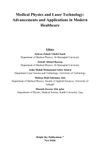
 This abstract does not report specific research findings but describes a book titled "Medical Physics and Laser Technology: Advancements and Applications in Modern Healthcare," authored by Zahraa Zuhair Ghafel Saeid and colleagues, which is available for purchase.
 August 2021 in “Al-Azhar International Medical Journal (Print)”
 This study found that Follicular Unit Extraction for managing secondary cicatricial alopecia resulted in good to very good outcomes in 90% of the patients, with minimal post-operative scars and recovery times, though 45% required additional surgery.
 September 2011 in “Clinical Biochemistry”
 This study indicated that a novel calcium-phosphate nanoflower coating on titanium surfaces had high surface area, low cytotoxicity, and promising cell affinity, suggesting it could be a potential alternative modification method for titanium implants.
5 citations
,
January 2024 in “Aesthetic Surgery Journal Open Forum” This review notes that while ATX-101 showed a favorable safety profile for reducing submental fat in clinical trials, serious adverse events related to procedures have been reported in real-world use, prompting recommendations for improved management and prevention strategies.
June 2026 in “Scientific Reports” This study found that alkyl shikimates with different alkyl group structures can increase or decrease fibroblast proliferation depending on concentration and alkyl chain length, with some variants showing cytotoxic effects due to their hydrophobicity and cell membrane permeability.
 January 2019 in “The Egyptian Journal of Hospital Medicine”
 In this study, researchers evaluated trichoscopic features in 500 Egyptian patients with patchy hair loss and found specific patterns, such as perifollicular scale with 90% sensitivity and 99.5% specificity, which effectively aid in diagnosing primary cicatricial alopecias.
 May 2018 in “Cell stem cell”
 This study reports that myoepithelial cells in submucosal glands can act as reserve stem cells, regenerating surface airway epithelium after severe injury through a mechanism involving Sox9 and Wnt signaling.
June 2023 in “CRC Press eBooks” This review highlights the medicinal potential of Acorus calamus, identifying its bioactive components and demonstrating its pharmacological activities, but also notes the need for more research on toxicity and safety.
 1 citations
,
January 2006
1 citations
,
January 2006 This article reviews the pathophysiology and causes of androgen-mediated hair growth in hirsutism but does not report any clinical outcomes; treatment aspects are discussed separately.
4 citations
,
October 2009 in “Saengmyeong gwahag hoeji/Saengmyeong gwahak hoeji” This study found that purified wood vinegar may promote hair growth in mice without toxicity, suggesting its potential use in treating baldness or alopecia.
1 citations
,
November 2016 in “Saengmyeong gwahag hoeji/Saengmyeong gwahak hoeji” This review discusses new insights into the pathogenesis of alopecia areata related to perifollicular immune and endocrine factors and potential new treatments, but it reports no clinical results.
 December 2009 in “Saengmyeong gwahag hoeji/Saengmyeong gwahak hoeji”
 This study observed that thymosin beta 4 and VEGF have similar expression patterns in various human tissues, suggesting a role in angiogenesis and organ function.
 25 citations
,
May 2020 in “Daehan saengsik uihak hoeji/Clinical and experimental reproductive medicine”
25 citations
,
May 2020 in “Daehan saengsik uihak hoeji/Clinical and experimental reproductive medicine” This article discusses the potential benefits of platelet-rich plasma injections in ovarian tissue to improve reproductive outcomes in IVF for older individuals and proposes a mechanism to enhance embryo ploidy rescue, but reports no new clinical results.
 15 citations
,
August 2022 in “Daehan saengsik uihak hoeji/Clinical and experimental reproductive medicine”
15 citations
,
August 2022 in “Daehan saengsik uihak hoeji/Clinical and experimental reproductive medicine” This pilot study found that intraovarian platelet-rich plasma administration significantly improved the euploidy rate of embryos in infertile women with previous IVF failures.
 1 citations
,
August 2025 in “Daehan saengsik uihak hoeji/Clinical and experimental reproductive medicine”
1 citations
,
August 2025 in “Daehan saengsik uihak hoeji/Clinical and experimental reproductive medicine” BMI should be considered in future research on dutasteride's effects on fertility.
 March 2025 in “Daehan saengsik uihak hoeji/Clinical and experimental reproductive medicine”
 This study found that long-term use of dutasteride in men taking it for androgenetic alopecia may lead to persistent decreases in semen volume and sperm motility, potentially impacting fertility, with significant impairment observed after 17.8 to 20.3 months of treatment.
 December 2023 in “Chiwi'saeng'gwa haghoeji”
 Hair keratin protein might help heal mouth wounds faster.
 3 citations
,
February 2014 in “Dong-ui saengni byeongni hakoeji”
3 citations
,
February 2014 in “Dong-ui saengni byeongni hakoeji” This study found that micro needle roller therapy enhanced hair follicle development and increased growth factor expression in C57BL/6 mice, suggesting potential benefits for alopecia treatment.
1 citations
,
April 2014 in “Dong-ui saengni byeongni hakoeji/Dong'ui saengli byeongli haghoeji” This study indicates that Samhwang-Sasimtang ethanol extract may promote hair growth in a mouse model, showing stronger effects than a control but less than 3% minoxidil.
 January 2023 in “Han'gug mi'saengmul saengmyeong gong haghoeji/Han-guk misaengmul saengmyeong gonghak hoeji”
 This study found that a mixed extract of N. jatamansi, O. basilicum, and C. sativus, particularly when extracted via steaming and ultrasonic methods, increased antioxidant content, stimulated melanin production for black hair, and promoted hair growth in mouse models, while maintaining high cell viability.
 September 2021 in “Han'gug mi'saengmul saengmyeong gong haghoeji/Han-guk misaengmul saengmyeong gonghak hoeji”
 This study found that an ethanolic extract from the microalga Tetrathelmis tetrathele exhibited anti-inflammatory effects, promoted the proliferation of certain skin and hair cells, and inhibited 5α-reductase activity, suggesting its potential as a therapeutic agent for preventing alopecia and enhancing scalp health.
 June 2019 in “Journal of Akhtar Saeed Medical & Dental College”
 This study found that while serum prolactin levels were higher in women with hirsutism, the relationship between prolactin levels and hirsutism severity was not statistically significant.
 December 2017 in “Dong-ui saengni byeongni hakoeji”
 This study found that Cynanchi Wilfordii Radix has strong antioxidant activity and may reduce key factors involved in male hair loss in dermal papilla cells.
June 2015 in “Han'gug eung'yong saengmyeong hwa haghoeji/Journal of the Korean Society for Applied Biological Chemistry” This study found that several small molecule peptides based on thymosin β4 significantly promoted cell proliferation related to wound healing, angiogenesis, and hair growth more effectively than established positive controls.