 73 citations
,
April 2013 in “Stem cells”
73 citations
,
April 2013 in “Stem cells” This study found that LGR5 is uniquely expressed in human corneal endothelial cells and maintains endothelial cell phenotypes while inhibiting mesenchymal transformation through the Wnt pathway.
December 2018 in “72° Congresso di Anatomia e Istologia” This study reported that using autologous micro-grafts according to the Rigenera® protocol may improve hair restoration and increase hair follicle numbers in patients with androgenetic alopecia after 6 to 9 months.
 May 2026 in “Discover Oncology”
 This review discusses the role of LGR4 in tumors, highlighting its involvement in cancer progression, metastasis, and chemotherapy resistance, as well as its regulatory effects on tumor stem cell self-renewal and stem cell characteristics, based on multiple recent studies.
5 citations
,
July 2022 in “Radiation Research” This study developed a mouse model to simulate chronic radiation-induced salivary dysfunction, revealing dose-dependent saliva reduction and glandular changes, which may help advance salivary regenerative therapies.
 57 citations
,
May 2014 in “Molecular Phylogenetics and Evolution”
57 citations
,
May 2014 in “Molecular Phylogenetics and Evolution” This study utilized a sequence-structure alignment approach to improve the characterization of Class A Rhodopsin GPCR superfamily, including orphan and unclassified receptors, through evolutionary analysis.
August 2015 in “Han'gug dongmul jawon gwahag hoeji/Han-guk dongmul jawon gwahak hoeji/Journal of animal science and technology” This study reported variable expression levels of TRα and CRABPII genes during the prenatal development of cashmere goats, contributing to an understanding of hair follicle formation in these animals.
 April 2023 in “Journal of Investigative Dermatology”
 In this study using a mouse model of Pemphigus vulgaris, researchers found that loss of desmoglein 3 adhesion in hair follicle stem cells triggers a regenerative program restoring stem cell function, requiring Hedgehog pathway suppression.
 April 2023 in “Journal of Investigative Dermatology”
 This study found that recombinant type III collagen may aid skin aging management by promoting fibroblast proliferation and migration, with a modest impact on inflammatory marker IL-6, though it did not significantly affect TNF-a secretion in vitro.
 October 2025 in “Proceedings of the National Academy of Sciences”
 This study identifies the PI4P-RHD4 module as a key regulator of GET pathway receptor dynamics in Arabidopsis, affecting TA protein insertion and root hair growth.
12 citations
,
July 2015 in “Experimental Dermatology” This study found that overexpression of Gsdma3 in mice led to epidermal hyperplasia, skin inflammation, and hair growth defects, suggesting gain-of-function mutations in Gsdma3 cause these conditions.
35 citations
,
July 2010 in “The FEBS journal” In this study, researchers identified a highly reactive, isozyme-specific sequence for TGase 3, contributing to understanding its distinct functional role and activity distribution in the mouse epidermis.
 14 citations
,
January 2016 in “Biochemical and Biophysical Research Communications”
14 citations
,
January 2016 in “Biochemical and Biophysical Research Communications” In this study, researchers found that ginsenoside Re from Panax ginseng increased hair shaft length and duration in mice, comparable to minoxidil, by modulating TGF-β signaling pathways.
23 citations
,
June 1992 in “PubMed” This study found that RAR-gamma 1 mRNA is present in multiple skin layers and structures, suggesting a role in maintaining and differentiating normal epidermis and skin appendages.
April 2026 in “The Plant Journal” This study demonstrated that MYB83 plays a crucial negative role in ethylene-mediated root hair growth in Arabidopsis by directly inhibiting EIN3, and that manipulating the MYB83-EIN3 interaction is key to root hair development and plant tolerance to nutrient stress conditions.
11 citations
,
September 2023 in “Nature Communications” In this study, researchers found that the cell surface protein Lrig1 plays a crucial role in regulating the suppressive function of regulatory T cells, suggesting it as a potential target for treating autoimmune diseases, as evidenced by experiments in mouse models.
2 citations
,
February 2012 in “PubMed” This study found that Gp₄G increased hair length, papilla cell numbers, and versican deposition in treated animals, potentially through alterations in hair follicle phases and nucleotide concentrations.
 November 2022 in “The journal of investigative dermatology/Journal of investigative dermatology”
 This study found that cPPARγ and dnPPARγ isoforms are differentially expressed in healthy human skin, suggesting that PPARγ modulators may have compartment-specific effects depending on isoform presence.
13 citations
,
April 2021 in “International Journal of Molecular Sciences” This study found that the fermented black soybean product GR-SC65 reduced particulate matter-induced cell death and oxidative stress in A549 cells, suggesting potential as a therapeutic agent for lung injury prevention.
 15 citations
,
January 2016 in “Sustainable development and biodiversity”
15 citations
,
January 2016 in “Sustainable development and biodiversity” This review discusses the role of rhizobacteria as biofertilizers in promoting plant growth and sustainable agriculture, and it reports no new experimental results.
5 citations
,
July 2022 in “Genes” This study found that EGR1 promotes the proliferation of dermal papilla cells, suggesting its close association with hair follicle growth and development.
 November 2025 in “Frontiers of Agricultural Science and Engineering”
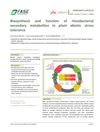
 This study observed that rhizobacterial strain RT3 significantly improved drought tolerance in lettuce by increasing survival rates and fresh biomass after rewatering, with metabolites such as proline and glycine enhancing stress resilience.
November 2024 in “Journal of Investigative Dermatology” Dermal IgA deposition without symptoms is rare in Dermatitis herpetiformis risk groups.
 8 citations
,
January 2015 in “Genetics and molecular research”
8 citations
,
January 2015 in “Genetics and molecular research” This study identified four proteins that differ between Type III and non-Type III hair in Yangtze River Delta white goats, contributing to understanding the development of high-quality brush hair.
1 citations
,
January 2012 In this study, the researchers cloned and analyzed the CRABP I gene in Inner Mongolian cashmere goats, finding its highest mRNA expression at 90 days in embryo skin compared to later stages.
12 citations
,
June 2016 in “Clinical and experimental dermatology” This study reported a previously undescribed G573V point mutation in the TRPV3 gene as a cause of familial Olmsted syndrome in a Mongolian family.
 March 2024 in “Plant physiology”
 This study found that the transcription factor GLABRA 2 inhibits ethylene production, regulating root hair growth in Arabidopsis under nutrient deficiency conditions.
 3 citations
,
May 2022 in “Oncogene”
3 citations
,
May 2022 in “Oncogene” This study revealed that Vav2 and Vav3 play roles in regulating hair follicle bulge stem cells in normal conditions and cancer stem cell activation and remodeling in mice.
 January 2019 in “Springer eBooks”
 Micrografts are useful for healing wounds, regenerating bone and periodontal tissues, and improving hair transplantation outcomes.
 September 2022 in “Research Square (Research Square)”
 This study found that overexpressing Rps14 in supporting cells promoted hair cell regeneration in the organ of Corti by facilitating cell proliferation and differentiation.
2 citations
,
December 2020 in “Frontiers in genetics” In this study, the researchers identified the SPEF2 and PRLR genes as potential candidates associated with feather rate phenotypes in Shouguang chickens through combined genome-wide association and differential expression analyses.