 5 citations
,
January 2021 in “IEEE Access”
5 citations
,
January 2021 in “IEEE Access” In this study, researchers demonstrated that treating platelet rich plasma with microsecond pulsed electric fields effectively activates platelets and induces similar or higher growth factor release compared to traditional bovine thrombin, suggesting a potential clinical use that may be more cost-effective and practical.
 5 citations
,
September 2019 in “ACS Applied Bio Materials”
5 citations
,
September 2019 in “ACS Applied Bio Materials” This study developed a composite hydrogel that delivered multiple proteins, enhancing skin wound healing by accelerating closure and promoting hair follicle regeneration.
5 citations
,
January 2017 in “Nevrologiâ, nejropsihiatriâ, psihosomatika” In this study, sustained-release sodium valproate showed high efficacy in achieving seizure remission for adults with focal and generalized epilepsy over one year, but side effects like weight gain and tremor were more frequent among heterozygous carriers of certain gene variants.
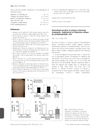 5 citations
,
June 2015 in “British Journal of Dermatology”
5 citations
,
June 2015 in “British Journal of Dermatology” This article discusses the role of lysophosphatidic acid-induced histamine release in generalized pruritus among patients with primary sclerosing cholangitis and reports no new clinical results.
 2 citations
,
August 2016 in “Química Nova”
2 citations
,
August 2016 in “Química Nova” This study concluded that chitosan nanoparticles loaded with minoxidil effectively target hair follicles and reduce dermal exposure compared to iontophoresis, despite similar drug delivery potential to the follicles.
1 citations
,
July 2021 in “Current nanomedicine” This study found that nanostructured lipid carriers could serve as a promising vehicle for topical Acitretin delivery in psoriasis treatment, potentially reducing oral side effects and enhancing patient compliance.
 1 citations
,
April 2021 in “Journal of Advances in Environmental Health Research”
1 citations
,
April 2021 in “Journal of Advances in Environmental Health Research” This review discusses the potential health risks of mercury released from dental amalgam, examining its effects on multiple body systems, and calls for replacing amalgam with composite resins due to these concerns.
July 2026 in “Journal of the American Academy of Dermatology” February 2026 in “ACS Omega” This study developed a multifunctional hydrogel, QTMP-Gel, which significantly accelerated wound healing in an oral mucositis hamster model by providing antioxidant and antibacterial effects, reducing inflammation, and controlling infection.
January 2026 in “Materials Today Bio” This study demonstrated that a multifunctional hydrogel containing Prussian blue nanozymes and an ultrasound-responsive nitric oxide donor improved healing in diabetic wounds by reducing oxidative stress, promoting angiogenesis, and enhancing tissue repair in animal models.
 January 2026 in “RSC Advances”
 The hydrogel helps heal wounds without scars by releasing two drugs gradually.
 April 2021 in “Journal of Advances in Environmental Health Research”
 This review discusses the health risks of mercury from dental amalgam, including higher levels of mercury in dentists and pregnant women, and suggests using composite resins instead.
 June 2005 in “Key Engineering Materials”
 This study found that biodegradable hydrogels loaded with various growth factors significantly enhanced hair follicle growth and blood vessel formation in mice, demonstrating a positive effect on their hair growth cycle.
81 citations
,
February 2022 in “Bioactive Materials” This study reported the development of pH-responsive nanoparticles that effectively deliver vancomycin in a controlled manner, demonstrated enhanced antibacterial activity, and showed promise for clinical applications by targeting bacterial infection sites with programmable drug release.
62 citations
,
November 2022 in “Acta Pharmaceutica Sinica B” This study reported that an injectable hydrogel based on platelet-rich plasma and laponite improved wound healing in diabetic and normal rats by enhancing angiogenesis and macrophage polarization.
 41 citations
,
December 2019 in “Stem Cell Reviews and Reports”
41 citations
,
December 2019 in “Stem Cell Reviews and Reports” This review discusses the progress in tooth regeneration research and highlights the potential of spatial-temporal release of developmental factors, but it reports no new clinical findings.
36 citations
,
March 2014 in “Annals of the Rheumatic Diseases” This study found that activating liver X receptors with an agonist reduced skin fibrosis in experimental models, particularly in inflammation-driven conditions, by inhibiting macrophage infiltration and interleukin-6 release.
 19 citations
,
December 2016 in “The journal of pharmacology and experimental therapeutics/The Journal of pharmacology and experimental therapeutics”
19 citations
,
December 2016 in “The journal of pharmacology and experimental therapeutics/The Journal of pharmacology and experimental therapeutics” This study found that multiple ion channel modulators, used here at clinical concentrations, increased intracellular calcium release in prostate and breast cancer cell lines.
16 citations
,
February 2009 in “Clinical neurology and neurosurgery” In this study, patients with epilepsy who switched from immediate-release to extended-release divalproex sodium did not experience significant changes in seizure frequency, but most preferred the new formulation due to a subjective decrease in tremor during daily activities.
 13 citations
,
May 2011 in “Bioorganic & Medicinal Chemistry”
13 citations
,
May 2011 in “Bioorganic & Medicinal Chemistry” This study identified certain benzopyran derivatives with a bulky tert-butyloxycarbonylamino group as effective KATP channel openers that inhibit insulin secretion in rat pancreatic islets.
12 citations
,
April 2023 in “Molecular Pharmaceutics” This study demonstrated that a microarray patch can deliver antibodies in a controlled and prolonged manner, maintaining their functionality after manufacturing and heat exposure, with successful pharmacokinetic proof-of-concept in rats.
11 citations
,
July 2023 in “Applied Nanoscience”  10 citations
,
September 2024 in “Journal of Nanobiotechnology”
10 citations
,
September 2024 in “Journal of Nanobiotechnology” This study developed an antimicrobial microneedle patch for delivering apoptotic vesicles to treat infected wounds, which was found to effectively reduce bacterial growth and accelerate scarless healing, including the rapid formation of mature hair follicles in just 8 days, a previously unreported early outcome.
10 citations
,
March 2019 in “Journal of neuroendocrinology” This study found that developmental changes in testosterone synthesis and gene regulation may explain age differences in corticosterone release in response to stress between adolescent and adult rats.
7 citations
,
January 2024 in “Regenerative Biomaterials” This study developed a multifunctional core-shell fiber dressing that preserves platelet-rich plasma for 180 days, facilitating sustained growth factor release and improved wound healing.
4 citations
,
January 2025 in “Pharmaceutics” This study found that spanlastic gel loaded with thymoquinone and ascorbic acid improved skin deposition and tyrosinase inhibition, suggesting potential as a treatment for hyperpigmentation.
2 citations
,
May 2021 in “IOP Conference Series Earth and Environmental Science” This study found that treating SM-MSCs with 150 μg/mL IGF-1 led to the highest increases in growth factor proteins BMP-2, FGF-18, and TGF-β1 in their conditioned media.
1 citations
,
July 2025 in “Chemosensors” This study developed a closed-loop system for emergency wound care that monitors infection in real-time using biomarkers and delivers amikacin-loaded liposomes for treatment, integrating a conductive hydrogel for environmental protection and antibacterial benefits.
 January 2025 in “Regenerative Biomaterials”
 In this study, a new pH-responsive hydrogel composed of polyvinyl alcohol and boric acid was found to release salvianolic acid B effectively, reducing excessive scar formation and enhancing tissue regeneration during early-stage wound healing.
 November 2023 in “Journal of the Taiwan Institute of Chemical Engineers”
 Scientists made nanoparticles from human hair proteins to improve drug delivery.