1 citations
,
April 2014 in “Journal of the Korean Society of Food Science and Nutrition” This study found that unripe Rubus occidentalis extracts may inhibit benign prostatic hyperplasia development in a rat model by reducing prostate weight and androgen-related gene expression.
 5 citations
,
March 2019 in “Journal of lipid research”
5 citations
,
March 2019 in “Journal of lipid research” This study reports new fluorogenic ceramidase substrates and highlights RBM14C24:1 as an efficient substrate for neutral ceramidase, while RBM15C18:1 is the best probe for measuring ACER1 and ACER2 activities, potentially aiding high-throughput screening for ceramidase inhibitors.
June 2023 in “bioRxiv (Cold Spring Harbor Laboratory)” This study developed new immortalized keratinocyte cell lines lacking COL7A1 using CRISPR/Cas9 technology, providing a valuable model to explore the biology and treatment options for recessive dystrophic epidermolysis bullosa.
 April 2019 in “Journal of Investigative Dermatology”
 This study found that BRG1 is crucial for keratinocyte migration during skin wound healing, as its suppression impairs wound closure by inhibiting migration without affecting cell proliferation or apoptosis.
 6 citations
,
April 2023 in “Frontiers in plant science”
6 citations
,
April 2023 in “Frontiers in plant science” In this study, NREs from lentil root nodules, specifically Serratia plymuthica 33GS and Serratia sp. R6, significantly enhanced lentil growth, altered root exudation, and modulated rhizospheric microbial communities in a greenhouse setting.
 2 citations
,
July 2005 in “International Joint Conference on Artificial Intelligence”
2 citations
,
July 2005 in “International Joint Conference on Artificial Intelligence” This study suggests that EREG, released from ORS cells, may promote hair growth by activating specific receptors and modulating ROS generation, offering a potential new treatment for hair loss.
 18 citations
,
February 2010 in “Odontology”
18 citations
,
February 2010 in “Odontology” This report describes Rabson-Mendenhall syndrome cases in two siblings and briefly reviews the literature, highlighting insulin receptor gene mutations as the underlying cause.
 September 2016 in “Journal of the Egyptian Women's Dermatologic Society (Print)”
 This article explores the interactions between retinoids and the immune system but reports no new clinical results related to their role in hair cycle control.
46 citations
,
May 2021 in “Stem Cell Research & Therapy” This study found that strontium ranelate promotes cartilage regeneration in rats by enhancing chondrogenic differentiation of bone mesenchymal stem cells while inhibiting the Wnt/β-catenin signaling pathway.
This study found that RXR and RAR proteins were detectable in normal human skin, suggesting they may play a role in epidermal cell differentiation and hair and gland physiology.
 59 citations
,
April 2016 in “Cell Reports”
59 citations
,
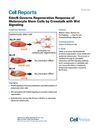
April 2016 in “Cell Reports” This study demonstrated that EdnrB signaling promotes melanocyte stem cell proliferation and differentiation, enhancing hair and epidermal melanocyte regeneration, especially under conditions of active Wnt signaling.
4 citations
,
July 2024 in “Pharmacology Research & Perspectives” In this phase 2a study of adults with alopecia areata, researchers observed that ritlecitinib treatment did not result in significant differences in brainstem auditory evoked potential changes or axonal swelling compared to placebo, suggesting the dog toxicity findings may not be clinically relevant in humans.
84 citations
,
September 2008 in “Developmental biology” This study found that cellular retinoic acid-binding proteins and fatty acid-binding proteins are dynamically expressed in skin development and respond differently to retinoic acid, β-catenin, and Notch signaling.
January 2026 in “Dermatologic Therapy” This study found that elevated tissue RBP4 levels correlate with disease severity in alopecia areata and decrease after effective baricitinib treatment, while the rs3758539 polymorphism is linked to disease susceptibility but not to treatment response.
16 citations
,
April 2021 in “Plant Signaling & Behavior” This study found that in Arabidopsis, the MYB30-EIN3 module plays a role in adapting root hair development to phosphate deficiency, potentially enhancing phosphate uptake from soil.
 60 citations
,
March 2011 in “Proceedings of the National Academy of Sciences of the United States of America”
60 citations
,
March 2011 in “Proceedings of the National Academy of Sciences of the United States of America” This study found that RANK-RANKL signaling regulates hair renewal and epidermal homeostasis in mice, revealing its role in initiating hair growth cycles and maintaining skin cell activity.
 January 2024 in “Wiadomości Lekarskie”
 In this study, researchers developed a novel computational framework using deep reinforcement learning to identify strategies for cellular reprogramming in gene regulatory networks, showing its effectiveness in a model of immune response against infection.
This study used whole-genome resequencing to analyze genetic diversity and selection in 17 rabbit breeds, identifying genes linked to traits like coat color and body size, which could inform breeding and conservation efforts.
7 citations
,
September 2024 in “PLANT PHYSIOLOGY” This study in Arabidopsis thaliana found that exposure to volatile compounds from Penicillium aurantiogriseum promotes root hair growth through signaling involving RALF22, ethylene, auxin, and photosynthesis, and that RALF22 plays a crucial role in the plants' response to these compounds.
 4 citations
,
January 2025 in “Translational Psychiatry”
4 citations
,
January 2025 in “Translational Psychiatry” In this study, remote photobiomodulation therapy to the lungs improved behavioral and neurological outcomes in rats with repeated closed-head injuries, suggesting potential preventive benefits for brain health.
 March 2021 in “Research Square (Research Square)”
 This study found that strontium ranelate may promote cartilage regeneration by enhancing chondrogenic differentiation and inhibiting the Wnt/β-catenin signaling pathway in rat models of cartilage defects.
 July 2023 in “New phytologist”
 This research identified a genetic mutation in Brachypodium distachyon that initially allows root hair initiation but fails to elongate them, while also affecting root growth and nitrate sensitivity; the mutation is linked to a previously uncharacterized cyclin-dependent kinase-like gene.
62 citations
,
March 2017 in “Journal of Investigative Dermatology” Mutations in the ACTB gene cause Becker’s nevi and may lead to muscle issues in Becker’s nevus syndrome.
3 citations
,
April 2020 in “PubMed” This study found that DEB-BACE combined with systemic chemotherapy was more effective than chemotherapy alone for unresectable lung squamous cell carcinoma, reducing side effects and improving survival rates.
5 citations
,
October 2021 in “American Journal of Medical Genetics Part A” This case report identifies a novel maternally inherited MBTPS2 variant associated with an expanded phenotypic spectrum of BRESHECK syndrome, including cytopenias, bone marrow fibrosis, and chronic diarrhea.
June 2026 in “British Journal of Dermatology” This audit of ritlecitinib prescribing for severe alopecia areata found that regional practices largely followed national guidelines but highlighted the need for better psychological assessments and more consistent use of SALT scoring to inform treatment continuation decisions after 36 weeks.

This review discusses the mechanisms, scientific support, and FDA clearance of photobiomodulation mask devices but reports no new research findings.
1 citations
,
May 2025 in “Cell Reports Medicine” This study found that RSPO1, a Wnt/β-catenin pathway agonist, significantly induces insulin-producing β cell replication and neogenesis in various settings, offering a promising potential therapy for diabetes.
25 citations
,
September 2005 in “Journal of the American Academy of Dermatology” This study reported that Rapp-Hodgkin syndrome, AEC syndrome, and EEC syndrome are likely part of a single genetic disorder spectrum linked to mutations in the TP63 gene.
 December 2025 in “International Journal of Surgery”
 In this study, researchers identified a causal link between Epstein-Barr virus infection and clear cell renal cell carcinoma, highlighting GBP1 as a key target and suggesting finasteride as a potential inhibitor, offering a new direction for treatment strategies.