
This animal study found that YH0618 may alleviate doxorubicin-induced alopecia and affects proteins like keratin and Smad3, suggesting potential therapeutic targets. The researchers analyzed protein expression changes to understand YH0618's effects in treating chemotherapy-related hair loss.
 May 2024 in “Scientific African”
 This research used computational methods to identify potential new treatments for benign prostatic hyperplasia, finding three compounds from Ghanaian plants with promising binding energy against 5alpha reductase 2 compared to existing drugs, yet further in vitro validation is necessary to confirm their efficacy.
May 2024 in “Frontiers in Nutrition” This study highlights promising methods for converting food waste into valuable resources such as biogas, bioethanol, biodiesel, fertilizers, and antioxidants through processes like fermentation and anaerobic digestion, emphasizing the need for robust large-scale technologies to optimize this "waste to value" transformation.
 April 2024 in “JCT research”
This study developed a mathematical model using hair biomarkers (levels of Mg, K, Fe, Al, Cr) to noninvasively predict iron content in Hereford cattle muscle tissue, potentially improving livestock management and meat quality.
 March 2024 in “Organic letters”
 This study reports that difluoromethyl nitrile oxide can rapidly functionalize various alkenes at room temperature, leading to products that can transform into valuable medicinal chemistry building blocks like CF2H-isoxazolines for bioactive molecule modification.
 March 2024 in “Cell communication and signaling”
 This study found that sleep deprivation in mice can trigger prostatitis by activating the cGAS-STING pathway due to reduced levels of dihydrotestosterone and melatonin, resulting in a pro-inflammatory environment, while recovery sleep can mitigate these effects.

This study reported that the Fe@C/CB electrocatalyst effectively detected Metol in water samples with a low detection limit, high sensitivity, and good stability, suggesting it as a promising tool for environmental monitoring.
 March 2024 in “Animal nutrition”
 This study found that sows consuming beet pulp had higher feed intake and improved litter performance during heat stress, while a high-fiber diet enhanced insulin levels, suggesting dietary fiber's importance for reproductive and metabolic health in sows.
 February 2024 in “Molecules/Molecules online/Molecules annual”
 In this study, NMN was found to reverse hair follicle atrophy, thinning, and sparsity in mice induced by DHT, and significantly decreased DHT-induced inflammation and oxidative stress in cultured human dermal papilla cells, enhancing hair growth-related markers.
This study identified seven novel CYP17A1 inhibitor scaffolds as potential leads for treating polycystic ovary syndrome through an in silico approach, demonstrating favorable interactions, drug-like properties, and predicted bioactivities warranting further experimental validation.
February 2024 in “Biomedicines” This study found that NKB placental mRNA expression was higher in women with PCOS, particularly in pregnancies with female offspring, suggesting its involvement in PCOS-related placental dysfunction.
January 2024 in “Medicina” This review examines the pathogenesis of androgen excess and dyslipidemia in PCOS and the potential role of statins as a treatment but provides no new clinical results.
January 2024 in “Diagnostics” This literature review found that Long COVID is a complex condition involving multiple body systems, influenced by factors like pre-existing conditions and vaccination status, with differing manifestations and persistence, complicating diagnosis and treatment efforts.
January 2024 in “Biomedicines” This review discussed the cutaneous manifestations of APECED, highlighting chronic mucocutaneous candidiasis, alopecia areata, and vitiligo, while emphasizing the importance of early detection and monitoring for accurate diagnosis and patient care in various populations.
 January 2024 in “Current research in toxicology”
 This review reports that thallium poisoning causes severe neurological damage, with early gastrointestinal symptoms and later neurological dysfunction, and highlights the importance of early diagnosis and Prussian blue as an effective antidote.
 December 2023 in “Redox biology”
 In this study, DMC selectively eliminated senescent cells in old mice, prevented hair loss, improved motor coordination, and reduced senescence-associated secretory factors, suggesting its potential as a senolytic treatment.
 December 2023 in “The journal of physical chemistry. B (1997 : Online)”
 This study explored the potential of human hair keratin as a filtration material, finding that it may effectively absorb the pollutants diclofenac and perfluorobutanesulfonate. The researchers reported significant binding affinities through molecular simulations, supporting further investigation into keratin's use for water purification.
 November 2023 in “BMC genomics”
 Using a multi-omics analysis, this study identified key regulators like PLA2G12A, KRT79, and prostaglandin B2 that influence cashmere fineness, providing crucial data for understanding the molecular mechanisms behind this trait in Liaoning cashmere goats.
October 2023 in “Biomimetics” This study developed a biocompatible hair-dyeing technology using a dark polyphenol complex, which demonstrated effective hair coating, improved mechanical strength, and strong antioxidant properties while maintaining high cell viability.
 September 2023 in “Journal of Natural Fibers”
 This study found that using a microfiber towel to dry human hair better preserves hair keratin integrity and wear resistance compared to blow-drying or using a cotton towel, as indicated by stronger alpha-helix structure in FTIR analysis.
 August 2023 in “Stem Cell Research & Therapy”
 This study found that cell-free fat extract (CEFFE) enhanced hair growth in mice with androgenetic alopecia by increasing hair follicle density and promoting proliferation while regulating the DHT/AR pathway.
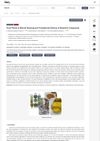
This review highlights the potential of plant-derived natural compounds as biocompatible and biodegradable materials in dermal and transdermal delivery systems, emphasizing their unexplored benefits and detailing recent advances in isolation techniques and drug delivery technologies.
 July 2023 in “International Journal of Endocrinology”
 In this study, researchers observed that Centratherum anthelminticum seed extract effectively reduced cholesterol, triglycerides, insulin resistance, and inflammatory markers, while normalizing hormone levels and oxidative stress markers in rodents with PCOS, suggesting potential benefits for managing the condition.
This study found that an injectable calcium alginate-amelogenin hydrogel is biocompatible, degradable, anti-inflammatory, and promotes osteogenesis, which may enhance the bone healing process in jaw and facial bone defect areas by mediating the bone immune microenvironment.
This study introduced a new computational method for simulating vibrational frequencies, finding that the multi-molecular fragment model showed the best agreement with experimental data for Finasteride, Lamivudine, and Repaglinide, outperforming traditional models in accuracy.
In this study, researchers found that FGF9 plays a significant role in sheep wool growth by accelerating the proliferation and cell cycle of dermal papilla cells, potentially through regulation of the Wnt/β-catenin signaling pathway.
 January 2023 in “Discovery medicine”
 This study found that Cepharanthine may mitigate doxorubicin-induced senescence by reducing SA-β-Gal activity and restoring autophagy in cell models, offering insights for antiaging drug development.
November 2022 in “IntechOpen eBooks” This review discusses nanoparticle-based wound-healing materials, detailing their benefits, limitations, and recent advancements, and emphasizes the need for further understanding to enhance therapeutic outcomes.
 August 2022 in “Metabolites”
 This study identified significant metabolic differences between volar and non-volar skin in mice, revealing distinct amino acid, sugar, and nucleotide metabolism patterns associated with skin type differentiation.