25 citations
,
August 2022 in “Frontiers in Reproductive Health” This review discusses the use of platelet-rich plasma injections for treating erectile dysfunction, noting the potential for regenerative medicine to reverse or halt disease progression, but it reports no new clinical results.
48 citations
,
July 1998 in “Pediatric Dermatology” This study found that pulsed doses of prednisolone led to excellent hair growth in 60% of young patients with widespread alopecia areata, with minimal side effects.
September 2023 in “Journal of the American Academy of Dermatology” Bullous pemphigoid can look like erythema multiforme, so awareness is needed for proper treatment.
 10 citations
,
August 2015 in “Journal of biophotonics”
10 citations
,
August 2015 in “Journal of biophotonics” This study found that applying benzyl nicotinate on open hair follicles led to a significant increase in blood flow, highlighting the role of the follicular pathway in epidermal penetration.
 35 citations
,
July 2009 in “Optics express”
35 citations
,
July 2009 in “Optics express” This study introduces a new intracavity frequency modulation technique for tunable picosecond optical parametric oscillators, enhancing chemical contrast in coherent Raman imaging by allowing real-time subtraction of background signals.
80 citations
,
August 2022 in “Materials Today Bio” This study developed a double-network hydrogel using polyacrylamide and catechol-chitosan to enhance mechanical properties and promote drug release, aiding in inflammation regulation and wound healing for chronic wounds with challenging microenvironments.
 47 citations
,
November 2012 in “Pharmaceutical research”
47 citations
,
November 2012 in “Pharmaceutical research” This study found that surface modified nanoparticles showed increased skin permeation and improvement in allergic contact dermatitis, independent of the follicular pathway.

This case report highlights the successful use of platelet-rich plasma infiltration to treat vasopressin-induced bilateral foot digit gangrene in a 20-year-old female, suggesting its potential in stimulating angiogenesis and wound healing, though further research is necessary to assess its general efficacy.
 April 2017 in “The journal of investigative dermatology/Journal of investigative dermatology”
 This study reports that 71% of patients treated with the gamma-secretase inhibitor PF-03084014 for desmoid tumors experienced dermatologic side effects, such as follicular lesions and pruritic eruptions, which were managed with topical or systemic treatments.
December 2025 in “Regenerative Biomaterials” In this study, researchers developed a responsive bilayer hydrogel for diabetic wounds that delivers drugs and oxygen in sync with healing stages, achieving a 99.1% wound closure rate in 14 days by integrating anti-inflammatory, antibacterial, and anti-fouling functions.
 December 2023 in “Frontiers in pharmacology”
 In this study, intrathecal progesterone administration initially worsened mechanical allodynia in mice after nerve injury, but later reduced pain when applied during the maintenance phase, highlighting distinct roles for cytochrome P450c17 and 5α-reductase in neuropathic pain modulation.
 130 citations
,
January 1994 in “Differentiation”
130 citations
,
January 1994 in “Differentiation” In this study, researchers found that bulge cells in mouse hair follicles undergo transient proliferation during early anagen, indicating their role as follicular stem cells. However, another factor beyond dermal papilla proximity may be required to initiate a new anagen phase.
 151 citations
,
July 2011 in “Archives of Dermatological Research”
151 citations
,
July 2011 in “Archives of Dermatological Research” This review discusses various strategies to enhance drug delivery through the skin barrier, highlighting liposomes as promising carriers for increased dermal concentrations in topical therapies, but reports no new research results.
 February 2009 in “Journal of The American Academy of Dermatology”
 This study suggests that fractional infrared technology may effectively improve cervical skin laxity by enhancing dermal thickness without adverse effects in a small pilot group.
April 2026 in “Applied Materials Today” This study introduced a pH-responsive polymeric wound dressing that enhances healing in chronic wounds by changing shape and drug delivery based on wound pH, achieving a 94.88% healing rate in diabetic mice by day 14.
This study found that neurosteroids influence oxytocin secretion in sheep, particularly during stress and pregnancy, suggesting their role in protecting and maintaining pregnancy under harmful conditions.
 1 citations
,
November 2010 in “Value in Health”
1 citations
,
November 2010 in “Value in Health” Pill splitting increased generic finasteride sales but didn't affect branded finasteride sales.
 3 citations
,
May 2011 in “Journal of the American Academy of Dermatology”
3 citations
,
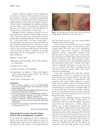
May 2011 in “Journal of the American Academy of Dermatology” This case report describes a 54-year-old woman who developed hypertrichosis around a leg ulcer while using PGE1 ointment, suggesting a potential side effect of the treatment.
61 citations
,
March 2006 in “Colloids and surfaces. B, Biointerfaces” In this study, lecithin/n-propanol/isopropyl myristate/water/tetracaine hydrochloride microemulsion was found to be a safe carrier for transdermal drug delivery in animal models, with analgesic effects on Wistar rats.
80 citations
,
June 2012 in “European Journal of Pharmaceutics and Biopharmaceutics” This study observed that smaller polymeric submicron particles provided more efficient selective drug delivery to inflamed skin in a mouse model, enhancing therapeutic effects while reducing systemic adverse effects.
 March 2025 in “Authorea (Authorea)”
 This review discusses the use of platelet-rich plasma (PRP) in regenerative plastic surgery and dermatology for hair regrowth and skin revitalization, noting some potential side effects without reporting new clinical results.
 March 2026 in “Journal of Ovarian Research”
 This review explores the potential of platelet-rich plasma therapy for early ovarian reserve decline and premature ovarian insufficiency, indicating some ovarian function improvements in initial studies but highlighting the need for further research.
 36 citations
,
May 2011 in “The Journal of Clinical Endocrinology & Metabolism”
36 citations
,
May 2011 in “The Journal of Clinical Endocrinology & Metabolism” Treatment with a hormone agonist can reduce excess male hormones in postmenopausal women without surgery.
 May 2026 in “AAPS PharmSciTech”
 This study found that PEGylated LUT-Aspasomes significantly improved neuroprotective effects in stressed rats, enhancing spatial memory, reducing depressive-like behavior, and preserving hippocampal architecture better than free luteolin. Additionally, it increased brain delivery and stability, suggesting potential for treating stress-related neurobehavioral disorders.
This study found that Dex-loaded hyaluronic acid hydrogel microneedles significantly reduced pain in an acute inflammatory visceral pain model without sedation, suggesting a promising and patient-friendly alternative to intravenous delivery.
8 citations
,
December 2023 in “International Journal of Molecular Sciences” In this study, successful treatment outcomes with platelet-rich plasma injections in patients with IC/BPS and rUTI were associated with specific cytokine concentrations, particularly lower TNF-α levels.
September 2025 in “Acta Biomaterialia” In this study, researchers developed injectable micropore-forming hydrogels that enhance tissue adhesion strength and promote wound healing by allowing better cell infiltration and inducing hair follicle regeneration in skin incision wound models.
October 2013 in “International Journal of Pediatric Endocrinology/International journal of pediatric endocrinology” This case report describes a boy with hypothalamic hamartoma experiencing pubertas precox and gelastic seizures, where leuprorelin therapy's effect on pubertas precox was controversial, but valproic acid effectively managed gelastic seizures.
 82 citations
,
January 2002 in “Journal of drug targeting”
82 citations
,
January 2002 in “Journal of drug targeting” This study found that drug delivery through human scalp skin may be more effective for lipophilic and hydrophilic drugs compared to abdominal skin, highlighting the potential of intrafollicular delivery methods.
13 citations
,
January 2024 in “Journal of Nanobiotechnology” This research reported that a newly developed adhesive wound dressing (SIS/PAA/LAP) demonstrated higher tissue adhesion and burst strength compared to conventional products, and improved tissue repair outcomes in animal models, suggesting potential for enhanced wound healing applications.