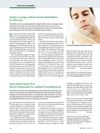
Early balding may be a sign of future prostate problems.
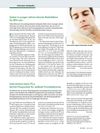
Men with early balding may have a higher risk of prostate issues, and surgery for prostate cancer has a slight survival benefit over radiation.
April 2012 in “The Journal of Urology” This study found that one year of finasteride treatment significantly reduced PSA levels and prostate volume in men with elevated PSA and negative prior biopsy, potentially aiding prostate cancer diagnosis.
 September 2011 in “Urology”
 This study reports on biofeedback treatment for dysfunctional voiding in three adult cases, providing insights into this condition when diagnosed beyond childhood.
January 2011 in “Zhonghua zhongyiyao xuekan” This study found that Yiqi Huayu Chinese medicine may inhibit benign prostatic hyperplasia in rats by reducing MMP-2 levels and vessel renewal, with effects comparable to finasteride.
 February 2010 in “Journal of The American Academy of Dermatology”
 This study found that nonobese women with idiopathic hirsutism had significantly lower nitrite/nitrate concentrations and higher fibrinogen levels compared to controls, but similar levels to women with PCOS.
March 2009 in “The Journal of Urology” This research concludes that finasteride significantly reduces dihydrotestosterone levels and prostate size in men with BPH and may improve urinary symptoms, with greater baseline prostate size predicting more pronounced benefits compared to placebo.
January 2009 in “Journal of Jilin Medical College” This study found that SDG did not significantly affect prostate weight in rats with BPH, but it may reduce serum PAP activity and alter prostate tissue changes induced by Testosterone Propionate.
This study found that PLX, a mixture of tomato extract and chitooligosaccharide, may reduce prostate weight in testosterone-induced BPH in rats, suggesting it could act as a 5α-reductase inhibitor.
October 2006 in “Urology” Combination therapy with Finasteride is more effective than alpha-blocker alone for BPH symptoms in small prostate volume.
October 2006 in “Urology” The document aimed to understand how certain treatments affect blood vessel growth in rat prostates.
January 2005 in “Urologia Journal” This study found that both Finasteride and MK386 reduced cell proliferation in primary prostate cancer cultures, with Finasteride being more effective in lower Gleason scores and MK386 in higher ones.
September 2004 in “Urology” Finasteride may reduce prostate cancer risk.
January 2004 in “Anticancer Research” This study suggested that long-term finasteride treatment for BPH patients may induce neuroendocrine activity in the prostate, potentially increasing the risk of developing aggressive prostate cancer.
February 2003 in “European Urology Supplements” Baseline PSA levels affect general health and sexual satisfaction in men with BPH treated with finasteride or placebo.
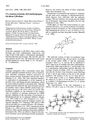 December 1998 in “Acta Crystallographica Section C-crystal Structure Communications”
 This study describes the molecular conformation and intermolecular interactions in the crystalline structure of the compound C24H31BrO4.
March 2023 in “The Journal of Urology” This study found that higher baseline expression of SRD5A2 in prostate tissue was associated with a better response to finasteride in men with benign prostatic hyperplasia.
May 2022 in “Current Enzyme Inhibition” This study found that the synthesized compound 7b exhibited higher 5α-reductase inhibitory activity, increased solubility, and dissolution compared to finasteride, suggesting its potential as a lead compound for benign prostatic hyperplasia treatment.
 December 2019 in “Reactions Weekly”
 Man stopped medications due to sexual side effects, found relief with prostatic artery embolisation.
 October 2015 in “Elsevier eBooks”
 Finasteride helps hair growth and prostate issues but may cause sexual side effects and increase tumor risk.
 March 2015 in “The Journal of Urology”
 This study observed that finasteride therapy reduced PSA levels by about 40% over a year in Chinese patients with benign prostatic hyperplasia, with varying effects based on baseline PSA levels.
 3 citations
,
February 2013 in “PubMed”
3 citations
,
February 2013 in “PubMed” This review discusses the pathophysiology of androgen-stimulated skin disorders and key clinical trials of 5α-reductase inhibitors for their treatment, but it does not report new clinical results.
 4 citations
,
August 2019
4 citations
,
August 2019 This study found that elevated free testosterone levels may reduce body fat and increase bone density in males, but also raise the risk of prostate cancer, hair loss, and benign prostate hyperplasia.
 1 citations
,
March 1997 in “Journal of Chromatography B: Biomedical Sciences and Applications”
1 citations
,
March 1997 in “Journal of Chromatography B: Biomedical Sciences and Applications” This study discovered that the disposition of LY191704 enantiomers in rats and dogs is both stereoselective and species specific.
 May 2021 in “The FASEB Journal”
 This study presents the crystal structure of human SRD5A2 with finasteride and reveals insights into its enzyme catalysis and inhibition mechanisms, which may inform drug development.
 295 citations
,
September 2006 in “Cell Cycle”
295 citations
,
September 2006 in “Cell Cycle” This review discusses the role of the TOR pathway in aging and suggests that rapamycin could potentially target age-related diseases, but reports no new clinical results.
 223 citations
,
December 2010 in “The Journal of Sexual Medicine”
223 citations
,
December 2010 in “The Journal of Sexual Medicine” This review discusses persistent adverse effects of 5α‐reductase inhibitors, like diminished libido and erectile dysfunction, in some patients and highlights the need for patient discussions before therapy, especially for androgenetic alopecia.
 147 citations
,
April 1990 in “The Journal of Clinical Endocrinology and Metabolism”
147 citations
,
April 1990 in “The Journal of Clinical Endocrinology and Metabolism” This study found that finasteride significantly suppresses serum dihydrotestosterone levels at all tested doses in normal male volunteers without significant adverse effects.
 137 citations
,
March 2006 in “Cns Drug Reviews”
137 citations
,
March 2006 in “Cns Drug Reviews” This review explores finasteride's effects on neuroactive steroid levels and their potential influence on disorders like depression and alcohol withdrawal but reports no new clinical findings.
 136 citations
,
March 1996 in “Journal of the American Chemical Society”
136 citations
,
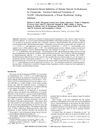
March 1996 in “Journal of the American Chemical Society” This study explains finasteride's high potency and specificity as a mechanism-based inhibitor for treating benign prostatic hyperplasia by detailing its interaction with human type 2 steroid 5α-reductase.