14 citations
,
May 2005 in “Steroids” This study describes the synthesis of finasteride from 4-androstene-3,17-dione in a seven-step process with an overall yield of 18.6%.
36 citations
,
July 2005 in “Journal of Neuroendocrinology” This study suggests that both the central biosynthesis and metabolism of progesterone to 3α,5α‐THP in the ventral tegmental area are crucial for facilitating lordosis in female rats.
April 2011 in “Cancer Research” In this study, ginsenoside 20(S)-protopanaxadiol-aglycone (PPD) was shown to downregulate androgen receptor expression and inhibit tumor growth in prostate cancer cells.
8 citations
,
July 1977 in “Lipids” This study found a negative correlation between dietary monoene levels, particularly oleic acid, and the capacity for PGE₂ synthesis in rat skin, with the most severe skin issues noted in those fed Zephyr rapeseed oil.
10 citations
,
December 2018 in “Medical Science Monitor” This study suggests that the MAPK/ERK signaling pathway plays a role in the regulation of cell proliferation, apoptosis, and cycling in rat urethral plate fibroblasts affected by finasteride-induced hypospadias.
12 citations
,
November 2024 in “Plants” This study found that the phytosterols β-sitosterol, stigmasterol, and campesterol have low-to-negligible inhibitory activity against steroidal 5α-reductase type 2 compared to the synthetic inhibitor dutasteride, with β-sitosterol showing the highest activity among the tested phytosterols.
 30 citations
,
December 1999 in “Journal of Investigative Dermatology Symposium Proceedings”
30 citations
,
December 1999 in “Journal of Investigative Dermatology Symposium Proceedings” This study found that in vitro treatments with 5alpha-reductase inhibitors and androgen receptor antagonists strongly stimulate VEGF expression in dermal papilla cells.
 September 2024 in “Cermin Dunia Kedokteran”
 This source highlights the role of progestin in contraception, noting that while different types have varying progesteronic potential and effects, they share similar contraceptive mechanisms, allowing tailored use based on patient conditions.
July 2026 in “Journal of Investigative Dermatology” This study uncovered that bimatoprost, a prostaglandin analog, promotes hair growth by activating hair follicle progenitor cells through two pathways: the PTGFR-MAPK signaling axis and an unexpected IGF1R-PCAD-AKT signaling axis, suggesting new potential targets for treating hair disorders.
October 2022 in “The Korean Journal of Physiology and Pharmacology” This review discusses the roles of prostaglandins in hair loss and highlights their potential as targets for new alopecia treatments, but reports no new clinical findings.
 1 citations
,
March 2012 in “Journal of Dermatological Science”
1 citations
,
March 2012 in “Journal of Dermatological Science” This study found that various steroids affected the mRNA expression of enzymes involved in lipid metabolism in hamster flank organs, with different impacts depending on the steroid and combination used.
123 citations
,
June 2006 in “Journal of Neurobiology” This study reports that progesterone metabolism to DHP and THP is necessary for its neuroprotective effect against kainic acid excitotoxicity in ovariectomized rats, unlike the synthetic progestin MPA.
 September 2017 in “Journal of Investigative Dermatology Symposium Proceedings”
 This study found that prostaglandin D2 increases testosterone production in human keratinocytes through a mechanism involving ROS and REDOX potential, which could inform treatments for androgenic alopecia.
December 2016 in “University of Birmingham Institutional Research Archive (University of Birmingham)” This study found that manipulating 5αR2 activity in human hepatocytes in vitro can regulate lipogenesis, with potential clinical implications for patients taking 5αR inhibitors.
 18 citations
,
February 2018 in “International Journal of Molecular Sciences”
18 citations
,
February 2018 in “International Journal of Molecular Sciences” This study found that prostaglandin D2 promotes androgen receptor and AKT signaling in human dermal papilla cells through the DP2 receptor, potentially contributing to androgenetic alopecia.
35 citations
,
January 2005 in “Brain Research” This study indicates that progesterone’s anesthetic activity in PR knockout mice is not due to progesterone receptors but is partially mediated by the neurosteroid allopregnanolone through GABAA receptor potentiation.
 15 citations
,
April 2008 in “Steroids”
15 citations
,
April 2008 in “Steroids” This study found that pregnane derivatives with higher lipophilicity, like compound 9d, had stronger androgen receptor binding and greater antiandrogenic effects in rats, correlating relative binding affinity with log P values.
 13 citations
,
January 2005 in “Chemical and Pharmaceutical Bulletin”
13 citations
,
January 2005 in “Chemical and Pharmaceutical Bulletin” This study reported that newly synthesized progesterone derivatives significantly reduced prostate weight in testosterone-treated hamsters, with 5alpha-reductase inhibitory activity dependent on the size of the substituent at C-17.
1 citations
,
April 2013 in “The FASEB Journal” In this study, chronic finasteride administration in near-term pregnant rats restored baroreflex control of renal sympathetic nerve activity to levels observed in non-pregnant rats.
151 citations
,
December 2004 in “Neuropharmacology” Progesterone reduces anxiety without needing progesterone receptors.
 57 citations
,
February 2014 in “Experimental Dermatology”
57 citations
,
February 2014 in “Experimental Dermatology” This review discusses the role of Prostaglandin D2 and its synthase in androgenetic alopecia but reports no new clinical findings, suggesting pathways for future therapeutic development.
August 2026 in “Prostaglandins & Other Lipid Mediators” This review suggests that imbalance in prostaglandin levels may contribute to androgenetic alopecia, highlighting prostaglandins as potential biomarkers and therapeutic targets for the condition.
56 citations
,
November 2007 in “Molecular and cellular endocrinology” This study identified enzymes responsible for regulating androgen action in the human prostate, suggesting that inhibiting AKR1C2 or RL-HSD may have therapeutic potential in androgen insufficiency or benign prostatic hyperplasia, respectively.
57 citations
,
April 2009 in “The Journal of Steroid Biochemistry and Molecular Biology” This study found that despite the presence of steroidogenesis inhibitors, CRPC tumor cells adapt to continue synthesizing androgens, suggesting a need for more effective androgen axis targeting.
 November 2021 in “Pharmaceutical Sciences”
 This study found that the compound androstane-17-carboxamide 6 may serve as a lead for new drugs to treat BPH and prostate cancer by reducing the weight of androgen-dependent glands.
September 2002 in “Research Repository (Kingston University London)” This review discusses strategies for treating hormone-dependent prostate diseases and synthesizes a range of potential 5α-reductase inhibitors, but experimental evaluation of these compounds was not completed.
 14 citations
,
March 2017 in “Brain research”
14 citations
,
March 2017 in “Brain research” This study suggests that ovarian cycle-related progesterone and neurosteroids regulate α2-subunit expression of GABA-A receptors in the hippocampus through a pathway independent of progesterone receptors, potentially affecting brain conditions linked to the menstrual cycle.
 23 citations
,
March 1988 in “Biochemical Pharmacology”
23 citations
,
March 1988 in “Biochemical Pharmacology” This study found that minoxidil inhibited prostacyclin production in various endothelial and smooth muscle cells in culture without affecting the synthesis of other cyclooxygenase products.
 6 citations
,
April 2004 in “Journal of Enzyme Inhibition and Medicinal Chemistry”
6 citations
,
April 2004 in “Journal of Enzyme Inhibition and Medicinal Chemistry” This study found that four new progesterone derivatives reduced prostate weight in gonadectomized hamsters, suggesting potent in vivo antiandrogenic effects similar to finasteride.
 April 2018 in “Radiotherapy and Oncology”
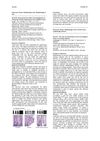
 Prostaglandin helps regenerate hair follicles after radiation damage.