 124 citations
,
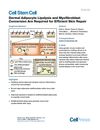
June 2020 in “Cell Stem Cell”
124 citations
,
June 2020 in “Cell Stem Cell” This study found that in mice, dermal adipocytes initiate inflammation and aid repair after skin injury by releasing lipids, suggesting a role in managing inflammatory diseases and impaired wound healing.
 113 citations
,
July 2020 in “Communications biology”
113 citations
,
July 2020 in “Communications biology” This review suggests that understanding the biological and molecular reasons for more severe COVID-19 in men, particularly those at risk for prostate cancer, could improve management of these patients, but reports no new results.
 89 citations
,
January 2009 in “Advances in Clinical Chemistry”
89 citations
,
January 2009 in “Advances in Clinical Chemistry” This review discusses the differences in wound healing between fetal and adult skin, highlighting the potential to uncover genes for scarless repair that could improve adult wound healing.
 78 citations
,
October 2020 in “Experimental Dermatology”
78 citations
,
October 2020 in “Experimental Dermatology” This review summarizes 15 years of clinical and experimental research advancements in hidradenitis suppurativa, highlighting its recognition as a uniquely healable inflammatory skin disease but reports no new clinical results.
 66 citations
,
July 2015 in “Organogenesis”
66 citations
,
July 2015 in “Organogenesis” This review summarizes recent findings on how Wnt signaling proteins play crucial roles in the cutaneous wound healing process but reports no new clinical results.
 59 citations
,
June 2023 in “Nature Aging”
59 citations
,
June 2023 in “Nature Aging” This study observed that in aged mouse skin, there was an increase in IL-17-expressing T helper cells, γδ T cells, and innate lymphoid cells, and blocking IL-17 signaling reduced skin inflammation and delayed age-related changes, suggesting it as a potential target to mitigate skin aging.
 56 citations
,
October 2018 in “Journal of The American Academy of Dermatology”
56 citations
,
October 2018 in “Journal of The American Academy of Dermatology” This review discusses the role of androgens in women's skin-related conditions like acne, hirsutism, and female pattern hair loss, noting the lack of dermatology guidelines for when to pursue endocrinologic evaluation.
 47 citations
,
March 2022 in “Frontiers in cellular and infection microbiology”
47 citations
,
March 2022 in “Frontiers in cellular and infection microbiology” This review discusses the role of the skin microbiome in the pathogenesis of various skin disorders, such as atopic dermatitis and psoriasis, and reports no new clinical findings; it emphasizes potential therapeutic implications.
 47 citations
,
January 2015 in “Dermatology”
47 citations
,
January 2015 in “Dermatology” This review revisits mechanisms underlying acne lesion formation and suggests that preventing comedone development requires controlling critical factors in the pilosebaceous follicle before acne involvement.
 47 citations
,
June 2012 in “Genes & Development”
47 citations
,
June 2012 in “Genes & Development” This study found that maternal consumption of a western diet in mice led to toxic milk production, causing inflammation and alopecia in nursing neonates due to Toll-like-receptor activation.
 46 citations
,
April 2008 in “Archives of Dermatological Research”
46 citations
,
April 2008 in “Archives of Dermatological Research” This study found that substance P may be involved in the pathogenesis of acne by increasing the expression of certain cytokines and receptors in cultured sebocytes.
38 citations
,
February 2021 in “Journal of Investigative Dermatology” This review examines the complexities of age-related skin healing and discusses how translating findings from model organisms to humans could enhance understanding and treatment of impaired regeneration in aging populations, but it reports no new clinical results.
 38 citations
,
June 2019 in “International Journal of Molecular Sciences”
38 citations
,
June 2019 in “International Journal of Molecular Sciences” This review discusses the potential role of extracellular vesicles in modulating hair follicle dynamics and reports no new clinical results; future investigations may inform treatment strategies for skin disorders.
 34 citations
,
October 2011 in “Pathology Research International”
34 citations
,
October 2011 in “Pathology Research International” This article reviews potential factors influencing Behçet's disease, like increased neutrophil functions, immunological changes, stress, and hormonal alterations, but it presents no new clinical results.
 30 citations
,
December 2011 in “Journal of biological chemistry/The Journal of biological chemistry”
30 citations
,
December 2011 in “Journal of biological chemistry/The Journal of biological chemistry” This study found that serine 44 in the N-terminal head domain of keratin 17 is phosphorylated in response to various stimuli affecting skin keratinocyte growth, linking K17 up-regulation with growth and stress responses in skin epithelium.
 28 citations
,
January 2018 in “Biochemical Society Transactions”
28 citations
,
January 2018 in “Biochemical Society Transactions” This review explores the role of fatty acids and bioactive lipid mediators in skin health and suggests targeting this metabolic network to control inflammation and improve skin conditions, but it reports no new findings.
26 citations
,
April 2024 in “Particle and Fibre Toxicology” In this study, researchers investigated the penetration and cellular responses to nanoplastics in human skin models with compromised barriers, finding that nanoplastics can penetrate the skin, accumulate in cells, and trigger inflammatory responses through specific signaling pathways.
 24 citations
,
January 2008 in “KARGER eBooks”
24 citations
,
January 2008 in “KARGER eBooks” This review discusses recent advances in understanding the pathogenesis of autoimmune alopecia areata and reports no new clinical results; it highlights potential for developing more effective treatments.
 23 citations
,
July 2008 in “British journal of dermatology/British journal of dermatology, Supplement”
23 citations
,
July 2008 in “British journal of dermatology/British journal of dermatology, Supplement” This review discusses the use of contact sensitizers for topical immunotherapy in dermatological conditions such as alopecia areata and viral warts, but it reports no new clinical findings.
 20 citations
,
February 2017 in “International Journal of Dermatology”
20 citations
,
February 2017 in “International Journal of Dermatology” This study found that the small molecule honokiol may protect against inflammation, collagen breakdown, and cell damage caused by cigarette smoke in skin cells cultured in vitro.
 14 citations
,
March 2002 in “The journal of investigative dermatology/Journal of investigative dermatology”
14 citations
,
March 2002 in “The journal of investigative dermatology/Journal of investigative dermatology” This study found that serum MIF levels were significantly higher in patients with extensive alopecia areata compared to those with mild alopecia areata and healthy individuals.
 11 citations
,
February 2021 in “Biomedicines”
11 citations
,
February 2021 in “Biomedicines” This review discusses the role of hair follicle bacterial colonization in immune responses and the pathogenesis of alopecia but reports no new clinical results.
 7 citations
,
May 2020 in “Trends in molecular medicine”
7 citations
,
May 2020 in “Trends in molecular medicine” This study explored the immune environment of the hair follicle's bulge region and suggested that its unique signaling may prevent melanoma formation by lacking necessary proinflammatory signals for full oncogenic transformation, indicating potential strategies for melanoma prevention by replicating this immune-privileged environment.
 4 citations
,
September 2021 in “Frontiers in allergy”
4 citations
,
September 2021 in “Frontiers in allergy” This review discusses the shared biological mechanisms between allergy and autoimmunity, emphasizing pruritus as a central symptom in psychophysiological dermatoses, and reports no new clinical results.
 4 citations
,
December 2020 in “Scientific Reports”
4 citations
,
December 2020 in “Scientific Reports” This study found that a mixture of plant extracts significantly improved skin barrier function, reduced inflammation, and exhibited anti-aging effects in human skin cells.
 1 citations
,
September 2023 in “Clinical, cosmetic and investigational dermatology”
1 citations
,
September 2023 in “Clinical, cosmetic and investigational dermatology” This genome-wide association study identified several genetic markers, including specific SNPs and HLA genotypes, associated with alopecia areata susceptibility in the Taiwanese population, highlighting key pathways involved in immune response and offering insights into the genetic origins of this autoimmune condition.
 1 citations
,
May 2021 in “International Journal Of Medical Science And Clinical Invention”
1 citations
,
May 2021 in “International Journal Of Medical Science And Clinical Invention” This review discusses the potential risk mechanisms for COVID-19 in women with polycystic ovarian syndrome due to hyperandrogenism and calls for further research, but reports no new findings.
 1 citations
,
April 2018 in “Revista da Sociedade Portuguesa de Dermatologia e Venereologia”
1 citations
,
April 2018 in “Revista da Sociedade Portuguesa de Dermatologia e Venereologia” This article reviews the prevalence, causes, and associated conditions of hidradenitis suppurativa, a chronic inflammatory skin disease, but reports no new clinical findings.
1 citations
,
June 2016 in “FEBS open bio” This study reports that topical fish oil treatment in GsdmA3 Dfl/+ mice increased cellular proliferation and macrophages but did not affect COX-2 expression related to psoriasis-like skin changes.
 1 citations
,
January 2015 in “Journal of nutrition & health”
1 citations
,
January 2015 in “Journal of nutrition & health” This study suggests that fish oil, specifically its components EPA and DHA, play a beneficial role in promoting skin health by supporting epidermal growth and reducing proinflammatory cytokines.