 63 citations
,
April 2003 in “Journal of The European Academy of Dermatology and Venereology”
63 citations
,
April 2003 in “Journal of The European Academy of Dermatology and Venereology” This study found that minoxidil topical solution was associated with a dose-related occurrence of hypertrichosis, especially facial hair, in women treated for androgenetic alopecia.
 60 citations
,
October 2009 in “Dermatology”
60 citations
,
October 2009 in “Dermatology” This article proposes a hypothesis for alopecia areata hair loss patterns and provides epidemiological evidence supporting distinct hair loss characteristics between general cases and those with androgenetic alopecia; it presents no new clinical results.
 60 citations
,
September 2001 in “Journal of the American Academy of Dermatology”
60 citations
,
September 2001 in “Journal of the American Academy of Dermatology” This review discusses the relationship between insulin regulation and hyperandrogenemia in polycystic ovary syndrome, suggesting potential benefits of insulin-lowering treatments for ovarian function but reporting no definitive results for hair-related symptoms.
 55 citations
,
November 2018 in “American journal of human genetics”
55 citations
,
November 2018 in “American journal of human genetics” This study identified five mutations in the gene LSS in individuals with unexplained hypotrichosis simplex, highlighting a potential role of mislocalized LSS proteins in disrupting hair follicle biology.
 55 citations
,
August 2008 in “Reviews in endocrine and metabolic disorders”
55 citations
,
August 2008 in “Reviews in endocrine and metabolic disorders” This review discusses clinical, hormonal, and genetic aspects of nonclassic adrenal hyperplasia and reports no new findings; the condition is highlighted as a potential cause of premature adrenarche and other symptoms in young people.
 52 citations
,
November 2003 in “Journal of Investigative Dermatology”
52 citations
,
November 2003 in “Journal of Investigative Dermatology” In this study, mutations in the CDH3 gene were identified as the cause of hypotrichosis with juvenile macular dystrophy, and the researchers observed substantial phenotypic variability among affected individuals.
 51 citations
,
September 2015 in “Medical Clinics of North America”
51 citations
,
September 2015 in “Medical Clinics of North America” This review discusses common skin appendage diseases, including their pathophysiology and treatments, but does not report new results.
 49 citations
,
November 2019 in “Egyptian Journal of Medical Human Genetics”
49 citations
,
November 2019 in “Egyptian Journal of Medical Human Genetics” This review discusses the role of CYP gene polymorphisms in exacerbating hyperandrogenism in women with PCOS and reports no clinical results; further validation of this hypothesis is needed.
 47 citations
,
November 2012 in “Wound repair and regeneration”
47 citations
,
November 2012 in “Wound repair and regeneration” This study found that grafting split-thickness human skin onto nude mice produces scars that mimic hypertrophic scar characteristics in humans, offering a useful model for studying scar formation and treatments.
 42 citations
,
September 2007 in “The Journal of Clinical Endocrinology and Metabolism”
42 citations
,
September 2007 in “The Journal of Clinical Endocrinology and Metabolism” This study found that women with PCOS who have an exaggerated 17-hydroxyprogesterone response to buserelin exhibit more severe hyperandrogenemia, increased insulin secretion, and reduced insulin sensitivity.
 39 citations
,
April 2020 in “IntechOpen eBooks”
39 citations
,
April 2020 in “IntechOpen eBooks” The authors describe drug repurposing as a promising strategy for finding new uses for existing drugs, noting it is efficient, cost-effective, and poses lower risks than traditional drug discovery processes, potentially aiding in the treatment of rare and difficult-to-treat diseases.
 38 citations
,
February 2005 in “The journal of sexual medicine”
38 citations
,
February 2005 in “The journal of sexual medicine” This study found that a testosterone patch and gel showed bioequivalent testosterone levels in hypogonadal men, but the patch mimicked a natural circadian profile, while the gel resulted in higher dihydrotestosterone levels.
 37 citations
,
April 2002 in “The American Journal of Medicine”
37 citations
,
April 2002 in “The American Journal of Medicine” St. John's Wort can cause dangerous high blood pressure if taken with certain foods.
 37 citations
,
April 1979 in “The Journal of Clinical Pharmacology”
37 citations
,
April 1979 in “The Journal of Clinical Pharmacology” Minoxidil effectively controls blood pressure but side effects may limit its use.
 36 citations
,
June 2021 in “Experimental & Molecular Medicine”
36 citations
,
June 2021 in “Experimental & Molecular Medicine” This study found that mechanical stress activates a WISP-1/Hedgehog signaling axis that contributes to ligamentum flavum hypertrophy and fibrosis, identifying Hedgehog signaling as a potential therapeutic target.
 36 citations
,
August 2011 in “Experimental Dermatology”
36 citations
,
August 2011 in “Experimental Dermatology” In this study, researchers found no hypertrophy in axillary sweat glands of hyperhidrotic patients, with eccrine gland clear cells being the primary site of fluid transport and no evidence of apoeccrine glands.
 35 citations
,
February 1994 in “Fundamental and applied toxicology”
35 citations
,
February 1994 in “Fundamental and applied toxicology” High doses of finasteride cause cell growth and tumors in mice.
 33 citations
,
March 2013 in “Journal of Investigative Dermatology”
33 citations
,
March 2013 in “Journal of Investigative Dermatology” Human hair follicle stem cells show signs of low oxygen levels, which may be important for hair growth and preventing baldness.
 32 citations
,
June 2003 in “The American Journal of Dermatopathology”
32 citations
,
June 2003 in “The American Journal of Dermatopathology” This report describes the third known case of lipedematous scalp in a 51-year-old woman, marked by progressive thickening of the scalp without hair loss, and notes its association with early meningitis symptoms.
 32 citations
,
April 1994 in “Journal of the American Academy of Dermatology”
32 citations
,
April 1994 in “Journal of the American Academy of Dermatology” This report presents the second known case of erythema nodosum without typical associated conditions, which could be linked to mycoplasma infection, although no testing was conducted to confirm this in the patient.
 31 citations
,
February 1997 in “The Journal of Clinical Endocrinology and Metabolism”
31 citations
,
February 1997 in “The Journal of Clinical Endocrinology and Metabolism” This study concluded that heterozygosity for CYP21 mutations is associated with higher mean and free testosterone levels in women but does not significantly increase their risk of developing clinically evident hyperandrogenism.
 30 citations
,
April 2021 in “The Journal of Sexual Medicine”
30 citations
,
April 2021 in “The Journal of Sexual Medicine” This guideline provides recommendations for prescribing systemic testosterone to women with hypoactive sexual desire disorder, emphasizing safe dosing, monitoring, and the need for informed consent despite regulatory challenges.
 29 citations
,
February 2018 in “Genetics research international”
29 citations
,
February 2018 in “Genetics research international” This review summarizes the influence of gene polymorphisms on genetic predisposition to polycystic ovary syndrome, but reports no new experimental or clinical results.
 29 citations
,
July 2012 in “Fertility and Sterility”
29 citations
,
July 2012 in “Fertility and Sterility” This study observed that hepatotoxicity is a rare but possible event in hyperandrogenic young females treated with low- and ultralow-dose flutamide, regardless of dose or oral contraceptive use.
 28 citations
,
July 2022 in “Endocrine”
28 citations
,
July 2022 in “Endocrine” This study suggests that young women with low prolactin levels may face higher cardiometabolic risk, and reducing cabergoline dosage reversed related metabolic disturbances.
 26 citations
,
March 2009 in “Dermato-endocrinology”
26 citations
,
March 2009 in “Dermato-endocrinology” This review discusses the evaluation, clinical presentation, and cutaneous manifestations of congenital adrenal hyperplasia, focusing on differential diagnosis challenges with polycystic ovary syndrome, and reports no new clinical findings.
 26 citations
,
January 2000 in “Hormone research in paediatrics”
26 citations
,
January 2000 in “Hormone research in paediatrics” This review discusses the relationship between hyperandrogenism and insulin resistance in PCOS, focusing on insulin dynamics, molecular mechanisms, genetic studies, and potential long-term treatments, but presents no new clinical results.
 24 citations
,
March 2017 in “Archives of Gynecology and Obstetrics”
24 citations
,
March 2017 in “Archives of Gynecology and Obstetrics” The study found that women with hyperandrogenic PCOS have higher levels of AKT1 and AKT2 proteins in their cells, which may lead to cell dysfunction.
 23 citations
,
January 2010 in “Journal of Medical Primatology”
23 citations
,
January 2010 in “Journal of Medical Primatology” This study found that alopecia in captive Rhesus macaques may be linked to chronic hypersensitivity dermatitis with CD4+ cell inflammation, possibly influenced by altered housing and reduced pathogen exposure.
 22 citations
,
September 2004 in “Journal of The European Academy of Dermatology and Venereology”
22 citations
,
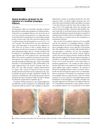
September 2004 in “Journal of The European Academy of Dermatology and Venereology” Bimatoprost can cause longer, thicker, darker eyelashes and eyebrows.