 March 2024 in “Plant physiology”
 This study found that the transcription factor GLABRA 2 inhibits ethylene production, regulating root hair growth in Arabidopsis under nutrient deficiency conditions.
2 citations
,
May 2023 in “Indian Journal of Dermatology Venereology and Leprology” A new genetic mutation in the CAST gene may link PLACK syndrome to alopecia areata.
January 2004 in “Pharmaceutical biotechnology” This study found that finasteride effectively inhibits the enzymatic activity of human steroid 5 alpha reductase type II in newly established CHO cell lines.
10 citations
,
March 2023 in “Journal of Chemistry” This study identified ten novel compounds that may effectively target steroid 5 alpha-reductase 2 (5αR-2) for potential treatment of benign prostate hyperplasia, exhibiting comparable binding energies to existing drugs like finasteride and dutasteride.
 61 citations
,
May 2016 in “Scientific reports”
61 citations
,
May 2016 in “Scientific reports” This study found that IMT-P8, a novel cell-penetrating peptide, effectively facilitated the dermal delivery of proteins and peptides in mouse skin and cell lines, suggesting potential for topical applications in cosmetics and skin diseases.
 77 citations
,
January 1980 in “Carcinogenesis”
77 citations
,
January 1980 in “Carcinogenesis” This study found that TPA was significantly more effective than mezerein in inducing dark basal keratinocytes in mouse skin, which may be important in early tumor promotion stages.
September 2026 in “Aging Cell” This study found that knocking down SFRP2 in an AGA model improved hair regeneration and reduced cellular dysfunction, suggesting that targeting the SFRP2-FSTL1 axis could be a promising therapeutic strategy for androgenetic alopecia.
 June 2023 in “Italian Journal of Medicine”
 This study found that urotensin II promoted proliferation and VEGF secretion in rat dermal papilla cells by activating the Wnt-β-catenin signaling pathway, with the effect being reversible by a Wnt inhibitor.
 May 2023 in “Elsevier eBooks”
 This study found that platelet-rich plasma may be an effective adjuvant treatment for androgenetic alopecia, especially when combined with antiandrogenetic medications and topical minoxidil, though factors like patient age and family history could influence outcomes.
This study found that the simultaneous inactivation of pRb and p53 genes in mouse epidermis accelerated aggressive squamous cell carcinoma development via activation of the epidermal growth factor receptor/Akt pathway.
The researchers reported that PEG-FGF2 conjugates, particularly Compound 6, significantly enhanced stability, proliferation, migration, and wound healing activity compared to native FGF2, despite some reduction in bioactivity near crucial binding domains.
7 citations
,
April 2019 in “Animal biotechnology” This study observed that POMP is strongly expressed in the root sheath hair follicles of Liaoning Cashmere goats and its expression can be regulated by certain factors, which may influence cashmere growth.
 May 2017 in “Journal of The American Academy of Dermatology”
 PLAU and SerpinB2 affect cell death differently in various forms of leprosy and could be targets for new treatments.
 April 2023 in “The journal of investigative dermatology/Journal of investigative dermatology”
 This study suggests that targeting mitophagy to regulate mitochondrial dysfunction and inhibit inflammasome activation could offer a novel therapeutic approach for alopecia areata.
 December 2023 in “bioRxiv (Cold Spring Harbor Laboratory)”
 This study found that AP-2α and AP-2β transcription factors are crucial for maintaining adult skin homeostasis, with their inactivation in keratinocytes leading to impaired differentiation, hair abnormalities, and inflammation, highlighting their key regulatory roles.

In this study, researchers optimized the soft drug AR antagonist 14-P1 to create candidate 39, which demonstrated effective AR antagonism and safety in a hair-growth mouse model, showing similar efficacy to pyrilutamide but with quicker onset and a lower risk of systemic toxicity.
 6 citations
,
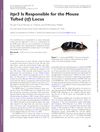
October 2012 in “Journal of Heredity”
6 citations
,
October 2012 in “Journal of Heredity” This study identified the Itpr3 gene as responsible for the tufted hair loss phenotype in the BTBR mouse strain.
26 citations
,
September 2009 in “Clinical genetics” This study identified four novel and one recurrent mutation in the AIRE gene among Arab families with APS1, suggesting these contribute to the disorder.
 20 citations
,
May 2013 in “International Journal of Molecular Medicine”
20 citations
,
May 2013 in “International Journal of Molecular Medicine” This study identified a novel missense MAFB variant in a family with some unaffected members, suggesting incomplete penetrance and the potential influence of modifier genes, epigenetic mechanisms, or environmental factors on MCTO phenotype.
16 citations
,
April 2021 in “Plant Signaling & Behavior” This study found that in Arabidopsis, the MYB30-EIN3 module plays a role in adapting root hair development to phosphate deficiency, potentially enhancing phosphate uptake from soil.
 4 citations
,
May 2011 in “Movement Disorders”
4 citations
,
May 2011 in “Movement Disorders” A woman's unique dementia was misdiagnosed, a genetic mutation increases Parkinson's risk with age, and finasteride may help with Tourette syndrome.
 June 2021 in “bioRxiv (Cold Spring Harbor Laboratory)”
 This study discovered that the gene Tfap2b identifies a melanocyte stem cell population in zebrafish, essential for regenerating melanocytes with multi-fate potential into adult pigment cells.

This study found that inhibiting AP-1 transcription factors in mice causes squamous tumors to transform into sebaceous tumors and regulates tumor cell lineage.
 136 citations
,
June 2006 in “Journal of Dermatological Science”
136 citations
,
June 2006 in “Journal of Dermatological Science” This study found that injecting PDGF-AA and -BB into mouse skin immediately triggered the hair growth cycle's anagen phase, suggesting potential treatment options for certain types of alopecia.
8 citations
,
September 2013 in “Molecular carcinogenesis” This study found that rapamycin effectively inhibits TPA-induced keratinocyte proliferation and skin tumor promotion by targeting mTORC1 signaling in both wild-type and transgenic mice.
 105 citations
,
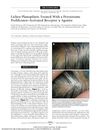
December 2009 in “Archives of dermatology”
105 citations
,
December 2009 in “Archives of dermatology” This overview discusses primary cicatricial alopecias, focusing on lichen planopilaris, and highlights the challenges in treatment and the progressive nature of hair loss despite symptom management, without providing new clinical results.
 72 citations
,
January 2003 in “American Journal of Pathology”
72 citations
,
January 2003 in “American Journal of Pathology” This study found that the co-activator CBP enhances the agonistic action of hydroxyflutamide on androgen receptors, suggesting a mechanism for therapy resistance in prostate cancer.
 March 1998 in “Journal of dermatological science”
 Diphencyprone initially increases mouse hair growth, then slows it, possibly due to changes in specific protein levels.
 37 citations
,
January 2002 in “British journal of dermatology/British journal of dermatology, Supplement”
37 citations
,
January 2002 in “British journal of dermatology/British journal of dermatology, Supplement” This study found that procyanidin B-2 may promote hair growth by reducing expression and inhibiting translocation of PKC isozymes in murine hair epithelial cells.
 26 citations
,
August 2019 in “Stem Cell Research & Therapy”
26 citations
,
August 2019 in “Stem Cell Research & Therapy” This study found that PBX1 enhances the proliferation and reprogramming of hair follicle mesenchymal stem cells by activating the AKT/GSK3β signaling pathway, promoting NANOG expression, and inhibiting apoptosis.