 March 2024 in “International Research Journal Of Modernization In Engineering Technology And Science”
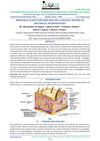
 This review highlights the beneficial effects of certain herbal drugs in treating skin diseases, such as their healing, antifungal, antiviral, antibacterial, anti-inflammatory, and antitumor-promoting activities, emphasizing recent technical advancements in the field over the past 17 years.
 March 2024 in “Tropical Journal of Natural Product Research”
 This study surveyed the use and potential toxicity of medicinal plants in the Fez-Meknes region of Morocco, documenting 59 toxic species used primarily for cosmetic purposes and minor illnesses, and identified hair loss and rheumatism as having the highest informant agreement ratios.
 January 2024 in “AIP conference proceedings”
 This review reports that medicinal plant-based hydrogel films may enhance diabetic wound healing by increasing growth factor expression involved in tissue repair and regeneration, suggesting their potential in future diabetic wound dressing development.
January 2024 in “Research Portal Denmark” This thesis reveals that tenuazonic acid inhibits plant plasma membrane H+-ATPase, suggesting its potential as a herbicide due to its impact on root elongation and cell viability in Arabidopsis thaliana.
 November 2023 in “Research journal of pharmacy and technology”
 This review highlights the challenges and limitations of synthetic treatments for alopecia areata and notes a growing interest in botanical and isolated active ingredient remedies due to uncertainties in the effectiveness and reliability of existing treatments.
 February 2023 in “Aesthetic Cosmetology and Medicine”
 This review examines the health-promoting effects of medicinal plants used in nutricosmetics, highlighting their beneficial impact on skin physiology, but offers no new clinical results.
 March 2022 in “GSC Advanced Research and Reviews”
 This article reviews traditional Indonesian plant ingredients for promoting hair growth but reports no new clinical findings, emphasizing the need for improved research methods to validate their efficacy.
 March 2022 in “Zenodo (CERN European Organization for Nuclear Research)”
 This review discusses the potential of Indonesian plants for hair growth promotion and highlights the need for more rigorous research to validate their effectiveness for treating hair loss.
 December 2021 in “International journal of minor fruits, medicinal and aromatic plants”
 This review identifies common medicinal plant species in Sri Lankan home gardens and discusses their traditional Ayurvedic uses, but it reports no new clinical results.
This study found that the Arabidopsis cation chloride cotransporter CCC1 is critical for regulating pH in the trans-Golgi network/early endosome, impacting plant growth and stress response.
 July 2019 in “Acta horticulturae”
 This study suggests that horticultural therapy may help cancer patients identify their experience of hair loss and regrowth with personal growth and emotional healing.
 January 2019 in “International Journal of Pharmacognosy and Clinical Research”
 This review presents studies on plants used in Mexico to treat alopecia and reports no new clinical results.
 January 2015 in “Farmatsevtychnyĭ zhurnal”
 This research discusses the development of a complex tincture for telogen effluvium using nettle, sage, and chestnut leaves, but provides no new clinical results.
 12 citations
,
June 2011 in “Han-guk sikpum gwahakoeji/Han'gug sigpum gwahag hoeji/Han-guk sikpum gwahak hoeji”
12 citations
,
June 2011 in “Han-guk sikpum gwahakoeji/Han'gug sigpum gwahag hoeji/Han-guk sikpum gwahak hoeji” This study found that MBN, an herbal extract fermented by Lactobacillus plantarum, promoted hair growth and increased related gene expression in C57BL/6 mice.
 10 citations
,
April 2019 in “Journal of Analytical Science and Technology”
10 citations
,
April 2019 in “Journal of Analytical Science and Technology” In this study, hydrolysates of lactic acid bacteria were found to enhance hair growth in C57BL/6 male mice more effectively than 5% minoxidil.
7 citations
,
January 2022 in “Brazilian Journal of Biology” This study found that a shampoo formulation using mangabeira leaf extract without sodium lauryl sulfate showed promising antioxidant activity and improved foam quality.
 7 citations
,
April 2020 in “Curēus”
7 citations
,
April 2020 in “Curēus” In this pilot study, both microneedling and CO2 laser combined with hair transplantation and nbUVB demonstrated potential for inducing repigmentation in refractory palmar-plantar vitiligo, though further research is needed to ascertain their relative efficacy.
3 citations
,
January 2023 in “Journal of Hunan University Natural Sciences” In this study, researchers developed a natural shampoo using traditional plant extracts and reported that its physicochemical properties and antioxidant activity were comparable to marketed shampoos. Further research is needed to confirm its performance and quality.
3 citations
,
December 2015 in “Asian journal of dermatology” This study reports that applying Natural Plant Extracts containing sweet flag significantly reduced hair loss and increased hair density and thickness in people with alopecia over 10 months.
3 citations
,
July 2015 in “International journal of pharmacology” In this study, Natural Plant Extracts (NPE) promoted hair growth in mice by stimulating anagen growth and upregulating relevant gene expression, compared to controls with saline.
3 citations
,
June 2012 in “Korean Journal of Human Ecology” This study found that a supplement containing medicinal plant extracts, amino acids, and vitamins decreased hair loss and increased hair thickness over three months, without significant side effects, in participants with hair loss concerns.
 1 citations
,
October 2017
1 citations
,
October 2017 This study found that topical gel containing ethanolic extract of Peperomia pellucida increased hair length in rabbits, but did not significantly impact hair mass compared to control treatments.
April 2026 in “The Plant Journal” This study demonstrated that MYB83 plays a crucial negative role in ethylene-mediated root hair growth in Arabidopsis by directly inhibiting EIN3, and that manipulating the MYB83-EIN3 interaction is key to root hair development and plant tolerance to nutrient stress conditions.
 March 2025 in “Research Square (Research Square)”
 This study explored the potential of the lysate and lipoteichoic acid from Lactiplantibacillus plantarum APsulloc 331261 to improve scalp seborrheic dermatitis by modulating inflammatory and lipogenesis pathways in vitro, suggesting potential as a natural treatment option.
 May 2024 in “Journal of Agricultural and Food Chemistry”
 In a study using mice, researchers observed that Cacumen platycladi fermented with Lactiplantibacillus plantarum CCFM1348—both as postbiotics and synbiotics—promoted hair growth, potentially by engaging the Wnt/β-catenin signaling pathway and enhancing growth factor expression.

This study found that in individuals with alopecia, scalp microbial diversity decreased while Cutibacterium acnes abundance increased, and that treating Cutibacterium acnes-infected mice with Lactobacillus plantarum L30 improved hair follicle health and hair growth, suggesting a potential new treatment pathway for alopecia.

In this study, researchers found that while applying a lotion containing Lactiplantibacillus plantarum subsp. plantarum N793 did not improve hair density overall compared to placebo, it was effective in improving hair density among individuals with relatively mild hair thinning.
 January 2023 in “Brazilian Journals Editora eBooks”
 The document concludes that Passiflora incarnata may help with anxiety, healthcare workers need mental support, common bacteria cause hospital UTIs, telehealth for heart failure needs research, kids' screen time has increased, pregnant teens are mostly okay with their body image, diagnosing post-surgery tuberculosis is hard, older and severely ill people are more likely to have long COVID symptoms, and psychiatrists should be part of pain management teams.
 December 2022 in “한국 미생물 생명공학회지”
 TS-SCLF from fermented Schisandra chinensis may promote hair growth and improve hair quality.
 November 2022 in “Nihon Nyuusankin Gakkaishi/Nihon Nyūsankin Gakkaishi”
 In a non-blinded study with 12 Japanese participants, applying a lotion containing Lactiplantibacillus plantarum N793 to the scalp for 24 weeks significantly increased hair density and reduced hair loss, with participants reporting improvements in hair thickness and volume, and the treatment deemed safe.