 November 2017 in “Asian journal of pharmaceutical and clinical research”
 This study predicted that 6-hydroxy genistein, coreximine, and scoulerine from Dadap leaves may act as anti-alopecia agents by interacting with JAK2, but further in-vivo testing is needed.
July 2025 in “Carbohydrate Polymers” This study investigated the extracellular polysaccharides from the edible green alga Parachlorella sp. BX1.5, finding that they have potential applications in cosmetics and health products due to their stability, antioxidant properties, and effects on hair growth in mice.
 March 2026 in “SHILAP Revista de lepidopterología”
 This review found that cosmeceuticals blend cosmetic and biological skin effects, offering promise in mild dermatoses and photoaging prevention, yet face challenges like regulatory gaps and the need for standardized definitions and pharmacovigilance systems.
4 citations
,
June 2025 in “Molecules” This review evaluates traditional uses, phytochemical profiles, and pharmacological activities of Mediterranean Erica species, revealing the wide range of bioactive compounds and highlighting their antioxidant, anti-inflammatory, and antimicrobial activities. Further studies are suggested to fully understand their medicinal potential.
69 citations
,
February 2019 in “Industrial Crops and Products” Zizyphus lotus leaves and fruits have strong antidiabetic effects and potential skin benefits.
This literature review suggests that herbal extracts show promise as antiandrogenic agents for androgen-related conditions, potentially offering a natural alternative with fewer side effects than synthetic medications.
 2 citations
,
September 2022 in “Advances in Environmental Biology”
2 citations
,
September 2022 in “Advances in Environmental Biology” This study found that ethanolic extracts of Avicennia marina leaves showed potential antibacterial activity against Vancomycin-Resistant Enterococcus faecium but were less effective than standard antibiotics.
 January 2026 in “Frontiers in Pharmacology”
 This review highlights the potential of wedelolactone from the plant Wedelia Chinensis, summarizing its reported pharmacological effects, including anti-inflammatory, antiviral, antibacterial, antitumor, anti-osteoporosis activities, and organ protection based on existing in vitro and in vivo research findings.

This review article highlights the potential of various herbal treatments, such as Saw Palmetto and Ginseng, in promoting hair growth and managing alopecia, while emphasizing the necessity for more rigorous clinical trials.
 2 citations
,
January 2023 in “Pharmaceuticals”
2 citations
,
January 2023 in “Pharmaceuticals” This review discusses factors affecting hair health, types of alopecia, and the potential of phytochemicals in managing hair loss but reports no new clinical results; it highlights the need for further studies.
 4 citations
,
August 2023 in “Italian Journal of Food Science”
4 citations
,
August 2023 in “Italian Journal of Food Science” This study found that pretreatment combining maceration with press-shear force and moist heat significantly increased the total phenolic and flavonoid contents in galactagogue herbs like banana inflorescences and Thai ginger.
 3 citations
,
July 2018 in “Biomedicine & pharmacotherapy”
3 citations
,
July 2018 in “Biomedicine & pharmacotherapy” This study suggests that paeoniflorin's protective effects on brain astrocytes may be mediated by TSPO and neurosteroids biosynthesis.
 10 citations
,
August 2024 in “Clinical Cosmetic and Investigational Dermatology”
10 citations
,
August 2024 in “Clinical Cosmetic and Investigational Dermatology” This review reports that natural compounds show promise in slowing skin photoaging by targeting cellular pathways in keratinocytes and fibroblasts. However, comprehensive clinical studies are needed to verify their efficacy and safety.
This source provides an overview of quercetin's therapeutic capabilities in skin wound healing, highlighting its antioxidant and anti-inflammatory benefits but noting its poor solubility limits skin penetration; various delivery strategies have been explored to enhance its effectiveness.
November 2025 in “Plant Science Today” This review explores the potential benefits of natural plant-based products for skin anti-aging, assessing effects on wrinkles, oxidative stress, pigmentation, and hydration, while also underscoring the importance of lifestyle factors such as diet, exercise, and sleep in skin health maintenance.
 2 citations
,
January 2023 in “International Journal of Dermatology Research”
2 citations
,
January 2023 in “International Journal of Dermatology Research” This study reported that C. procera leaf extracts showed antifungal activity against several dermatophytes, with ethanol extracts demonstrating slightly greater efficacy than aqueous extracts.
 May 2025 in “Frontiers in Bioinformatics”
 This study used computational methods to identify six molecules, with jamogenin being particularly promising, that effectively bind to and inhibit the enzyme linked to male pattern hair loss, suggesting these compounds could be explored further for hair growth potential.
 June 2021 in “International Journal of Ayurvedic Medicine”
 This study found that humulen, a phytoconstituent of Cyperus Rotundus Linn., showed the highest binding affinity in molecular docking with the 5 α reductase enzyme, suggesting potential anti-androgenic effects for hirsutism treatment.
3 citations
,
February 2025 in “Metabolites” In this study, researchers identified specific Se6OMT enzymes in *S. epigaea* involved in the cepharanthine biosynthetic pathway, providing insights into their substrate promiscuity and essential genetic components for metabolic engineering and synthetic biology applications of cepharanthine production.
 54 citations
,
October 2002 in “Journal of controlled release”
54 citations
,
October 2002 in “Journal of controlled release” This study found that increasing a drug's lipophilicity and adding ethanol to the donor phase can enhance its delivery to the hair follicle, although the precise transport mechanism remains unclear.
1 citations
,
August 2024 in “Journal of Pharmacy & Pharmaceutical Sciences” This study found that forming inclusion complexes of DPCP with HPβCD using the 3D ground mixture method enhances its anti-inflammatory activity at lower doses compared to complexes with β-CD.
83 citations
,
August 2020 in “Resources” This review highlights the potential of marine macroalgae as a largely untapped resource for developing new active ingredients in the cosmetic industry, emphasizing their role in supporting circular economy models by utilizing waste from other industrial sectors.
11 citations
,
September 2022 in “World Journal of Advanced Pharmaceutical and Medical Research” This review examines the chemical constituents and pharmacological effects of Nicotiana tabacum but reports no new experimental findings, emphasizing traditional uses and known bioactivities.
 April 2026 in “Nanomaterials”
 This perspective study suggests that plant-derived extracellular vesicles could advance the use of Ayurvedic medicinal plants in nanomedicine by enhancing their therapeutic potential and guiding future research.
January 2026 in “Eng—Advances in Engineering” This study developed a biodegradable nonwoven textile using a starch-based biopolymer and fruit extracts, resulting in materials that are stronger, more hydrophilic, and capable of releasing beneficial compounds over 72 hours, positioning them for potential use in medical, healthcare, and cosmetic applications.
 May 2017 in “bioRxiv (Cold Spring Harbor Laboratory)”
 This study found that the peach gene CTG134, involved in auxin-ethylene interactions, plays a role in hormonal regulation during root hair formation in Arabidopsis and tobacco.
25 citations
,
December 2022 in “Indonesian Journal of Science and Technology” This study found that ethyl acetate extract from peanut stems demonstrated very strong antioxidant properties and moderate cytotoxic activity against MCF-7 cell lines in in-vitro and in-silico settings.
December 2023 in “FUDMA Journal of Sciences” In this study, researchers analyzed Vachellia nilotica and Senegalia ataxacantha from Katsina state, Nigeria, identifying various bioactive compounds in their shoots and suggesting their potential as raw materials for pharmaceutical antifungal therapies.
4 citations
,
December 2024 in “International Journal of Molecular Sciences” This study found that extracts from Hom Thong banana peels, rich in phenolic compounds, may inhibit melanin production in human and mouse melanoma cells, showing potential as anti-melanogenic agents comparable to standard treatments like arbutin and kojic acid.
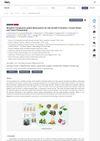
This review highlights various plant-based and herbal treatments that reportedly help prevent hair loss and encourage hair growth. It also explores the molecular mechanisms, identified plant compounds, recent technologies such as nanoarchitectonics, and patents related to hair growth promotion.