January 2013 in “대한피부과학회지” This article presents a rare case of cicatricial alopecia in a 59-year-old woman after using the epidermal growth factor receptor inhibitor gefitinib.
March 2026 in “Anais Brasileiros de Dermatologia” Lichen planopilaris and frontal fibrosing alopecia are likely distinct diseases with different tissue involvement.
 9 citations
,
September 2016 in “Dermatologic Surgery”
9 citations
,
September 2016 in “Dermatologic Surgery” This study identified a new subtype of lichen planopilaris that mimics androgenetic alopecia, selectively affecting vellus hair follicles and presenting unique histopathological features.
 1 citations
,
July 2009 in “Journal of dermatology”
1 citations
,
July 2009 in “Journal of dermatology” This case report describes a 29-year-old Japanese man with follicular mucinosis, suggesting nestin-positive, multipotent hair follicle stem cells may be involved in reticular epithelial degeneration of the outer root sheath.
 3 citations
,
February 2020 in “Dermatologic Therapy”
3 citations
,
February 2020 in “Dermatologic Therapy” This article is a letter to the editor about attempts to target microinflammation in androgenetic alopecia and includes no new clinical results.
 3 citations
,
March 2014 in “Annals of Hepatology”
3 citations
,
March 2014 in “Annals of Hepatology” This case report describes irreversible alopecia universalis following discontinuation of Peg-IFN/RBV treatment for chronic hepatitis C, highlighting potential autoimmune side effects of interferon-based therapies.
October 2025 in “Clinical and Experimental Dermatology” Among patients with biopsy-proven FAPD in specialized hair clinics, this study found the condition is common in females around 52.5 years old, with treatment generally stabilizing or slightly improving hair loss, despite challenges in differentiating FAPD from androgenetic alopecia.
4 citations
,
September 2011 in “Journal of the American Academy of Dermatology” This case report describes a 46-year-old man who developed folliculotropic mycosis fungoides, a form of post-transplant lymphoproliferative disorder, following renal transplantation.
7 citations
,
October 1988 in “Clinics in Dermatology” Minoxidil may help hair regrowth in alopecia areata by affecting T-cells.
 16 citations
,
February 2010 in “Journal of the European Academy of Dermatology and Venereology”
16 citations
,
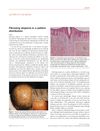
February 2010 in “Journal of the European Academy of Dermatology and Venereology” This article is a letter to the editor about fibrosing alopecia in a pattern distribution and reports no new research findings.
 March 2019 in “Nasza Dermatologia Online”
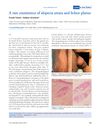
 A man had both alopecia areata and lichen planus, which is uncommon.
 9 citations
,
July 2020 in “Journal of Dermatology”
9 citations
,
July 2020 in “Journal of Dermatology” This study found that diffuse and pseudo-fringe sign patterns are common in Asian patients with frontal fibrosing alopecia, and that treatments combining antiandrogens or antimalarials with topical therapy are effective.
14 citations
,
August 2004 in “Veterinary Dermatology” In this study, a thoroughbred mare exhibited a unique case of alopecia areata with lymphocytic infiltration at both the bulbar and isthmic levels of hair follicles.
 September 2023 in “International Journal of Dermatology”
 In this study, FAPD was characterized in a Chinese population by perifollicular mast cell infiltration, suggesting young individuals may be at higher risk than previously thought.
December 2023 in “Minia Journal of Medical Research” In this study, researchers found that transverse sections of alopecia areata lesions showed significantly more terminal hair follicles with perifollicular lymphocytic infiltrate compared to longitudinal sections, and this immune infiltration positively correlated with the positive hair pull test in patients.
 7 citations
,
January 2009 in “Immunological investigations”
7 citations
,
January 2009 in “Immunological investigations” This report describes a rare case of alopecia areata universalis developing in a child during the recovery phase of phenobarbital-induced anti-convulsant hypersensitivity syndrome, which suggests a mechanism involving lymphocyte-related immune responses.
September 2011 in “Chinese Journal of Dermatology” This case report describes a 69-year-old man diagnosed with folliculotropic mycosis fungoides after initially being treated for folliculitis, highlighting emerging skin lesions despite subsequent photochemotherapy and acitretin treatment.
 33 citations
,
July 1992 in “Journal of Investigative Dermatology”
33 citations
,
July 1992 in “Journal of Investigative Dermatology” Minoxidil doesn't affect perifollicular lymphoid infiltration in alopecia areata patients.
 May 2015 in “Journal of The American Academy of Dermatology”
 Some people may temporarily lose more hair in certain areas after a hair transplant.
 22 citations
,
June 2013 in “Australasian Journal of Dermatology”
22 citations
,
June 2013 in “Australasian Journal of Dermatology” Early stage bald spots are linked to skin inflammation and damage to the upper part of the hair follicle.
 2 citations
,
January 2020 in “American Journal of Clinical Research and Reviews”
2 citations
,
January 2020 in “American Journal of Clinical Research and Reviews” This study suggests that hair follicles may be the primary target in the onset of various skin diseases, potentially spreading to affect the surrounding epidermis.
 34 citations
,
October 2017 in “Archivos Argentinos De Pediatria”
34 citations
,
October 2017 in “Archivos Argentinos De Pediatria” This review discusses the clinical characteristics, diagnosis, and treatment of alopecia areata, exploring potential environmental, immunological, and genetic factors involved in its development, but reports no new research findings.
 17 citations
,
July 1994 in “Journal of Dermatological Science”
17 citations
,
July 1994 in “Journal of Dermatological Science” This article reviews the genetic and potential environmental factors in alopecia areata's pathogenesis and suggests a polygenic model but reports no new clinical findings.
 May 2023 in “Tạp chí Da liễu học Việt Nam”
 This study involving Vietnamese patients with alopecia areata found that histopathological examination is crucial for diagnosis, noting diverse features including peribulbar lymphocytic infiltration and varying hair follicle characteristics across disease stages, with eosinophils and necrosis observed in some cases.
 1 citations
,
October 2013 in “The Journal of Dermatology”
1 citations
,
October 2013 in “The Journal of Dermatology” This letter to the editor discusses the immune response related to hair loss in a case of atypical drug-induced hypersensitivity syndrome but reports no new research findings.
 5 citations
,
July 2013 in “Our Dermatology Online”
5 citations
,
July 2013 in “Our Dermatology Online” This study found that lichen planopilaris was the most common variant of cicatricial alopecia among patients, with perifollicular fibrosis being a prevalent histopathological feature.
 23 citations
,
June 2003 in “Journal of Investigative Dermatology Symposium Proceedings”
23 citations
,
June 2003 in “Journal of Investigative Dermatology Symposium Proceedings” This review discusses rodent models of alopecia areata and suggests they are crucial for understanding the autoimmune mechanisms and potential treatments but reports no new clinical results.
 7 citations
,
January 2012 in “International Journal of Trichology”
7 citations
,
January 2012 in “International Journal of Trichology” This article highlights differences in childhood alopecia areata compared to adult cases but reports no new clinical findings.
 April 2012 in “Informa Healthcare eBooks”
 Syphilitic alopecia is a rare hair loss condition in secondary syphilis that looks similar to another condition but can be diagnosed with specific tests and responds to antibiotics.
 20 citations
,
November 2005 in “Journal of Investigative Dermatology Symposium Proceedings”
20 citations
,
November 2005 in “Journal of Investigative Dermatology Symposium Proceedings” This study found that IFN-γ plays a critical role in T cell activation and the pathogenesis of alopecia areata in C3H/HeJ mice.