 December 2021 in “Consilium Medicum”
 This study found that treating diffuse alopecia associated with prior COVID-19 infection using a combination of Selencin (homeopathic drug) and Selencin Peptide Active (peptide lotion) significantly reduced hair loss and improved hair structure and volume in 34 patients over two months.
 February 2020 in “Benha Journal of Applied Sciences”
 This study suggests that high nesfatin-1 levels and insulin resistance are linked to an increased risk and severity of acne vulgaris.
This study suggests that keratin peptide signatures in human hair shafts may potentially be used to distinguish gender and ethnicity, although further validation with larger samples is needed.
This study suggests that keratin peptide signatures from human hair shafts could potentially distinguish gender and ethnicity, though confirmation in larger studies is needed.
This study demonstrated potential in using specific keratin peptide profiles from human hair shafts to distinguish gender and ethnicity, suggesting it could enhance forensic investigations, though larger studies are needed.
 April 2019 in “The journal of investigative dermatology/Journal of investigative dermatology”
 The researchers reported that DHT may reduce the inflammatory responses induced by C. acnes in androgen-sensitive human sebocyte cells, suggesting a potential link between androgens and infection in sebaceous disorders.
 September 2018 in “University of the Arts London Research Online (University of the Arts London)”
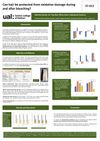
 This study assessed three materials—L-arginine, hydrolysed keratin, and cystine-silanol copolymer—ex vivo for their potential to reduce undesirable effects of hair bleaching, such as damage to hair proteins.
 April 2017 in “Journal of Investigative Dermatology”
 In this study, deep phenotyping of 68 patients with XPD gene defects successfully separated individuals by clinical diagnosis and survival status, potentially improving diagnosis and prognosis for xeroderma pigmentosum and trichothiodystrophy.
 July 2016 in “The journal of investigative dermatology/Journal of investigative dermatology”
 This study concluded that a new model of reconstructed human epidermis using keratinocytes from plucked hair follicles offers a less-invasive alternative to conventional skin-derived models for skin research.
 July 2016 in “Journal of Investigative Dermatology”
 R-spondin2 may help treat hair loss, gene differences could explain baldness, a peptide's regulation is linked to psoriasis, B-defensin gene copies may affect a skin condition's risk and severity, and potential markers and targets for alopecia areata were identified.
November 2007 in “Cancer Epidemiology and Prevention Biomarkers” In this study, PSA levels were significantly lower among African-American men with higher C-peptide levels and Caucasian men with higher HbA1c levels, suggesting a link between metabolic markers and prostate cancer detection.
 July 2002 in “Australasian Journal of Dermatology”
 Maintaining anticoagulation is crucial for patients with antiphospholipid syndrome.
November 2022 in “Annals of Translational Medicine” This study identified four hub genes that are closely linked to the causative factors of androgenetic alopecia, suggesting potential diagnostic and therapeutic targets.
 121 citations
,
May 2009 in “Journal of Ethnopharmacology”
121 citations
,
May 2009 in “Journal of Ethnopharmacology” This study found that the methanol extract of Eclipta alba showed dose-dependent hair growth promoting activity in pigmented C57/BL6 mice by influencing the transition from the telogen to anagen phase.
 22 citations
,
January 2018 in “Experimental Dermatology”
22 citations
,
January 2018 in “Experimental Dermatology” This article reviews insights into the pathogenesis of primary cicatricial alopecias, such as lichen planopilaris, provided by emerging technologies, but it does not report new clinical results.
 16 citations
,
August 2014 in “Colloids and surfaces. B, Biointerfaces”
16 citations
,
August 2014 in “Colloids and surfaces. B, Biointerfaces” This study found that hydrophobic lipid-coated silica nanoparticles penetrated deeper into human stratum corneum compared to their hydrophilic counterparts, highlighting the influence of surface polarity on skin penetration.
11 citations
,
October 2024 in “International Journal of Molecular Sciences” This study observed that the cutaneous microbiome in psoriasis patients differs both qualitatively and quantitatively from healthy individuals, suggesting a potential link to psoriasis pathogenesis.
 11 citations
,
February 2021 in “Biomedicines”
11 citations
,
February 2021 in “Biomedicines” This review discusses the role of hair follicle bacterial colonization in immune responses and the pathogenesis of alopecia but reports no new clinical results.
 8 citations
,
May 2019 in “Journal of Stem Cells & Regenerative Medicine”
8 citations
,
May 2019 in “Journal of Stem Cells & Regenerative Medicine” This study found that mesenchymal stem cells derived from dental pulp and adipose tissue have distinct gene expression signatures that suggest potential target diseases for clinical applications.
 4 citations
,
January 2015 in “Journal of microbial & biochemical technology”
4 citations
,
January 2015 in “Journal of microbial & biochemical technology” In this study, the researchers observed that biotin administration in biotin-deficient children with alopecia eliminated certain membrane proteins from their blood, suggesting that biotin might regulate these proteins' expression.
 1 citations
,
April 2023 in “bioRxiv (Cold Spring Harbor Laboratory)”
1 citations
,
April 2023 in “bioRxiv (Cold Spring Harbor Laboratory)” This study is the first to document alopecia in Guadalupe fur seals in the Northeast Pacific Ocean, finding that it may result from nutritional stress due to higher sea surface temperatures.
 1 citations
,
November 1976 in “Archives of Dermatology”
1 citations
,
November 1976 in “Archives of Dermatology” This article discusses the role of clinical observation and microscopic correlation in American dermatology training and reports no new clinical results.
January 2026 in “Saudi Journal of Internal Medicine” This narrative review suggests that while corticosteroids and Janus kinase inhibitors may be effective for treating ophiasis-pattern alopecia areata in both adults and children, the limited age-specific evidence underscores the need for further research to confirm their efficacy and safety across age groups.
 November 2025 in “Repositorio Comunidad Politecnico Grancolombiano”
 This research focuses on Milagros's strategy to internationalize by exporting their intensive repair hair mask to Mexico, France, and the United States, examining each market's potential and challenges in the global hair care sector.
 July 2025 in “Scientific Reports”
 This study found that dermal papilla cell-conditioned medium can protect against UV-induced skin aging in a mouse model by modulating ferroptosis pathways, highlighting its potential for treating oxidative stress-related skin conditions.
 June 2025 in “Microorganisms”
 In this study, researchers observed significant differences in hair follicle microbiome diversity and microbial composition between hair loss and healthy groups, uncovering specific patterns and functional changes associated with female pattern hair loss, which may aid future targeted approaches for androgenetic alopecia.
In a controlled study, researchers observed that lambs exposed to colder temperatures had increased wool growth, thicker skin, altered physiological traits, and activated specific molecular pathways, highlighting potential targets for enhancing cold tolerance, welfare, and productivity in sheep breeds.
 February 2025 in “BMC Genomics”
 This study found that in cashmere goats, melatonin treatments enhanced cashmere growth by stimulating secondary hair follicles, increasing follicle density, and improving yield and quality, highlighting key genes and metabolic pathways involved in this process.
March 2026 in “International Journal of Cosmetic Science” This research reports that KCV and its palmitoylated derivatives show strong effectiveness in strengthening hair proteins, indicating their potential for use in advanced hair care products.
 262 citations
,
May 2017 in “Nanomedicine”
262 citations
,
May 2017 in “Nanomedicine” This review examines recent advancements in electrospun nanofibers for wound healing applications, but reports no new experimental results, highlighting their potential in sutures, dressings, and skin regeneration.