53 citations
,
February 2015 in “Journal of Investigative Dermatology” This study found that inactivating CerS4 in mice led to hair follicle stem cell exhaustion and hair loss, indicating its role in regulating hair regeneration through ceramide composition and signaling pathways.
48 citations
,
August 2001 in “Experimental dermatology” This study developed a rapid, cost-effective three-dimensional skin equivalent model using human dermal fibroblasts, collagen, and hair follicles, which closely resembles natural human skin and can be used for autologous transplantation.
36 citations
,
July 1996 in “The journal of investigative dermatology/Journal of investigative dermatology” This research reports a new autosomal recessive mutation in mice, 'lanceolate hair', causing generalized alopecia and hair shaft abnormalities, which may serve as a model for Netherton's syndrome in humans.
 31 citations
,
April 2019 in “Cell reports”
31 citations
,
April 2019 in “Cell reports” This study found that human iPSC-derived melanocytes from vitiligo patients successfully integrated into mouse hair follicles and epidermis, demonstrating potential for personalized therapy for depigmentation.
30 citations
,
January 1999 in “Journal of Cutaneous Pathology” This study suggests that spiny keratoderma may be an ectopic hair formation on palms and soles, based on keratinization patterns observed using antikeratin antibodies and electron microscopy.
14 citations
,
July 2019 in “Journal of Investigative Dermatology” In this study, targeted inactivation of the integrin-linked kinase gene in melanoblasts led to defects in cell migration, proliferation, and ability to populate the skin, implicating an integrin-linked kinase-Rac1 connection in melanocyte function.
 14 citations
,
June 2001 in “Endocrinology”
14 citations
,
June 2001 in “Endocrinology” This study found that disrupting the PRL gene in mice alters the timing of hair cycling events, causing earlier molts and changes in hair characteristics, particularly affecting female mice more significantly.
7 citations
,
January 1990 in “Archives of Dermatological Research” Syringomas likely start in the upper dermis and form distinct luminal structures.
7 citations
,
January 1986 in “Prenatal Diagnosis” This study demonstrated that biochemical analysis of proteins from fetal skin biopsies is feasible, potentially enhancing prenatal diagnostic capabilities for protein-related disorders.
1 citations
,
June 2022 in “Gene reports” This study analyzed gene expression in Pashmina goats and identified key biological processes and molecular functions involved in long-fibre production, suggesting potential pathways for enhancing this trait in other goat breeds.
1 citations
,
January 2021 in “Brazilian Journal of Medical and Biological Research” In this study, maternal exposure to constant light significantly altered the neonatal skin structure in rabbits, associated with reduced maternal melatonin levels.
1 citations
,
August 2013 in “The Journal of Cell Biology” This study found that Wnt secretion is important for skin homeostasis in mice, as Evi-deficient mice developed skin lesions resembling psoriasis and showed immune cell imbalance.
 July 2024 in “Journal of Investigative Dermatology”
 In this animal study, researchers found that the simultaneous deletion of ERBB2 and ERBB3 in mice results in impaired skin differentiation, inflammation, and sebaceous gland alteration, leading to skin lesions, while highlighting potential side effects in cancer therapies targeting these receptors.
 September 2023 in “Clinical anatomy”
 This study examined the subcutaneous structures in forehead creases using cadavers and observed that dense fibrous structures connecting the dermis to the frontalis muscle, as well as specific epidermal and dermal characteristics, may contribute to the formation of these creases.
 September 2019 in “Journal of Investigative Dermatology”
 This study established a model using nude mice to successfully graft human scalp skin, maintaining hair follicle growth and skin integrity for at least two months, which may aid preclinical research.
October 2018 in “Deep Blue (University of Michigan)” This study found that matrix progenitor cell differentiation in hair growth has distinct early and late phases, and generated a mouse model to explore the hair follicle's role in harlequin ichthyosis.
 April 2018 in “Journal of Investigative Dermatology”
 This study found that deleting all three Desmoglein 1 genes in mice led to impaired skin barrier function, disorganized epidermis, and postnatal lethality, highlighting Dsg1's essential role in epidermal development and maintenance.
 July 2016 in “The journal of investigative dermatology/Journal of investigative dermatology”
 This study concluded that a new model of reconstructed human epidermis using keratinocytes from plucked hair follicles offers a less-invasive alternative to conventional skin-derived models for skin research.

This study reports that follicular cells isolated from murine skin can regenerate hair follicles after being injected into nude mouse skin, with the regeneration process relying on cell interactions, recipient sites, and cell numbers.
January 2010 in “Chinese Journal of Aesthetic Medicine” The study observed increased melanin and signs of skin aging in melasma-afflicted skin, with strong CK10 expression in the upper basal epidermis, potentially linked to excessive epidermal cell differentiation and aging.
August 2007 in “Faculty Opinions – Post-Publication Peer Review of the Biomedical Literature” This review discusses the effects of mineralocorticoid receptor overexpression in mice skin, reporting no new data but highlighting its link to epidermal atrophy, early barrier formation, eye issues, and hair loss.
1 citations
,
October 2024 in “BMC Pediatrics” In this study, researchers analyzed data from 132 hospitalized kerion patients over 11 years, mostly children under 11 from rural areas, and noted a significant male predominance and frequent animal contact as potential transmission factors.
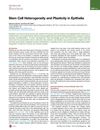 129 citations
,
May 2015 in “Cell Stem Cell”
129 citations
,
May 2015 in “Cell Stem Cell” This review discusses recent findings on the plasticity and regulation of epithelial stem cells and reports no new experimental results.
1 citations
,
June 2006 in “Experimental dermatology” In this study, researchers identified similar presence of various nicotinic and muscarinic AChRs in lesional and normal epidermis, suggesting that tobacco-delivered nicotine may exacerbate acne inversa by interacting with endogenously produced acetylcholine.
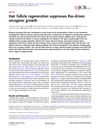 17 citations
,
September 2019 in “Journal of Cell Biology”
17 citations
,
September 2019 in “Journal of Cell Biology” This study found that despite carrying an activating Hras mutation, hair follicle stem cells integrate into normal skin without causing tumors, unlike similar mutations in the epidermis, suggesting unique tumor-suppressing mechanisms in hair follicles.
June 2006 in “Experimental dermatology” This study found that, while hair follicle bulge stem cells are important for hair follicle survival and epidermal regeneration after wounding, the epidermis maintains itself independently of these cells under normal conditions.
22 citations
,
May 2011 in “Molecular Biology of the Cell” In this study, gene inactivation in mouse hair follicle stem cells lacking ILK impaired wound healing by reducing their progeny’s contribution to the regenerating epidermis, but did not affect hair follicle regeneration.
63 citations
,
July 2006 in “British Journal of Dermatology” This study found that keratin K17 is induced in the suprabasal layer of psoriatic scalp epidermis during epidermal hyperproliferation, suggesting it is not specific to hair follicles.
 29 citations
,
July 2014 in “PloS one”
29 citations
,
July 2014 in “PloS one” In this study, Meis1 was found to regulate epidermal homeostasis and act as a proto-oncogenic factor in skin tissues, with differences in expression patterns between normal and tumor cells.
39 citations
,
November 2005 in “The journal of investigative dermatology/Journal of investigative dermatology” The study concluded that fatty acid transport protein 4 in epidermal keratinocytes is crucial for maintaining normal skin structure, as its deficiency led to hyperkeratosis and epidermal barrier disruption in mice.