 April 2018 in “Journal of Investigative Dermatology”
 The study found that, unlike in actinic keratosis and squamous cell carcinoma, basal cell carcinoma tissues showed higher expression of nidogen1 and Col4 in both basement membranes and surrounding stroma compared to normal skin.
4 citations
,
August 2024 in “Non-coding RNA Research”  1 citations
,
November 2020 in “Asian Journal of Pharmaceutical and Clinical Research”
1 citations
,
November 2020 in “Asian Journal of Pharmaceutical and Clinical Research” This review discusses the potential of nanotechnology in treating idiopathic pulmonary fibrosis by targeting abnormal alveolar epithelial cells and reports no new clinical results.
4 citations
,
April 1978 in “PubMed” This case study describes a six-month-old boy diagnosed with Netherton syndrome, featuring ichthyosiform erythroderma and alopecia, possibly linked to aminoaciduria.
September 2025 in “Acta Biomaterialia” In this study, researchers developed injectable micropore-forming hydrogels that enhance tissue adhesion strength and promote wound healing by allowing better cell infiltration and inducing hair follicle regeneration in skin incision wound models.
 1 citations
,
October 2024 in “Journal of Clinical Immunology”
1 citations
,
October 2024 in “Journal of Clinical Immunology” This study observed that adult Netherton syndrome patients showed a range of normal to diminished immune responses to polysaccharide, conjugate, and mRNA-based vaccines, with responses generally overlapping those of healthy controls, suggesting no consistent B- or T-cell immunodeficiency in this population.
April 1987 in “Pediatric Research”  5 citations
,
January 2016 in “Journal of The American Academy of Dermatology”
5 citations
,
January 2016 in “Journal of The American Academy of Dermatology” This review discusses inflammatory and medication-related nephrocutaneous disease associations and emphasizes the importance of timely referral to nephrology for early management, but it reports no new clinical results.

This study suggests that Nepenthes kampotiana Lecomte ethanol extract may promote hair growth and inhibit cell death in models of androgenic alopecia, indicating potential as a treatment option.
21 citations
,
December 2015 in “European journal of cell biology” In this study, researchers demonstrated that follicular tight junctions in porcine skin form a barrier to nanoparticle penetration, particularly in upper regions, which supports its use as a model for human skin.
 32 citations
,
January 2017 in “Orphanet journal of rare diseases”
32 citations
,
January 2017 in “Orphanet journal of rare diseases” This article reviews the genetic basis, diagnostic approaches, and treatment options for nude severe combined immunodeficiency, but does not present any new research findings.
December 2022 in “Stem Cells and Development” The researchers reported that using exosomes from hair follicle stem cells with acellular nerve allografts helped bridge facial nerve defects in rats and may match the effectiveness of autograft therapy.
 9 citations
,
December 2024 in “Nano Research”
9 citations
,
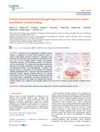
December 2024 in “Nano Research” In a study on diabetic mice, researchers developed a protein-based hydrogel that leverages zinc ions and the natural compound phellopterin to promote cutaneous nerve regeneration, angiogenesis, and tissue remodeling in diabetic wounds, highlighting its potential for advanced wound therapy.
 March 2025 in “FEBS Journal”
 This study found that Epiprofin acts as a negative regulator of parathyroid hormone transcription, with potential implications for controlling PTH production in hyperparathyroidism.
17 citations
,
February 2025 in “Smart Medicine” In this study, a multifunctional microneedle patch made from silk fibroin-methacryloyl and gelatin methacryloyl was reported to significantly prevent bacterial infection and promote wound healing in vivo due to its antimicrobial silver nanoparticles and VEGF-loaded tips.
January 2016 in “DOAJ (DOAJ: Directory of Open Access Journals)” This study demonstrates that collagen XVII is crucial for normal glomerular development, is present in normal colon epithelia, and plays a role in carcinogenesis in colorectal and squamous cell cancers.
January 2007 in “The FASEB journal” In this study, keratin hydrogels derived from human hair were found to significantly enhance nerve regeneration in a mouse model, acting effectively as scaffolds by influencing Schwann cell behavior.
 September 2023 in “HAL (Le Centre pour la Communication Scientifique Directe)”
 In this study, peptide-based nanoparticles were successfully used to deliver the CRISPR-Cas9 system into cancer cells, effectively targeting and editing KRAS mutations, suggesting promising therapeutic potential for cancer treatment.
 100 citations
,
March 2006 in “Journal of biological chemistry/The Journal of biological chemistry”
100 citations
,
March 2006 in “Journal of biological chemistry/The Journal of biological chemistry” This study found that cystatin M/E strongly inhibits human cathepsin V and cathepsin L via distinct non-overlapping sites, suggesting an important role in human epidermal differentiation and hair follicle morphogenesis.
August 2020 in “bioRxiv (Cold Spring Harbor Laboratory)” This study found that KrasG12D mutant cells are typically cleared from adult pancreas tissues through mechanisms involving the EphA2 receptor, suggesting its role as a tumor suppressor in pancreatic cancer.

In this study, researchers explored ubiquitination patterns in healthy human skin and CYLD cutaneous syndrome tumors, identifying extensive ubiquitin sites and differential protein ubiquitination linked to tumor pathology, highlighting the role of ubiquitination in tissue architecture and disease mechanisms.
1 citations
,
July 2019 in “Small ruminant research” This study suggests that the NGF/TrkA/CREB system plays a crucial role in promoting outer root sheath cell proliferation in cashmere goats, which may aid in marker-assisted breeding.
 11 citations
,
August 2019 in “Journal of Molecular Histology”
11 citations
,
August 2019 in “Journal of Molecular Histology” This study found that upregulation of NFIC may enhance proliferation and osteogenic/cementogenic differentiation in rat dental follicle cells.
80 citations
,
January 2020 in “Journal of Nanobiotechnology” This review highlights that incorporating nanomaterials into scaffolds can significantly enhance angiogenesis in tissue regeneration by simulating extracellular matrix structures and effectively delivering angiogenesis-related factors, offering promising designs for vascularization and therapeutic applications.
 January 2023 in “European journal of gynaecological oncology”
 This study found that depletion of KRT17 in endometrial cancer reduced cell growth, motility, and angiogenesis, suggesting KRT17 as a potential therapeutic target.
 70 citations
,
August 2020 in “Nanomaterials”
70 citations
,
August 2020 in “Nanomaterials” This review discusses the development of electrospun nanofibrous scaffolds for promoting angiogenesis in tissue engineering but notes that their clinical application beyond bone and skin repair is still limited.
 6 citations
,
December 2022 in “Colloids and Surfaces B: Biointerfaces”
6 citations
,
December 2022 in “Colloids and Surfaces B: Biointerfaces” This study reported that a novel bilayer wound dressing made from PLCL nanofibers and keratin hydrogel, loaded with FGF-2, promoted skin healing and showed potential for use in skin tissue engineering.
45 citations
,
January 2021 in “Drug Delivery” In this study, researchers developed a biomimetic anti-inflammatory nanosystem (MM-CEP/NLCs) that significantly reduced the severity of acute lung injury in vivo by targeting and accumulating in lung inflammation sites, showcasing its potential for treating inflammation.
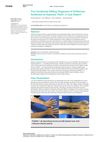
This study presents a rare instance of Netherton syndrome diagnosed incidentally in siblings of consanguineous parents, initially misdiagnosed as other skin conditions, emphasizing the need for careful evaluation in chronic skin cases to prevent misdiagnosis.
This study developed a bioresponsive hydrogel combining basic fibroblast growth factor and N-acetylcysteine, which significantly improved diabetic wound healing by enhancing re-epithelialization, collagen deposition, hair follicle regeneration, and neovascularization in response to oxidative stress.