475 citations
,
October 2006 in “Proceedings of the National Academy of Sciences” This study suggests that folliculin, mutated in Birt–Hogg–Dubé syndrome, and its partner FNIP1 may play a role in energy and nutrient sensing through the AMPK and mTOR pathways.
 15 citations
,
January 2014 in “BioMed Research International”
15 citations
,
January 2014 in “BioMed Research International” This review discusses the concept of drug repositioning and highlights fragmin and protamine as emerging biomaterials for tissue engineering and regenerative medicine, but it reports no new clinical results.
 April 2018 in “Journal of Investigative Dermatology”
 This study found that NDRG1 expression increases during the proliferation of infantile hemangioma and may positively regulate its growth, while FOXO1 downregulation plays a role in its pathogenesis.
 28 citations
,
February 1999 in “Journal of Investigative Dermatology”
28 citations
,
February 1999 in “Journal of Investigative Dermatology” This study found that neonatal mice without the urokinase-type plasminogen activator (uPA) gene had reduced epidermal proliferation rates, suggesting uPA's involvement in promoting keratinocyte proliferation.
 February 2024 in “Journal of Investigative Dermatology”
 In this study, the deletion of NIPP1 in keratinocytes led to chronic skin inflammation and epidermal changes in mice, with early cell-cycle arrest and premature senescence observed, potentially contributing to reduced mutagen sensitivity.
 June 2022 in “Research Square (Research Square)”
 This study revealed that nestin-expressing progenitor cells capable of becoming ORS keratinocytes are present during both hair follicle development and in adult hair follicles.
6 citations
,
April 2016 in “Australasian journal of dermatology” Renal transplant patients on tacrolimus and sirolimus may develop acne keloidalis nuchae.
 July 2018 in “Kidney international”
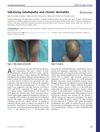
 This case study describes a 9-year-old girl with a homozygous EGFR gene mutation, presenting with tubulopathy and chronic dermatitis, whose ongoing symptoms and management offer insights into this rare genetic condition.
February 2009 in “Journal of Investigative Dermatology” EGFR is essential for organized skin nerve growth and branching.
19 citations
,
March 2022 in “Molecular therapy. Nucleic acids” This study found that silencing the circular RNA circNlgn in mice reduced doxorubicin-induced cardiofibrosis and cardiomyocyte apoptosis, suggesting potential therapeutic strategies for minimizing heart-related side effects in cancer treatment.
This study examined the use of keratin gel as a filler in nerve guides for peripheral nerve regeneration in a rat sciatic nerve injury model.
December 2009 in “Faculty Opinions – Post-Publication Peer Review of the Biomedical Literature” This study found that in keratin 14-targeted transgenic mice, BMP antagonism via noggin led to the development of hair follicle tumors, mediated through alterations in Wnt and Shh signaling pathways.
July 2026 in “Theranostics” This study developed a novel ferritin-based delivery system (LR@Fn) that effectively co-delivers RG108 and LLY283 for hearing loss treatment in animal models, reducing hair cell loss and synaptic damage more effectively than dexamethasone.
2 citations
,
June 2025 in “Preprints.org” This review highlights the potential of amphiregulin as a therapeutic target, noting its role in both fibrotic and malignant diseases, and discusses promising early findings but reports no new clinical results.
September 2004 in “Experimental Dermatology” This study developed a tissue-engineered model of innervated skin, allowing for examination of how epidermis and capillaries affect nerve growth and offering a tool for further research on skin-related processes.
53 citations
,
April 1985 in “Developmental Biology” Fibronectin and other basement membrane components increase during hair growth and decrease during rest.
 14 citations
,
October 2018 in “Brain Research Bulletin”
14 citations
,
October 2018 in “Brain Research Bulletin” This article reviews the role of exosomes in promoting axonal regeneration and discusses recent findings on how exosome-borne molecules might influence the PTEN-mTOR pathway in injured neurons; it reports no new experimental results.
 248 citations
,
November 2011 in “The EMBO Journal”
248 citations
,
November 2011 in “The EMBO Journal” This study found that Wnt1/βcatenin signaling plays a crucial role in activating the epicardium and cardiac fibroblasts, which supports cardiac repair following acute ischemic injury.
 1 citations
,
January 2024 in “Advanced science”
1 citations
,
January 2024 in “Advanced science” This study found that fibronectin-attached cell sheets significantly improved wound healing in vivo by increasing wound closure rates, reducing inflammation, and promoting tissue regeneration compared to conventional cell sheets.
 6 citations
,
February 2022 in “The journal of neuroscience/The Journal of neuroscience”
6 citations
,
February 2022 in “The journal of neuroscience/The Journal of neuroscience” This study observed that deleting PTEN in mouse facial motoneurons enhanced peripheral axon regeneration but also led to physiological changes and potential hyperplasia in older mice.
 102 citations
,
August 2008 in “Genes & Development”
102 citations
,
August 2008 in “Genes & Development” This study found that laminin-511 is crucial for hair morphogenesis in mice, as it influences primary cilia formation and dermal papilla maintenance through noggin and sonic hedgehog signaling.
 1 citations
,
July 2009 in “Journal of dermatology”
1 citations
,
July 2009 in “Journal of dermatology” This case report describes a 29-year-old Japanese man with follicular mucinosis, suggesting nestin-positive, multipotent hair follicle stem cells may be involved in reticular epithelial degeneration of the outer root sheath.
 November 2023 in “Research Square (Research Square)”
 In this study, researchers used NIR-II fluorescence imaging to track the survival and migration of EPI-NCSCs in rat models, finding that these stem cells aided in repairing facial nerve defects when applied via acellular nerve allografts.
December 2004 in “PLoS ONE” In this study, the Foxn1(-/-) nude phenotype was associated with an altered regulation of epithelial progeny in skin, offering a valuable model for investigating stem cell niche maintenance and regulation.
 19 citations
,
June 2015 in “Actas Dermo-Sifiliográficas”
19 citations
,
June 2015 in “Actas Dermo-Sifiliográficas” This review discusses various skin conditions linked with chronic kidney disease and highlights effective treatments but does not provide new clinical results.
 14 citations
,
January 2024 in “Theranostics”
14 citations
,
January 2024 in “Theranostics” In this study involving a mouse model, researchers reported that intranasal delivery of protein-based CRISPR/dCas9 nanoparticles targeting the gene *Sirt1* reduced cerebral edema and increased survival following ischemic stroke, with no significant toxicity observed.
33 citations
,
May 2017 in “Journal of Clinical Oncology” This phase I study reported that ETC-159, targeting Wnt signalling, showed tolerable safety profiles at doses that inhibit its pathway, though bone turnover markers increased, warranting early and regular monitoring. No tumor responses were observed, but two patients achieved stable disease for several cycles.
125 citations
,
August 2003 in “Development” In this study, mice engineered to express human EGFR showed tissue-specific growth defects and neurodegeneration rescue, but developed severe heart issues and accelerated bone cell differentiation.
10 citations
,
October 2018 in “Journal of molecular and cellular cardiology/Journal of Molecular and Cellular Cardiology” This study identified NM_026333 as a potential anti-aging gene that, when induced, may alleviate proton-induced aging symptoms in CF6-overexpressing and high salt-fed mice.
1 citations
,
November 2020 This study found that a pro-fibrotic Wnt1/βcatenin injury response is crucial for maintaining cardiac function following acute ischaemic cardiac injury by activating the epicardium and cardiac fibroblasts.