 2 citations
,
May 2012 in “Indian drugs”
2 citations
,
May 2012 in “Indian drugs” This study found that a proniosomal gel formulation of finasteride increased anagen hair count in male volunteers with androgenic alopecia by 42.85% compared to the control group.
159 citations
,
July 2014 in “Molecular pharmaceutics” This study found that MPEG-dihexPLA micelles significantly improved the skin deposition of tacrolimus compared to a marketed ointment, suggesting better targeted delivery with reduced systemic absorption.
 July 1988 in “Journal of The American Academy of Dermatology”
 This article reviews therapeutic advances published between December 1986 and December 1987 but reports no new research findings; readers are advised to consult the original articles before considering new therapies.
This study found that oral cyclosporine therapy was more effective than betamethasone mini-pulse therapy for treating alopecia areata, with a better patient-reported outcome on hair regrowth, despite a higher incidence of mild, reversible adverse effects in the cyclosporine group.
3 citations
,
April 2024 in “JAAD Case Reports” This article reviews DPCP's use as a topical immunotherapy for alopecia areata and discusses its suggested mechanism, but reports no clinical results.
 1 citations
,
October 1990 in “The Lancet”
1 citations
,
October 1990 in “The Lancet” Using minoxidil for hair growth may cause skin lesions in some people, and taking breaks from nitrate patches for angina might worsen symptoms.
 3 citations
,
July 2015 in “Australasian Journal of Dermatology”
3 citations
,
July 2015 in “Australasian Journal of Dermatology” This letter discusses a case of iododerma in pregnancy linked to iodinated multivitamin use, but reports no new clinical findings.
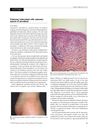 9 citations
,
July 2002 in “Journal of the European Academy of Dermatology and Venereology”
9 citations
,
July 2002 in “Journal of the European Academy of Dermatology and Venereology” This article discusses multiple minute digitate hyperkeratosis in a dermatological context and reports no new clinical findings; the authors focus on a descriptive review.
23 citations
,
November 2007 in “Journal of cutaneous medicine and surgery” This case report suggests that topical tacrolimus may effectively manage erosive pustular dermatosis of the scalp and reverse skin atrophy, although long-term use requires monitoring for side effects.
January 2022 in “Drugs of Today”  July 2023 in “Journal of exploratory research in pharmacology”
 In this case report, a 47-year-old man with extensive psoriasis saw significant improvement in scaling and itching after using a new lotion containing clobetasol and other ingredients for one week, but further research is needed to confirm these findings.
 November 2006 in “Reactions Weekly”
 A woman's hair grew back after she stopped taking the Parkinson's disease medication pramipexole.
 33 citations
,
September 2007 in “Veterinary dermatology”
33 citations
,
September 2007 in “Veterinary dermatology” In this study, proliferative and necrotizing feline otitis externa in four domestic shorthair cats improved with topical 0.1% tacrolimus treatment, despite previous ineffective therapies.
3 citations
,
April 2021 in “Oncology Times” This study reports that sacituzumab govitecan achieved a 33.3% overall response rate in patients with metastatic triple-negative breast cancer who had prior treatments, with a median response duration of 7.7 months.
1 citations
,
January 1989 in “Carcinogenesis” This study found that dexamethasone treatment inhibited the inflammatory response and the induction of ornithine decarboxylase activity in mouse skin after TPA application, although the effect on ODC was weaker during the hyperplastic stage.
 5 citations
,
January 2014 in “Hospital pharmacy”
5 citations
,
January 2014 in “Hospital pharmacy” This case report suggests that frequent application of diphenylcyclopropenone 2% solution to the scalp for alopecia areata may lead to scalp angioedema.
25 citations
,
January 1978 in “JAMA” This case report describes a 45-year-old woman who developed Cushing's syndrome and hirsutism after using topically applied desoximetasone (Topicorte).
January 2013 in “Touro Scholar (Touro College)” This review concluded that Diphenylcyclopropenone may offer the best treatment results for alopecia areata, although further research into the disease's pathogenesis could improve therapeutic options.
 September 2024 in “Journal of the American Academy of Dermatology”
 This study found that a new compounded topical solution for alopecia was clinically tolerable and did not cause irritation, while also showing potential to enhance hair growth through fibroblast proliferation and gene expression.
2 citations
,
December 2021 in “BMC veterinary research” This study found that long-term use of difluprednate ophthalmic emulsion in dogs can lead to HPA axis suppression and potentially cause iatrogenic hyperadrenocorticism, with localized alopecia suspected due to dermal absorption.
18 citations
,
September 1979 in “DMW - Deutsche Medizinische Wochenschrift” In this study, Diane was reported to effectively treat acne, seborrhoea, androgenic alopecia, and mild hirsutism in hirsute women, with its effectiveness influenced by the severity and duration of the condition.
 January 2026 in “The Pharma Innovation”
 This study describes the successful treatment of a stray kitten with Notoedric mange using a combination of Selamectin, benzyl peroxide shampoo, omega 3 and 6 supplements, and ayurvedic ointment, resulting in complete clinical recovery and negative skin scraping after six weeks.
 4 citations
,
January 2023 in “The journal of allergy and clinical immunology/Journal of allergy and clinical immunology/The journal of allergy and clinical immunology”
4 citations
,
January 2023 in “The journal of allergy and clinical immunology/Journal of allergy and clinical immunology/The journal of allergy and clinical immunology” This study reported that dupilumab, an FDA-approved biologic, is a safe and effective first-line systemic treatment for children with moderate-to-severe atopic dermatitis, showing sustained skin improvement and itch reduction, with injection site reactions and conjunctivitis as potential side effects.
 February 1990 in “Journal of The American Academy of Dermatology”
 This review summarizes therapeutic advances reported in English-language literature from December 1987 to December 1988 and states no new clinical results.
 April 2023 in “Dermatology practical & conceptual”
 This study observed that a tacrolimus solution (0.1%) applied to the scalp was effective and well-tolerated for treating inflammatory scalp conditions, with 72.7% of patients showing an excellent response after 2 months of treatment, which persisted after 6 months.

This study evaluated the stability of multiple active ingredients in TrichoSol™ for use in alopecia treatments, finding varying stability durations at room temperature—up to 180 days for some ingredients—supporting its use as a compounding vehicle in personalized therapies.
January 2007 in “Journal of Clinical Dermatology” This study found that the new cytopurine/pentadecanoic glyceride topical solution significantly improved total hair count and reduced daily hair shedding in patients with androgenetic alopecia over 16 weeks, although other measures did not differ from placebo.
This study observed that liposomes encapsulating minoxidil and PEP penetrate the skin at a slower rate but may reach deeper layers compared to a foam formulation.
March 2001 in “Clinical Obstetrics & Gynecology” This paper is a quiz on contraceptive knowledge and reports no new research findings.
January 2016 in “Mercer University Libraries (Mercer University)” This study found that an anhydrous gel formulation containing sertaconazole nitrate effectively penetrated the stratum corneum for treating fungal infections without causing irritation.