 5 citations
,
December 2021 in “Frontiers in Cell and Developmental Biology”
5 citations
,
December 2021 in “Frontiers in Cell and Developmental Biology” This review outlines how peptidyl arginine deiminases (PADIs) and protein citrullination are involved in hair follicle regeneration and inflammatory alopecia, but presents no new clinical findings.
37 citations
,
January 2010 in “Journal of Clinical Investigation” In this study, N-WASP deficiency in mouse skin was found to cause severe alopecia and disrupt hair follicle cycling by 5 months, highlighting its critical role in skin function and Wnt signaling.
 July 2022 in “Biomedicines”
 This study found that 4-aminopyridine significantly enhanced skin wound healing by accelerating wound closure, improving skin architecture, and promoting hair follicle neogenesis and tissue regeneration.
March 2022 in “Clinical Cosmetic and Investigational Dermatology” This study identified altered mRNA and lncRNA profiles in NS scalp tissues, highlighting CDKN2AIP as a downregulated gene involved in a ceRNA network.
1 citations
,
January 2022 This book chapter reviews the taxonomy, traditional uses, pharmacological effects, and safety of Eclipta prostrata, emphasizing its potential therapeutic applications, but it reports no new clinical results.
 November 2013 in “International Journal of Dermatology”
 New skin lesions on the scrotum or vulva in patients with a history of internal cancer could indicate rare skin metastasis.
 109 citations
,
October 2007 in “American Journal of Human Genetics”
109 citations
,
October 2007 in “American Journal of Human Genetics” This study found that postnatal treatment with recombinant EDA normalized adult teeth, improved sweating, and restored normal lacrimation in dogs with XLHED, suggesting its potential as a treatment for the condition.
44 citations
,
September 2016 in “American Journal Of Pathology” This study identified a subpopulation of neural crest-derived progenitor cells in human corneal endothelial tissue from normal and Fuchs endothelial corneal dystrophy donors, which may have potential for future cell therapy development.
 1 citations
,
June 2025 in “Journal of Allergy and Clinical Immunology Global”
1 citations
,
June 2025 in “Journal of Allergy and Clinical Immunology Global” This study describes the case of a young boy with Netherton syndrome who showed significant improvements in skin inflammation, quality of life, and hair growth after receiving dupilumab, with a marked decrease in serum IgE levels observed following treatment.
Defective protein folding due to a mutation is key in ANE syndrome.
188 citations
,
June 1998 in “Molecular cell” This study found that mimicking the XPD point mutation in mice resulted in trichothiodystrophy-like symptoms, supporting the role of basal transcription and DNA repair defects in the disease.
September 2017 in “The journal of investigative dermatology/Journal of investigative dermatology” This study found that N-acetyl-GED may protect and partially rescue human hair follicles from experimentally-induced epithelial-mesenchymal transition ex vivo, suggesting its potential in treating scarring alopecias like lichen planopilaris.
 July 2021 in “International journal of dermatology, venereology and leprosy sciences”
 This study found that diphenylcyclopropenone (DPCP) was more effective and better tolerated than dinitrochlorobenzene (DNCB) in promoting hair regrowth in patients with alopecia areata.
 May 2026 in “Zenodo (CERN European Organization for Nuclear Research)”
 In this study, researchers propose that the EDAR V370A allele's positive selection in East Asian populations may be linked to stable aquatic resources from Late Pleistocene ecosystems in northern China, suggesting a "nutritional niche construction" framework where these resources offset the allele's metabolic costs.
September 2023 in “UCrea (University of Cantabria)” In this study, researchers found that mouse digits without nails could not regenerate after amputation, highlighting the necessity of nails for fingertip regeneration and suggesting a potential role for the Lmx1b gene in this process.
 76 citations
,
May 2011 in “Cell death and differentiation”
76 citations
,
May 2011 in “Cell death and differentiation” This study found that the enzyme A20 helps regulate EDAR-induced NF-κB signaling in mice, preventing ectodermal abnormalities like disheveled hair and assuring proper skin and appendage development.
February 2024 in “Epigenomes” This review discusses recent insights into the dynamics and regulation of the epidermal differentiation complex during keratinocyte differentiation and reports no new experimental results.
1 citations
,
September 2024 in “Journal of the American Academy of Dermatology” Farudodstat may effectively treat alopecia areata without harmful side effects.
 January 2019 in “Current research in diabetes & obesity journal”
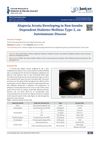
 A woman with type 2 diabetes developed alopecia areata, suggesting a link between the two autoimmune conditions.
 March 2026 in “Calcified Tissue International”
 This review discusses the complex role of the EDA pathway in vertebrate skeletal development, emphasizing its interaction with other morphogenic pathways to influence skeletal diversity, but reports no new experimental results.
6 citations
,
April 2018 in “Transplantation proceedings” This case report describes severe agranulocytosis and alopecia in a Japanese woman after starting azathioprine, highlighting the potential role of NUDT15 genetic screening in preventing adverse reactions to the drug.
9 citations
,
April 2010 in “The Journal of Dermatology” This study suggests that nestin is an important marker for identifying HMB-45-negative cells in nodular melanomas, particularly in the dermal parts.
 January 2025 in “Nanoscale”
 This study reports that a new boron/nitrogen-doped carbon nano-onion-based delivery system for doxorubicin enhanced its uptake and anticancer effects in specific cancer cell types, while reducing cardiotoxicity in human heart cells.
 16 citations
,
March 2016 in “The journal of investigative dermatology/Journal of investigative dermatology”
16 citations
,
March 2016 in “The journal of investigative dermatology/Journal of investigative dermatology” In this study, researchers observed that a noncanonical mechanism involving the γ-secretase-dependent, RBPj-independent Notch intracellular domain improves survival in Msx2-Cre mice by delaying hair follicle destruction and reducing disease severity.
 November 2022 in “Journal of Investigative Dermatology”
 This study found that non-balding dermal papilla cells emphasized extracellular matrix organization and reduced inflammation when cultured in 3D or with adipose-derived stem cells, unlike balding cells which maintained inflammatory pathways.
 25 citations
,
August 2010 in “Journal of Biological Chemistry”
25 citations
,
August 2010 in “Journal of Biological Chemistry” This study found that NFI-C plays a crucial role in the transition from the telogen to anagen phase of the hair follicle cycle, affecting hair growth initiation in mice.
 42 citations
,
October 2009 in “The journal of investigative dermatology/Journal of investigative dermatology”
42 citations
,
October 2009 in “The journal of investigative dermatology/Journal of investigative dermatology” In this study, researchers identified two distinct homozygous mutations in the KRT85 gene among consanguineous Pakistani families with pure hair and nail ectodermal dysplasia, highlighting variations in severity and potential impacts on the K85 protein function.
 12 citations
,
November 2003 in “Journal of the American Academy of Dermatology”
12 citations
,
November 2003 in “Journal of the American Academy of Dermatology” This study found hair regrowth in the majority of AA-affected mice and rats treated with diphencyprone, suggesting its potential utility for understanding human alopecia areata and the drug's therapeutic action.
 April 2018 in “Journal of Investigative Dermatology”
 This study found that NDRG1 expression increases during the proliferation of infantile hemangioma and may positively regulate its growth, while FOXO1 downregulation plays a role in its pathogenesis.