 6 citations
,
April 2022 in “Advanced Pharmaceutical Bulletin”
6 citations
,
April 2022 in “Advanced Pharmaceutical Bulletin” This study found that cefazolin-loaded silica nanoparticles embedded in polycaprolactone nanofibers successfully inhibited Staphylococcus aureus growth while maintaining stem cell viability, suggesting their potential use in wound healing.
January 2018 in “Refubium (Universitätsbibliothek der Freien Universität Berlin)” This study demonstrated that combining amorphization and nanonization of drugs enhances both saturation solubility and dissolution rate, potentially offering therapeutic benefits for formulations like dermal applications.
January 2012 in “RepositóriUM (Universidade do Minho)” This study reported that a modified nanoprecipitation protocol can effectively create PLA nanoparticles capable of delivering compounds into hair follicles, with promising potential for hair follicle therapy and cosmetic applications.
11 citations
,
July 2023 in “Applied Nanoscience”  87 citations
,
August 2017 in “Scientific Reports”
87 citations
,
August 2017 in “Scientific Reports” This study found that PCL-based nanofiber scaffolds enhanced cell proliferation and extracellular matrix deposition, suggesting they show promise as a cell delivery system for improving skin wound healing.
 April 2026 in “Zenodo (CERN European Organization for Nuclear Research)”
 This guide explores the fundamental science and practical applications of nanocrystal technologies to enhance the bioavailability of poorly water-soluble drugs, detailing synthesis methods, stability solutions, and drug delivery innovations like hydrogel composites and microneedle platforms.
26 citations
,
July 2023 in “International Journal of Nanomedicine” The researchers suggest that combining microneedle technology with nanocarriers could enhance drug delivery systems for treating central neurological diseases due to nanoparticles' ability to prolong blood circulation time and improve brain targeting.
 6 citations
,
December 2022 in “Colloids and Surfaces B: Biointerfaces”
6 citations
,
December 2022 in “Colloids and Surfaces B: Biointerfaces” This study reported that a novel bilayer wound dressing made from PLCL nanofibers and keratin hydrogel, loaded with FGF-2, promoted skin healing and showed potential for use in skin tissue engineering.
September 2023 in “bioRxiv (Cold Spring Harbor Laboratory)” This study found that dissolving microneedle array patches containing mesoporous silica nanoparticles can deliver antigen-loaded nanoparticles into mice effectively, inducing strong immune responses similar to traditional subcutaneous injection.

This review discusses how nanotechnology can potentially enhance the treatment and delivery of clomiphene citrate for ovulatory disorders, with a focus on improving solubility and minimizing side effects in women experiencing anovulatory infertility, highlighting its 80% efficacy in triggering ovulation in treated cases.
 March 2024 in “International journal of nanomedicine”
 This review discusses recent advancements in the development and use of polymer-based nanohydrogels for topical drug delivery, noting their potential to enhance drug loading, release control, and skin penetration for treating dermatological conditions.
26 citations
,
April 2024 in “Particle and Fibre Toxicology” In this study, researchers investigated the penetration and cellular responses to nanoplastics in human skin models with compromised barriers, finding that nanoplastics can penetrate the skin, accumulate in cells, and trigger inflammatory responses through specific signaling pathways.
September 2024 in “Medical Sains Jurnal Ilmiah Kefarmasian” This review summarizes the potential of nanostructured lipid carriers in drug delivery systems, highlighting their promise in enhancing the stability and skin penetration of anti-aging cosmetics.
 April 2026 in “Zenodo (CERN European Organization for Nuclear Research)”
 This comprehensive guide from nanotechsci.com explores how nanocrystal technology enhances the bioavailability of poorly water-soluble pharmaceuticals, detailing the science behind crystallization and practical synthesis techniques, and discussing their advanced drug delivery applications across various routes.
57 citations
,
December 2012 in “Journal of Biomedical Optics” This review discusses the application of confocal laser scanning microscopy for studying nanoparticle interactions with skin and highlights its potential for broad applications, but reports no new experimental findings.
January 2026 in “PubMed Central” This article reviews self-assembled nanoparticles, highlighting their promising role in drug delivery systems but noting the need for further research on stability and large-scale industrial application; it reports no new clinical findings.
36 citations
,
August 2020 in “Polymers” The researchers developed semi-dissolving microneedle patches using TEMPO-oxidized bacterial cellulose nanofibers, which allow effective transdermal drug delivery by forming micro-channels for large drug quantities, overcoming traditional microneedles' low drug loading.
 17 citations
,
June 2017 in “Journal of pharmaceutical sciences”
17 citations
,
June 2017 in “Journal of pharmaceutical sciences” This study found that adapalene-loaded nanospheres in a hyaluronic acid gel enhanced skin penetration and were nonirritant, making them potentially suitable for treating acne on oily skin.
July 2025 in “Highlights in Science Engineering and Technology” In this study, researchers found that nanomaterials designed for plastic surgery applications show promising results, including a 95% dynamic wrinkle filling rate and enhanced hair density by 41%; however, challenges like potential long-term safety issues and high production costs must be addressed.
 26 citations
,
August 2016 in “ACS Applied Materials & Interfaces”
26 citations
,
August 2016 in “ACS Applied Materials & Interfaces” In this study, cell membrane remodeling with a thermoresponsive boronic acid copolymer was shown to rapidly form spheroids from cancer or cardiac cell lines under standard conditions, promising advances in tissue engineering.
7 citations
,
October 2024 in “Pharmaceutics” This study found that clindamycin-loaded PHA nanoparticles showed potent antibacterial effects against MRSA and enhanced wound healing in a mouse model of MRSA-infected wounds, indicating their potential as a novel treatment for these infections.
 August 2023 in “Indian Journal of Pharmaceutical Education and Research”
 This study highlights the potential of nanoemulgel, a nano-lipoidal gel formulation, as an effective method for delivering topical drugs, especially for BCS class II/IV pharmaceuticals, and emphasizes the need for thorough toxicological evaluations due to changes in delivery methods.
 17 citations
,
June 2021 in “Molecules”
17 citations
,
June 2021 in “Molecules” This review summarizes the promising role of melatonin combined with nanosized carriers in drug delivery, suggesting enhanced effectiveness in treating various diseases compared to free melatonin.
 October 2022 in “ACS Applied Materials & Interfaces”
 This study reports that the newly developed SA-Ca(II) hydrogel has tunable mechanical properties, high biocompatibility, and potential applications in wearable protections and stimuli-responsive electronics.
March 2019 in “SLAS TECHNOLOGY” This study found that MSN-ceria nanomaterial accelerates cutaneous wound healing in rat models by reducing ROS levels and promoting collagen deposition, leading to improved tissue regeneration without significant scarring.
January 2016 in “Universitätsbibliothek der FU Berlin Hochschulschriftenstelle u. Dokumentenserver” This study found that novel biodegradable nanocarriers with highly hydrophobic cores significantly increased the solubility and sustained release of hydrophobic drugs and dyes, showing promise for drug delivery applications.
62 citations
,
November 2016 in “Nanoscale” In this study, researchers developed thermoresponsive nanogels that effectively penetrate hair follicles and release a model drug when triggered by temperature, demonstrating greater penetration for medium to large nanogels (300–500 nm) compared to smaller ones.
 January 2025 in “Nanoscale”
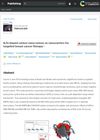
 This study reports that a new boron/nitrogen-doped carbon nano-onion-based delivery system for doxorubicin enhanced its uptake and anticancer effects in specific cancer cell types, while reducing cardiotoxicity in human heart cells.
June 2026 in “ACS Nano Medicine” The study presents the development of fibronectin nanogel microneedles (FNG MNs) designed to enhance tissue penetration and transdermal delivery for anti-aging and diabetic wound healing applications. The FNG MNs, with an average size of 82.0 nm, demonstrate excellent stability, cytocompatibility, and cell penetration capabilities. In a photoaged mouse model, these microneedles effectively restore skin homeostasis by normalizing epidermal thickness, reorganizing collagen and elastin fibers, and reducing inflammation and oxidative stress. In a diabetic wound rat model, FNG MNs promote collagen deposition, hair follicle neogenesis, and angiogenesis while reducing Yes-associated protein expression. These findings suggest that FNG MNs could be a promising formulation for various biomedical applications due to their ability to modulate the extracellular matrix, reduce inflammation, and provide antioxidative benefits.
 61 citations
,
May 2014 in “International journal of pharmaceutics”
61 citations
,
May 2014 in “International journal of pharmaceutics” This research describes a process for producing caffeine nanocrystals, which may enhance skin penetration by accumulating in hair follicles and maintaining stability for two months, paving the way for in vivo testing.