22 citations
,
September 2003 in “Journal of Investigative Dermatology” This study analyzed patients with X-linked dominant chondrodysplasia punctata and identified novel mutations in the emopamil-binding protein gene, highlighting the need for genetic testing alongside biochemical analysis for accurate diagnosis.
13 citations
,
July 2019 in “Chemical papers/Chemické zvesti” This study developed and optimized a molecularly imprinted polymer-based electrochemical sensor, demonstrating its ability to detect minoxidil with high sensitivity and selectivity at concentrations as low as 0.3 nM, and successfully applied it for minoxidil measurement in various real sample matrices.

This study found that finite element analysis-guided design improved bubble microneedles' controlled tip separation and insertion strength, supporting effective transdermal and sublingual drug delivery.
 11 citations
,
May 2010 in “Journal of the South African Veterinary Association”
11 citations
,
May 2010 in “Journal of the South African Veterinary Association” This case report describes how a treatment with mycophenolate mofetil and prednisone may be effective in managing autoimmune subepidermal blistering dermatosis in dogs while allowing for steroid reduction.
 April 2023 in “Journal of Investigative Dermatology”
 This study found that PX-12 inhibited the NLRP3 inflammasome and reduced psoriasis-like symptoms in a mouse model, suggesting its potential as a treatment for psoriasis.
 January 2026 in “International Journal of Applied Pharmaceutics”
 This study developed a novel LC-ESI-MS/MS method to quantify Minoxidil in pharmaceutical forms, finding it precise, accurate, and robust. It withstands excipient and degradant interference, although Minoxidil degrades under some stress conditions but remains stable thermally.
April 2025 in “International Journal of Pharmaceutics” Liposomes improve minoxidil delivery to hair follicles, enhancing treatment for hair loss.
159 citations
,
July 2014 in “Molecular pharmaceutics” This study found that MPEG-dihexPLA micelles significantly improved the skin deposition of tacrolimus compared to a marketed ointment, suggesting better targeted delivery with reduced systemic absorption.
May 2026 in “Drug Delivery” This study introduces a co-design framework using finite element analysis to optimize separable bubble microneedles, demonstrating enhanced transdermal and sublingual drug delivery in preclinical models. In vivo results showed faster hair regrowth and glucose lowering in animals, indicating potential improvements over traditional methods.
3 citations
,
November 2024 in “Electrochimica Acta” A new, quick method accurately detects minoxidil in drugs and cosmetics.
September 2017 in “PubMed” In this case report, a Danish family with monilethrix showed varying symptoms, diagnosed via dermatoscopy, microscopy, and gene sequencing. The study highlights that while no cure exists, oral minoxidil shows promise in a single case, and reducing hair trauma remains key for management.
 April 2024 in “Current Rheumatology Reviews”
 This case report describes an 8-year-old girl with Mixed Connective Tissue Disease who experienced remission after treatment with immunomodulator drugs, highlighting the diagnostic value of anti-U1 RNP antibody testing in children.
July 2025 in “Ultrasound in Medicine & Biology” This study found that nanobubble-encapsulated diclofenac with ultrasound-targeted microbubble destruction (DNBs-UTMD) can enhance the anti-tumor efficacy of Doxil® by regulating the tumor immune microenvironment, improving drug uptake, and increasing T cell responses while reducing immune-suppressive cells in the process.
 6 citations
,
July 2005 in “Farmaco”
6 citations
,
July 2005 in “Farmaco” This study developed a micellar electrokinetic capillary chromatography method for determining minoxidil in Rogaine and generic products, offering a simple and efficient alternative to HPLC.
June 2024 in “European Journal of Pharmaceutics and Biopharmaceutics” This study reported that using photoacoustic waves to enhance transdermal delivery of encapsulated minoxidil can significantly increase hair growth while reducing treatment frequency and systemic side effects.
4 citations
,
July 2021 in “Frontiers in Cell and Developmental Biology” This study demonstrates that the transcription factor DLX5 can promote hair follicle stem cell differentiation through regulating the c-MYC/miR-29c-3p/NSD1 axis.

In this case report, a 25-year-old female with Mixed Connective Tissue Disease presented unusual symptoms in a specific geographical region, prompting clinicians to approach diagnosis and management with caution due to potential severe complications such as pulmonary hypertension and renal crisis.
 1 citations
,
June 2022 in “Chinese medical journal/Chinese Medical Journal”
1 citations
,
June 2022 in “Chinese medical journal/Chinese Medical Journal” This study identified two novel mutations in the CDH3 gene causing HJMD in a Chinese patient, expanding the genetic and phenotypic understanding of the disorder.
1 citations
,
July 2020 in “The Egyptian Journal of Hospital Medicine” This study found no significant association between the MDR1 C3435T polymorphism and methotrexate responsiveness in rheumatoid arthritis patients.
 January 2026 in “Drug Delivery and Translational Research”
 This study investigated the integration of crystal engineering and microneedle technology for androgenetic alopecia treatment, finding that microneedles loaded with newly developed Kopexil multicomponent crystals reduced drug diffusion rates in vitro compared to standard formulations.
2 citations
,
September 2018 in “JAAD case reports” This report describes a rare case of folliculotropic and syringotropic CD8 mycosis fungoides with unusual widespread mucosal involvement.
 June 2026 in “Frontiers in Oncology”
 In this study, researchers found that deficiencies in Gsdma1/2/3 significantly inhibited the initiation and progression of cutaneous squamous cell carcinoma (cSCC) in mice, suggesting GSDMA's role in promoting cSCC proliferation and its potential as a therapeutic target.
January 2024 in “Wiadomości Lekarskie” This pilot clinical study introduces DEC cells as a novel therapy for Duchenne muscular dystrophy, confirming safety and efficacy in seven patients up to 24 months post-treatment.
 109 citations
,
October 2007 in “American Journal of Human Genetics”
109 citations
,
October 2007 in “American Journal of Human Genetics” This study found that postnatal treatment with recombinant EDA normalized adult teeth, improved sweating, and restored normal lacrimation in dogs with XLHED, suggesting its potential as a treatment for the condition.
 27 citations
,
August 1984 in “Experimental and Molecular Pathology”
27 citations
,
August 1984 in “Experimental and Molecular Pathology”  19 citations
,
September 1999 in “Talanta”
19 citations
,
September 1999 in “Talanta” New method measures minoxidil concentration faster, more accurately, and automatically.
 4 citations
,
January 2022 in “Current pharmaceutical design”
4 citations
,
January 2022 in “Current pharmaceutical design” This review discusses the benefits and applications of microsponges delivery systems in drug delivery, particularly for topical treatments, and reports no new clinical findings.
 6 citations
,
July 2015 in “European Journal of Dermatology”
6 citations
,
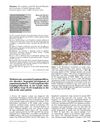
July 2015 in “European Journal of Dermatology” Stopping methotrexate might reverse lymphoma-like conditions in some patients.
 4 citations
,
January 2009 in “Eclética Química”
4 citations
,
January 2009 in “Eclética Química” This study described a potentiometric titration method for determining minoxidil, which showed recoveries of 97.4 to 98.7% and agreed with chromatographic results within a 90% confidence level.
 April 2026 in “microPublication”
 In this study, researchers explored whether minoxidil, a common treatment for androgenetic alopecia, may have estrogenic activity and found preliminary evidence suggesting it could act as a partial agonist of Estrogen Receptor α (ERα).