1 citations
,
April 2022 in “Applied sciences” This study reports the development of a microemulsion using Momordica charantia extract, which demonstrated strong antioxidant and 5α-reductase inhibitory activity, potentially aiding hair loss management. The microemulsion was stable over 12 weeks, suggesting its future potential for cosmetic or pharmacological applications.
 4 citations
,
January 2011
4 citations
,
January 2011 This study found that Pleuropterus cilinervis extracts and animal milk fermented with Lactobacillus rhamnosus promoted hair growth in mice, suggesting potential applications in hair loss treatments.
 3 citations
,
May 2019 in “Journal of Cosmetic Dermatology”
3 citations
,
May 2019 in “Journal of Cosmetic Dermatology” This study found that a 12-week supplementation with MePL, a solution of miliacin encapsulated within polar lipids, significantly reduced hair density in the telogen phase and improved scalp dryness and hair brightness in women with telogen effluvium.
 29 citations
,
January 2010 in “Journal of oleo science”
29 citations
,
January 2010 in “Journal of oleo science” In this study, mannosylerythritol lipids from soybean oil notably increased fibroblast and papilla cell viability, suggesting potential as a hair growth agent.
4 citations
,
May 2014 in “Daehan hanbang so'a'gwa haghoeji/Daehan hanbang soagwa hakoeji” In this study, Ganoderma lucidum extract combined with microneedle therapy promoted hair growth more effectively than microneedle therapy alone in a mouse model of alopecia.
 March 2022 in “Research Square (Research Square)”
 This study found that replacing components with artificial sebum in the modified Leeming and Notman agar medium significantly increased the growth yield of Malassezia restricta.
 1 citations
,
September 2023 in “Journal of cosmetic dermatology”
1 citations
,
September 2023 in “Journal of cosmetic dermatology” This study suggests that Silybum marianum flower extract may promote hair growth and reduce hair loss by increasing proliferation and VEGF production in dermal papilla cells and suppressing cell senescence.
3 citations
,
December 2020 in “Pharmaceutical Sciences and Research” This study found that using 70% ethanol as a solvent for extracting unsoaked Leucaena leucocephala seeds produces a high extract yield while managing mimosine levels, indicating potential for nutraceutical use.
 November 2022 in “The journal of investigative dermatology/Journal of investigative dermatology”
 In this case study, a 26-year-old female with PLEC mutations and features of muscular dystrophy and myasthenia gravis showed significant improvement in symptoms following steroid treatment.

This study suggests that Tenebrio molitor larvae extract may promote hair growth and prevent hair loss by enhancing cell proliferation and protecting against cytotoxicity in laboratory settings.
May 2018 in “Pakistan journal of nutrition” This study found that feeding sheep rations with up to 30% Leucaena leucocephala leaf meal did not significantly affect mimosine concentrations or alter blood metabolites and thyroid hormones, suggesting it can be used without detrimental effects in these aspects.
 5 citations
,
April 2021 in “Frontiers in Pharmacology”
5 citations
,
April 2021 in “Frontiers in Pharmacology” In this mouse study, the combination of minoxidil-coated lysozyme microbubbles and ultrasound significantly enhanced hair growth compared to minoxidil alone.
 July 2025 in “New Phytologist”
 This study demonstrated that the FER/MLO signaling module regulates calcium dynamics and ROS accumulation in root hair growth, with the constitutively active MLO (faNTA) able to restore normal development and signaling in specific mutant genotypes, highlighting MLO15's role in root hair tip growth regulation.
 1 citations
,
March 2020 in “Functional foods in health and disease/Journal of functional foods in health & disease”
1 citations
,
March 2020 in “Functional foods in health and disease/Journal of functional foods in health & disease” This study found that OM-X® supplementation effectively prevented adverse biological changes caused by vitamin C deficiency in SMP30/GNL KO mice, improving energy maintenance, antioxidant capacity, and protein synthesis.
January 2011 in “한국미생물·생명공학회지” In this study, Pleuropterus cilinervis extracts and animal milk fermented with Lactobacillus rhamnosus were found to enhance hair re-growth in mice more than the positive control treatment.
The serum with these ingredients may help reduce hair loss and promote growth.
 December 2019 in “University of Malaya Students Repository”
 This study found that Soxhlet extraction is more effective at removing the toxin mimosine from Leucaena leucocephala, and mimosine shows promise as a biodiesel additive due to its antioxidative properties.
 November 2024 in “Journal of Cosmetic Dermatology”
 This study observed that a topical serum containing Silybum marianum extract, manganese PCA, and Lespedeza capitata extract enhanced hair follicle growth and hair shaft elongation, while prolonging the anagen phase in an ex vivo human scalp skin model, suggesting potential benefits for hair loss treatment.
This study found that bitter melon leaf extract, particularly at a 10% concentration, promoted hair growth in male rabbits, outperforming the effect of a 2% minoxidil solution.
July 2025 in “OPAL (Open@LaTrobe) (La Trobe University)” The research found that topical maslinic acid stimulates hair growth in mice, comparable to minoxidil, by inducing anagen phase acceleration and activating pathways such as Wnt/β-catenin, Notch, and MAPK; a potential link to cilia activity was also explored.
February 2018 in “Zenodo (CERN European Organization for Nuclear Research)” This study reported that 100% crude extracts of Glycyrrhiza glabra and Emblica officinalis demonstrated strong antibacterial effects against Escherichia coli.
February 2018 in “Open MIND” This study found that both Glycyrrhiza glabra and Emblica officinalis extracts demonstrated significant antibacterial activity against Escherichia coli, with the highest effect seen in 100% crude extracts.
 1 citations
,
March 2023 in “PubMed”
1 citations
,
March 2023 in “PubMed” In this research, a 1% rosemary extract hair lotion was found to promote hair growth in mice more effectively than a standard minoxidil treatment.
 October 2025 in “SAR Journal of Medical Biochemistry”
 In this research, the methanolic extract of Moringa oleifera seeds demonstrated potential antihelminthic activity in Indian adult earthworms, potentially offering fewer side effects compared to standard anthelmintic drugs like albendazole.
 8 citations
,
November 1990 in “Archives of Dermatology”
8 citations
,
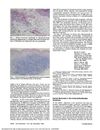
November 1990 in “Archives of Dermatology” This case report details a woman with eosinophilia-myalgia syndrome associated with L-tryptophan ingestion, highlighting skin lesions with abundant dermal mucin.
 November 2023 in “Cureus”
 In this pilot study, a 12-week topical treatment with a lotion containing magnetized saline water significantly increased hair count and hair mass index while activating autophagy in the scalp of 20 Caucasian men with mild-to-moderate androgenetic alopecia.
 December 2024 in “Livers”
 This case report highlights a female patient with familial partial lipodystrophy who showed significant improvement in liver stiffness after starting leptin replacement therapy.
 22 citations
,
January 2015 in “Dermatology Research and Practice”
22 citations
,
January 2015 in “Dermatology Research and Practice” This study found that an oral marine protein supplement significantly increased hair growth and reduced hair shedding in women with temporary thinning hair over 90 days compared to a placebo.
January 2022 in “Wiadomości lekarskie (Warsaw Poland)” This study found that Methylsulfonylmethane significantly reduced hair loss and enhanced hair growth and follicle number in male mice, attributed to its antioxidant and anti-inflammatory properties.
 May 2024 in “Journal of ayurveda and integrated medical sciences”
 In this study, a clinical trial on a vegan patient with Vitamin B12 deficiency showed that administering Amra Beej Majja Churna over two months increased serum Vitamin B12 levels and alleviated symptoms like hair loss and tingling sensations in the lower limbs.