 2 citations
,
April 2020 in “bioRxiv (Cold Spring Harbor Laboratory)”
2 citations
,
April 2020 in “bioRxiv (Cold Spring Harbor Laboratory)” This study reveals that basement membrane composition and structure in mouse hair follicles are specialized for distinct inter-tissue interactions, with laminin α5 being essential for maintaining these interfaces.
 April 2016 in “Journal of Investigative Dermatology”
 This study found that a newly developed peptide, FOL-005, significantly inhibited hair growth and counteracted minoxidil's effects in organ-cultured human male scalp skin and mouse models, without apparent toxicity.
 57 citations
,
February 1994 in “Experimental dermatology”
57 citations
,
February 1994 in “Experimental dermatology” This study found that murine skin is a target for melatonin bioregulation, as melatonin affected DNA synthesis and tyrosinase activity in skin organ culture.
 16 citations
,
May 2000 in “Endocrinology”
16 citations
,
May 2000 in “Endocrinology” This study identified a new gene, mrp4, in mice, which suggests it may have a unique role in the growth and development of hair follicles in the ears and tails.
3 citations
,
March 2012 in “Arab Journal of Urology” This study found that cromakalim and pinacidil significantly inhibited porcine detrusor muscle contractions, suggesting these ATP-sensitive potassium channel openers may have potential in treating certain bladder diseases.
July 2024 in “Journal of Investigative Dermatology” This study found that systemic treatment with DS77754007, a KLK5 inhibitor, improved skin symptoms in a mouse model of Netherton Syndrome more effectively than certain antibody treatments, suggesting KLK5 inhibition as a promising therapeutic approach for this condition.
33 citations
,
February 2021 in “Journal of Medicinal Chemistry” This study found that novel MPC inhibitor analogues with specific chemical modifications promoted significant hair growth in shaved mice when applied topically.
 June 2026 in “Zenodo (CERN European Organization for Nuclear Research)”
 This source describes SH‑1 as a next-generation androgen receptor antagonist designed for localized treatment of androgenetic alopecia, aiming to reverse follicular miniaturization while maintaining endocrine balance. Unlike traditional therapies, SH‑1 offers tissue-specific action, avoiding systemic effects.
 506 citations
,
January 2012 in “Molecular and Cellular Endocrinology”
506 citations
,
January 2012 in “Molecular and Cellular Endocrinology” This review details the expression and diverse functions of melatonin receptors in non-neural tissues and reports no new clinical findings, emphasizing their potential as therapeutic targets across various physiological and pathological processes.
September 2020 in “Scientific periodicals of Ukraine” This study found that the combination therapy of Flosin and Prostamol Uno over nine years was well tolerated and equally effective in managing benign prostatic hyperplasia symptoms as the combination of doxazosin and finasteride, with fewer adverse events reported.
 14 citations
,
December 1998 in “The Journal of Clinical Endocrinology and Metabolism”
14 citations
,
December 1998 in “The Journal of Clinical Endocrinology and Metabolism” This study found that MENT is 10 times more potent than testosterone in suppressing gonadotropins and contributing to anabolism in monkeys, with a potentially wider therapeutic index for human androgen replacement and male contraception.

This study reports that a combination of upadacitinib and oral minoxidil resulted in complete hair regrowth in a 20-year-old with alopecia universalis, Crohn's disease, and atopic dermatitis.
8 citations
,
June 2004 in “Journal of Investigative Dermatology” Certain peptides can prevent hair loss in young rats caused by a cancer drug.
45 citations
,
March 1998 in “Journal of the American Academy of Dermatology” This report describes two cases of Majocchi's granuloma in immunocompromised patients, highlighting the importance of considering this condition in such populations.
 April 2023 in “Journal of Investigative Dermatology”
 This study suggests that MPZL3, a mitochondrially localized protein, may play an integral role in regulating hair follicle cycles, with potential therapeutic implications for hair growth disorders if findings translate to humans.
 April 2023 in “Journal of Investigative Dermatology”
 This study found that human TMEM2 does not function as a hyaluronidase but is involved in regulating hyaluronan metabolism.
July 2026 in “Journal of Investigative Dermatology” November 2025 in “Pharmacological Research” In this study, researchers found that exosome-like nanoparticles isolated from Polygoni Multiflori Radix can promote hair growth in mice by modulating androgen signaling and gene expression, outperforming Minoxidil in testosterone-induced conditions.
November 2021 in “OPAL (Open@LaTrobe) (La Trobe University)” This study identified melatonin as a potential treatment for rosacea and Alzheimer's disease, suggesting it may help by modulating inflammatory and vascular signaling pathways.
September 1997 in “Clinical and Experimental Dermatology” 3 citations
,
September 2021 in “Bulletin of the Korean Chemical Society” In this study, dimeric peptide derivatives were shown to enhance the proliferation of human follicle dermal papilla cells in vitro, particularly promoting the ERK1/2 pathway, suggesting potential for developing peptide-based treatments for hair regeneration.
16 citations
,
August 2012 in “The journal of investigative dermatology/Journal of investigative dermatology” This study found that MED1 plays a role in maintaining keratinocyte quiescence and hair follicle stem cell populations, as its absence in mice led to increased keratinocyte proliferation and reduced stem cell numbers.
 April 2023 in “The journal of investigative dermatology/Journal of investigative dermatology”
 This study revealed distinct cellular and transcriptomic differences among various subtypes of cutaneous T-cell lymphoma, particularly highlighting characteristics unique to folliculotropic mycosis fungoides.
 31 citations
,
August 1975 in “Journal of Pharmaceutical Sciences”
31 citations
,
August 1975 in “Journal of Pharmaceutical Sciences” This study found that different species metabolized minoxidil into various products, with monkeys and humans showing similar profiles primarily excreting a glucuronide conjugate, while rats and dogs showed distinct differences.
1 citations
,
May 1992 in “Pharmacological Research”  8 citations
,
December 2009 in “Journal of The European Academy of Dermatology and Venereology”
8 citations
,
December 2009 in “Journal of The European Academy of Dermatology and Venereology” This article discusses a novel mutation in the FERMT1 gene identified in a Spanish family with Kindler’s syndrome but reports no new clinical results.
253 citations
,
June 2004 in “Journal of Controlled Release” The research observed that 40-nm self-assembled nanoparticles enhanced minoxidil penetration in hairy guinea pig skin compared to 130-nm nanoparticles, but this size effect was absent in hairless skin.
 133 citations
,
May 2016 in “Cell Host & Microbe”
133 citations
,
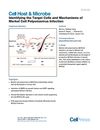
May 2016 in “Cell Host & Microbe” In this study, human dermal fibroblasts were identified as natural host cells that support productive Merkel cell polyomavirus infection, and the MEK antagonist trametinib was introduced as an effective inhibitor to control the virus.
1 citations
,
November 2016 in “Frontiers in neurology” In this case report, a patient with Cronkhite-Canada syndrome also had mononeuritis multiplex, and the authors suggest that an autoimmune mechanism may be involved based on steroid responsiveness and electrophysiological findings.
22 citations
,
May 2003 in “Planta Medica” This study found that torilin from Torilis japonica fruit extract inhibited 5 alpha-reductase in vitro more effectively than alpha-linolenic acid but less effectively than finasteride.