17 citations
,
May 1969 in “American Journal of Physical Anthropology” This study describes unique anatomical characteristics of the skin and hair structures in the silver marmoset, including features such as thin epidermis, specialized nerve end-organs, and distinctive gland compositions.
1 citations
,
January 2013 This study observed that inducible deletion of the Ugcg gene in mouse epidermis led to a significant reduction in GlcCers and epidermal POS-Cers, causing impaired skin barrier function and delayed wound healing.

This study found that upper-bulge epidermal stem cells in mouse hair follicles are specialized for nerve interactions, crucial for forming tactile sensory units, and influence touch responses via EGFL6 and αv integrin pathways.
 February 2024 in “Advanced Materials”
 In this study, researchers discovered that a newly identified oligosaccharide, OG6, promotes hair growth by activating hair follicles, achieved by revealing its hidden activity from a larger molecule structure.
 45 citations
,
December 1991 in “Annals of the New York Academy of Sciences”
45 citations
,
December 1991 in “Annals of the New York Academy of Sciences” This article discusses the distribution of extracellular matrix molecules in human hair follicles and reports no new results.
216 citations
,
May 2003 in “Journal of Investigative Dermatology” This study found that sebaceous-gland-derived glycerol significantly contributes to stratum corneum hydration in mice with sebaceous gland deficiencies.
 9 citations
,
April 2021 in “Frontiers in Immunology”
9 citations
,
April 2021 in “Frontiers in Immunology” This review discusses the role and mechanisms of unconventional lymphocytes in promoting tissue repair and maintaining mucosal barrier integrity in the skin, gut, and lungs, but reports no new findings.
5 citations
,
March 2025 in “Tissue Engineering and Regenerative Medicine” November 2025 in “Journal of Investigative Dermatology” Mesenchymal stiffness affects sweat gland cell development.
1 citations
,
January 2020 in “bioRxiv (Cold Spring Harbor Laboratory)” This study found that knocking out vinculin in mouse skin disrupts bulge stem cell quiescence by impairing force generation and mechanical stability of adherens junctions.
This study introduces a new type of tissue micromodule, the micro tissue precursor (μTP), which can form complex 3D tissues, including lung stroma and skin models supporting hair viability.
This study purified trichohyalin protein from pig tongue epithelium, characterizing its unique properties and structure, which may facilitate future functional research.
May 2013 in “Plastic & Reconstructive Surgery” This letter clarifies a previous article's incorrect usage of terms prefabrication and prelamination, discussing how small, separate oral mucosa grafts can effectively reduce surgical morbidity in flap procedures.
 8 citations
,
November 1990 in “Archives of Dermatology”
8 citations
,
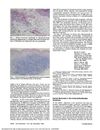
November 1990 in “Archives of Dermatology” This case report details a woman with eosinophilia-myalgia syndrome associated with L-tryptophan ingestion, highlighting skin lesions with abundant dermal mucin.
44 citations
,
January 2021 in “Research” This study explored the use of manganese-doped calcium silicate nanowire-incorporated alginate hydrogels (MCSA hydrogels) for treating melanoma and promoting wound healing, finding that these hydrogels effectively ablate melanoma under near-infrared irradiation and enhance vascular endothelial cell activity for tissue regeneration.
85 citations
,
January 1991 in “Journal of Investigative Dermatology”  July 2025 in “ACS Applied Materials & Interfaces”
 This study found that combining ultrasound with a GelMA hydrogel able to deliver mesenchymal stem cell-derived vesicles significantly improved wound healing in a mouse model by enhancing fibroblast activity, promoting re-epithelialization, and facilitating hair follicle regeneration, highlighting a novel approach to skin regeneration therapy.
 November 2023 in “Regenerative Biomaterials”
 This study developed a degradable and bioactive citrate-based polyurethane adhesive that achieves rapid and strong tissue adhesion, exhibiting improved bonding strength in wet environments, biocompatibility, biodegradability, and hemostatic properties, with potential to enhance wound healing by promoting angiogenesis.
28 citations
,
March 1993 in “Journal of Cell Science” In this study, rabbit esophageal epithelial cells were found to produce K4 and K13 keratins in suprabasal cells, forming disulfide-crosslinked dimers that may support the physical stability of the esophageal lining.
4 citations
,
January 1981 in “PubMed” This study found that medullary cell content in mammal hair evolves from an amorphous form to a biphasic phase, with human and anthropoid hair containing both macrofibrils and microfibrils.
 September 2017 in “Journal of Investigative Dermatology”
 This study suggests that sweat glands may have an immune privilege similar to hair follicles, and disruptions in this could contribute to autoimmune skin diseases.
 March 2024 in “Advanced science”
 This study observed that a novel extracellular matrix hydrogel made from human fibroblast-derived matrix improved wound healing in animal models, showing significant effects such as hair follicle formation, reduced inflammation, enhanced pro-healing growth factor levels, and interaction with macrophages, compared to traditional collagen hydrogels.
14 citations
,
February 2011 in “Experimental dermatology” This study identifies cartilage oligomeric matrix protein (COMP) as a key extracellular matrix component in human hair follicle cycling, potentially regulated by TGFβ signaling, and suggests its importance in normal hair follicle biology.
11 citations
,
June 2020 in “FEBS Journal” This review discusses the regulation of myeloid cell networks in barrier tissues and how various factors influence immune homeostasis, but it reports no new experimental results.
This study observed that stimulating the cholinergic system via muscarinic receptors in dermal papilla cells and other hair-related tissues promoted hair growth, with mechanisms involving the activation of Wnt/β-catenin signalling pathways in cell cultures and increased hair shaft elongation in mouse vibrissae treated with bethanechol.
31 citations
,
August 2023 in “ACS Applied Bio Materials” This study developed granular hydrogels with reversible interparticle cross-linking, finding they offer high mechanical stability and enhance cell recruitment, making them promising for injectable and 3D printable scaffolds in tissue engineering and therapeutic delivery.
7 citations
,
July 2016 in “Journal of Biomedical Materials Research Part A” This study found that a novel hydrogel scaffold, cGEL, significantly increased melanin production and melanotic gene expression in human melanocytes compared to other graft materials, suggesting its potential as a superior carrier for skin grafting.
January 2016 in “Frontiers in Bioengineering and Biotechnology” In this study, a porous keratin hydrogel derived from wool hair demonstrated strong mechanical properties and supported the growth of various animal cells, indicating potential as a scaffold in tissue engineering.
November 2025 in “Journal of Investigative Dermatology” Skin-associated cartilage cells can influence hair growth by altering specific signaling pathways.
254 citations
,
March 2023 in “Advanced Science” This study developed an all-natural hydrogel that promotes diabetic wound healing by converting pro-inflammatory M1 macrophages to anti-inflammatory M2 macrophages in a simple and biosafe manner.