August 2020 in “Research Square (Research Square)” This study found that PD-MSCs overexpressing PRL-1 inhibited adipogenesis in orbital fibroblasts from Graves' ophthalmopathy patients, potentially offering a new therapeutic approach for degenerative diseases.
This study found that PRL-1-overexpressing PD-MSCs reduced adipogenesis in orbital fibroblasts from Graves' ophthalmopathy patients by secreting IGFBPs and modulating the FAK pathway.
 April 2023 in “Journal of Investigative Dermatology”
 This study demonstrates that human epidermal stem cells can adapt to environmental temperature changes through mTOR signaling, and prolonged inhibition of mTORC1 supports stem cell maintenance, which may be vital for regenerative medicine.
 16 citations
,
February 2019 in “Pediatric Blood & Cancer”
16 citations
,
February 2019 in “Pediatric Blood & Cancer” In this study, 96% of children with CNS tumors receiving MAPK and mTOR inhibitors experienced common, treatable skin reactions, occasionally requiring therapy adjustments.
 January 2023 in “Åbo Akademi University Research Portal”
 This study found that vimentin is essential for proper wound healing and cell growth by influencing EMT signaling and mTOR activity in mice.
 March 2016 in “Journal of the European Academy of Dermatology and Venereology”
 The April 2016 JEADV issue covered various dermatology topics, including psoriasis, psoriatic arthritis, mTOR inhibitors, autoimmune diseases, photodynamic therapy, viral DNA in skin diseases, chronic hand eczema, and female hair loss.
October 2020 in “Stem cells” This study highlights a novel connection between the DNMT3B enzyme, metabolic flux, and the self-renewal and differentiation of human embryonic stem cells.
695 citations
,
October 2011 in “Cell stem cell” This review discusses the metabolic and physiological mechanisms that maintain hematopoietic stem cell function, particularly focusing on oxygen and energy homeostasis, but it reports no new experimental results.
100 citations
,
November 2017 in “EMBO Reports” This review discusses the roles of metabolism, reactive oxygen species, intracellular pH, and cell morphology in influencing cell fate decisions during stem cell differentiation but reports no new experimental results.
37 citations
,
August 2024 in “Current Issues in Molecular Biology” This review summarizes recent findings on keratins 6, 16, and 17, highlighting their role in keratinocyte behavior and nuclear functions, and discusses their potential as biomarkers for various skin pathologies, including damage, inflammation, and cancer, rather than in healthy skin.
 21 citations
,
March 2019 in “Critical Reviews in Clinical Laboratory Sciences”
21 citations
,
March 2019 in “Critical Reviews in Clinical Laboratory Sciences” This review discusses the role of the androgen receptor in breast cancer diagnosis and treatment, and notes a lack of new research results on its therapeutic potential.
12 citations
,
May 2024 in “International Journal of Nanomedicine” This review discusses the potential of stem cell-derived extracellular vesicles for improving diabetic wound healing and highlights their mechanisms, limitations, and challenges, but provides no new clinical findings.
12 citations
,
December 2010 in “Journal of thoracic oncology” This article organizes and lists ongoing and completed clinical trials of novel agents for lung cancer, serving as a reference tool with no new research findings reported.
7 citations
,
June 2025 in “International Journal of Molecular Sciences” This review highlights that vitexin, a natural flavonoid derived from plants like mung bean, modulates critical cellular processes involved in cancer progression, suggesting its potential as a multi-target anticancer treatment in preclinical studies.
3 citations
,
January 2025 in “Burns & Trauma” In this review, the authors describe how glucose metabolism supports various stages of wound healing by providing energy and necessary substances, noting that abnormal glucose metabolism in chronic wounds increases oxidative stress and inflammation, significantly hindering healing.
 1 citations
,
April 2021 in “Current Stem Cell Reports”
1 citations
,
April 2021 in “Current Stem Cell Reports” This review discusses the role of metabolism in maintaining adult stem cell homeostasis with aging and highlights the potential benefits of dietary restrictions on stem cell function and longevity. It reports no new clinical results and emphasizes the need for further molecular studies.
 June 2026 in “International Journal of Molecular Sciences”
 This review synthesizes current evidence on the Warburg effect in anaplastic thyroid carcinoma and discusses potential therapeutic targets, but reports no new clinical results.
 June 2026 in “Frontiers in Immunology”
 This review synthesizes both traditional and emerging molecular mechanisms of tissue remodeling across different organs, aiming to establish a theoretical basis for precision interventions in pathological conditions, according to the authors.
 April 2026 in “Journal of Cancer”
 This review reports that the compound Cepharanthine shows promise as a cancer therapy by inducing cell death, arresting cell growth, inhibiting tumor progression, modulating key oncogenic pathways, and reversing multidrug resistance, suggesting its potential for further investigation in oncology.
October 2025 in “Clinical Chemistry” This study found that combining Juniperus communis extract with 5-Fluorouracil inhibited oral cancer cell growth more effectively than 5-FU alone, inducing cancer cell death and reducing drug resistance by affecting key cellular pathways and proteins.
 December 2024 in “Deleted Journal”
 This review explores the challenges of treating chronic wounds and highlights regenerative medicine as a promising approach, emphasizing the roles of growth factors, stem cell therapies, and novel regenerative treatments in improving wound healing and tissue regeneration.
 October 2024 in “Frontiers in Oncology”
 This review examines the potential of K18 as a diagnostic and prognostic marker in epithelial-derived tumors, highlighting its specific expression in tumor tissues and interaction with proteins involved in tumor progression, without reporting new clinical findings.
 December 2023 in “JEADV. Journal of the European Academy of Dermatology and Venereology/Journal of the European Academy of Dermatology and Venereology”
 This study found that among melanoma patients in a real-world setting, adjuvant anti-PD-1 antibodies and BRAF/MEK inhibitors were associated with a recurrence-free survival of 78.1% and 86.5% respectively after 12 months.
 May 2020 in “Research Square (Research Square)”
 In this rat study, bone marrow mesenchymal stem cell therapy reduced mortality and intestinal damage in acute liver failure by alleviating endotoxemia.
April 2012 in “Cancer research” In this study, the authors found that targeting mTORC1 with rapamycin inhibited TPA-induced skin tumor promotion by affecting keratinocyte proliferation, including critical stem cell populations in the mouse epidermis.
October 2014 in “Cancer research” This study found that targeting mTORC1 with rapamycin effectively inhibited skin tumor promotion in a mouse model, highlighting a potential target for cancer chemoprevention.
8 citations
,
September 2013 in “Molecular carcinogenesis” This study found that rapamycin effectively inhibits TPA-induced keratinocyte proliferation and skin tumor promotion by targeting mTORC1 signaling in both wild-type and transgenic mice.
 January 2010 in “Actas Dermo-Sifiliográficas”
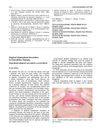
 A woman developed thick gums from everolimus treatment after a kidney transplant.
 2 citations
,
January 2022 in “bioRxiv (Cold Spring Harbor Laboratory)”
2 citations
,
January 2022 in “bioRxiv (Cold Spring Harbor Laboratory)” This study found that low temperatures and nitrogen deficiency trigger root hair elongation through a molecular mechanism involving the receptor kinase FERONIA and the TOR Complex 1.
 54 citations
,
January 2016 in “Cell reports”
54 citations
,
January 2016 in “Cell reports” This study found that different epidermal stem cell populations contribute to the formation of various skin tumors and new hair follicles following β-catenin activation in the adult epidermis.