 6 citations
,
September 1988 in “Drug intelligence & clinical pharmacy”
6 citations
,
September 1988 in “Drug intelligence & clinical pharmacy” This report documents a case of dermatological toxicity associated with chronic minoxidil therapy, highlighting the emergence of a severe rash after three years of use, which recurred upon inadvertent rechallenge.
9 citations
,
January 2014 in “Molecular Genetics and Metabolism Reports” This study discovered that a specific G to C mutation in the ornithine aminotransferase gene is linked to the retarded hair growth phenotype in mice and may serve as a model for human gyrate atrophy.
 68 citations
,
September 1990 in “Biochemical Pharmacology”
68 citations
,
September 1990 in “Biochemical Pharmacology” This study found that minoxidil is bioactivated through sulfation by the phenol-sulfating form of phenol sulfotransferase in human liver.
 8 citations
,
January 2011 in “Collection of Czechoslovak Chemical Communications”
8 citations
,
January 2011 in “Collection of Czechoslovak Chemical Communications” This study developed and validated a sensitive method using adsorptive cathodic stripping voltammetry to directly determine minoxidil in topical solutions, shampoos, and creams, achieving high recovery rates and precision.
 8 citations
,
September 2016 in “Pediatric dermatology”
8 citations
,
September 2016 in “Pediatric dermatology” This review discusses the diverse clinical manifestations of mucopolysaccharidoses in children and emphasizes the importance of early diagnosis and treatment initiation, but it reports no new clinical findings.
 April 2016 in “The journal of investigative dermatology/Journal of investigative dermatology”
 In this study, Mpzl3-/- mice developed severe seborrhea-like dermatitis with skin inflammation, indicating MPZL3's role in the skin condition's development, independent of adaptive immunity.

This study found that social hair plucking in captive rhesus macaques may share traits with both prosocial and aggressive behaviors and is associated with alopecia and hair cortisol levels.
31 citations
,
November 1965 in “Journal of Mammalogy” This study found that in mink, the pituitary gland is essential for normal seasonal pelage cycles, and manipulating hormone levels can affect hair growth and type.
January 2020 in “한국미용학회지” This study found that incorporating Musa extracts in pretreatment products effectively mitigated hair damage during permanent wave application, closely maintaining hair thickness and tensile strength compared to untreated hair.
16 citations
,
May 2006 in “PubMed” This article reviews the diverse regulatory roles of alpha-melanocyte-stimulating hormone in skin biology, highlighting its potential involvement in maintaining tissue homeostasis and protecting against inflammation-induced DNA damage but reports no new clinical findings.
February 2026 in “Advanced Healthcare Materials” This study proposes a metal-organic gel-encapsulated microneedle system with antibacterial, anti-inflammatory, and pro-angiogenic properties for treating infected wounds, demonstrating potential for precise and adaptive management by targeting various stages of wound healing.
13 citations
,
April 2024 in “International Journal of Molecular Sciences” This literature review highlights the importance of understanding the mechanisms behind the gradual mosaic loss of the Y chromosome (mLOY) in men, its association with various health conditions like cardiovascular diseases and cancer, and its potential as a marker for age inference.
 12 citations
,
February 2010 in “Tetrahedron Letters”
12 citations
,
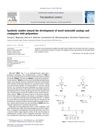
February 2010 in “Tetrahedron Letters” This article describes the synthesis of novel polyamine-modified minoxidil analogs and conjugates to potentially enhance minoxidil's biological activity, selectivity, and water solubility, but reports no new biological results.
 November 2009 in “Eclética Química”
 In this study, a potentiometric titration method was developed for determining minoxidil, achieving recoveries of 97.4% to 98.7%, and it showed agreement with a chromatographic procedure at a 90% confidence level.
 2 citations
,
February 2023 in “Research Square (Research Square)”
2 citations
,
February 2023 in “Research Square (Research Square)” In this study, a newly engineered scaffold, PADM-MX-Ag-Si@Dox, demonstrated potential as a multifunctional biomaterial for postoperative melanoma treatment by controlling drug release, enhancing wound healing, and enabling real-time tumor surveillance through temperature, pH, and electrical stimuli.
 15 citations
,
June 2020 in “Applied Materials Today”
15 citations
,
June 2020 in “Applied Materials Today” This study found that SA-MS hydrogel released Mo4+ ions which promoted healing of disease-impaired wounds by enhancing cell proliferation and angiogenesis, and through its photothermal effects addressed skin cancer-impaired wounds in mice.
 June 2026 in “Drug Delivery and Translational Research”
 This study developed a spring-driven microneedle booster that improved early and cumulative delivery of minoxidil, accelerating hair regrowth compared to traditional roller methods in an androgenetic alopecia model.
 1 citations
,
December 2023 in “Cutis”
1 citations
,
December 2023 in “Cutis” This systematic review found that toluidine blue may be valuable for diagnosing and treating specific skin tumors in the context of Mohs micrographic surgery, though literature on its use is limited and mostly qualitative.
12 citations
,
July 2011 in “Experimental Dermatology” This study found that mEGF ethosomal delivery systems mainly penetrated mice skin through the pilosebaceous unit and successfully induced hair follicles to transition from the telogen to anagen phase.

Using 5% minoxidil foam twice daily can help regrow hair, especially in younger men aged 20-30.
6 citations
,
March 1991 in “Journal of Radioanalytical and Nuclear Chemistry” Manganese levels in hair may be linked to multiple sclerosis.
1 citations
,
July 2024 in “Journal of Investigative Dermatology” MPZL3 protein affects hair growth cycles and could help manage hair loss.
 May 2026 in “Journal of the Egyptian Womenʼs Dermatologic Society”
 This review discusses microneedling radiofrequency in cosmetic dermatology, particularly for skin texture improvement and various conditions, and reports no new clinical results.
11 citations
,
January 1956 in “Journal of Investigative Dermatology”  29 citations
,
November 2014 in “Experimental Dermatology”
29 citations
,
November 2014 in “Experimental Dermatology” This study found that α-MSH administration before skin wounding in adult mice reduced inflammation and scar area, suggesting a potential pathway to more regenerative healing.
 5 citations
,
January 2018 in “Javma-journal of The American Veterinary Medical Association”
5 citations
,
January 2018 in “Javma-journal of The American Veterinary Medical Association” This case report documents the first successful management of accidental minoxidil toxicosis in a dog, resulting in full recovery after treatment with supportive care, including medications for blood pressure and potential toxicity mitigation.
June 2025 in “OPAL (Open@LaTrobe) (La Trobe University)” This study found that a novel bioengineered microneedle patch successfully delivered minoxidil to induce hair growth in a mouse model, suggesting a promising approach to improve treatment for androgenetic alopecia.
4 citations
,
November 2017 in “PubMed” This study found that Synsepalum dulcificum seed oil hair treatment significantly reduced hair breakage and improved hair health indices in women, outperforming both placebo and argan oil treatments.
 4 citations
,
January 2009 in “Eclética Química”
4 citations
,
January 2009 in “Eclética Química” This study described a potentiometric titration method for determining minoxidil, which showed recoveries of 97.4 to 98.7% and agreed with chromatographic results within a 90% confidence level.
3 citations
,
November 2024 in “Electrochimica Acta” A new, quick method accurately detects minoxidil in drugs and cosmetics.