1 citations
,
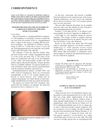
January 2022 in “Annals of Dermatology” In this case report, researchers identified a novel homozygous missense mutation in the MBTPS2 gene associated with the mild form of IFAP syndrome in a 7-year-old boy.
5 citations
,
August 2021 in “Experimental dermatology” This study suggests that Merkel cell polyomavirus T antigen-positive cells resembling Merkel cell carcinoma may originate from epithelial cells in human hair follicles, potentially informing future transgenic mouse models for this cancer.
1 citations
,
September 2017 in “BMJ” The man has a disease causing skin patches, thickened nerves, and mild muscle weakness.
20 citations
,
August 2021 in “Clinical and Experimental Dermatology” This case report describes a drug-related skin eruption following AstraZeneca-Oxford vaccination, which resolved after treatment with oral prednisolone.
 February 2025 in “The Indian Journal of Animal Sciences”
 This study investigated a severe outbreak of mange in a goat herd in North Goa and found that treatment with Ivermectin and other supplements led to complete recovery, highlighting the need for preventive measures in hot, humid regions.
 April 2021 in “Journal of Investigative Dermatology”
 This study found that multicomponent microarray patches for SARS-CoV-2 vaccination produced stronger immune responses and fewer side effects in mice compared to traditional intramuscular injection.
 16 citations
,
January 2005 in “Pediatric Dermatology”
16 citations
,
January 2005 in “Pediatric Dermatology” This brief report describes a case of Fox-Fordyce disease in a prepubertal girl but reports no new clinical findings.
46 citations
,
May 2013 in “The journal of investigative dermatology/Journal of investigative dermatology” This review discusses the state-of-the-art knowledge on pseudoxanthoma elasticum, summarizing recent advancements in genetics, pathomechanisms, and potential treatments but reports no new clinical findings.
 November 2022 in “The journal of investigative dermatology/Journal of investigative dermatology”
 This study suggests that varicella-zoster virus infection in skin cells may play a role in segmental vitiligo's progression and depigmentation.
1 citations
,
July 2024 in “Journal of Investigative Dermatology” Plaquenil can cause a severe skin reaction called AGEP, requiring prompt diagnosis and treatment.
19 citations
,
March 2016 in “British journal of dermatology/British journal of dermatology, Supplement” In this study, evidence that trichodysplasia spinulosa-associated polyomavirus targets follicular keratinocytes was observed in a pediatric case, suggesting these cells as the primary viral target.
 23 citations
,
January 2010 in “Journal of Medical Primatology”
23 citations
,
January 2010 in “Journal of Medical Primatology” This study found that alopecia in captive Rhesus macaques may be linked to chronic hypersensitivity dermatitis with CD4+ cell inflammation, possibly influenced by altered housing and reduced pathogen exposure.
April 2026 in “International Journal of Agriculture and Food Science” In this case report, a young goat with mixed ectoparasitic infestations including Psoroptes spp. showed significant clinical improvement and resolution of skin lesions after treatment with ivermectin-based therapy and supportive care, illustrating the importance of early diagnosis and comprehensive management for recovery.
 10 citations
,
October 2015 in “Journal of the International Association of Providers of AIDS Care”
10 citations
,
October 2015 in “Journal of the International Association of Providers of AIDS Care” This case report describes a severe form of HIV-associated pityriasis rubra pilaris in a dark-skinned woman that improved rapidly and sustainably with combination antiretroviral therapy, despite atypical presentation without significant erythroderma.
 December 2022 in “The journal of pediatrics/The Journal of pediatrics”
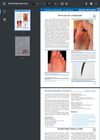
 This case report describes a diagnosis of cutaneous pilus migrans in a 19-month-old girl, highlighting its rarity and distinction from larva migrans, and confirming it through microscopic examination.
 23 citations
,
September 2021 in “Frontiers in Medicine”
23 citations
,
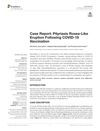
September 2021 in “Frontiers in Medicine” This report describes a rare case of pityriasis rosea-like eruption in a 52-year-old Thai woman following Oxford/AstraZeneca COVID-19 vaccination, emphasizing the condition does not preclude further vaccinations.
 September 2025 in “Media Kedokteran Hewan”
 This study found that 90% of African pygmy hedgehogs at Golden Dhonje Farm in Bogor District were affected by potential zoonotic fungi, including Scopulariopsis sp. and Penicillium sp.
January 2024 in “Veterinary Science and Medicine Journal” In this case report, a 1.5-year-old Pomeranian named Beb with respiratory and skin issues was diagnosed with pneumonia and demodecosis; following a two-week treatment including antibiotics, ivermectin, and supportive care, Beb's symptoms resolved, and hair regrowth was observed.
1 citations
,
January 2008 in “SKINmed Dermatology for the Clinician” This case report describes a patient with mucous membrane pemphigoid who experienced recurrent blisters and cicatricial alopecia, showing improvement with prednisolone and dapsone treatment.
 May 2026 in “Journal of Wildlife and Conservation Medicine”
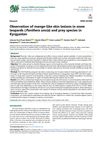
 This study found that camera trap images revealed mange-like skin lesions in snow leopards and other species in Kyrgyz reserves, with detection rates varying widely and raising concerns about disease spread.
5 citations
,
September 1989 in “Pediatric dermatology” Persistent papular plaques on children's faces need better understanding and treatment.
14 citations
,
June 2021 in “British Journal of Dermatology” This article discusses the BIOMAP consortium's efforts in standardizing data for atopic dermatitis and psoriasis research to facilitate personalized medicine, but it presents no new research findings.
 8 citations
,
August 1997 in “Australasian Journal of Dermatology”
8 citations
,
August 1997 in “Australasian Journal of Dermatology” This review discusses the distinctive non-infective skin presentations of HIV infection from a dermatological perspective and reports no new clinical findings.
 14 citations
,
January 2020 in “Korean Journal of Family Medicine”
14 citations
,
January 2020 in “Korean Journal of Family Medicine” This case study reported a rare occurrence of lepromatous leprosy with Lucio phenomenon in a 50-year-old Indonesian living in Malaysia, highlighting the necessity for primary care practitioners, even in non-endemic areas, to recognize this serious leprosy reaction to prevent complications and transmission.
1 citations
,
April 2024 in “Pathogens” This study observed mycobacterial infection with M. xenopi in a pet ferret, noting its resistance to doxycycline, and highlighted the potential zoonotic transmission risk associated with such infections.
2 citations
,
June 1953 in “Journal of the American Medical Association” This article explores the correlation between alopecia leprotica and Buddhist customs, presenting evidence that leprosy is contracted during infancy or childhood rather than in maturity; it reports no new clinical findings.
 February 2018 in “BMJ case reports”
 This case report describes an 18-year-old woman with a pruritic rash featuring extensive confluent scaly erythema, hyperkeratotic follicular plugging, and waxy keratoderma on palms and soles.
28 citations
,
October 2000 in “International Journal of Dermatology” This case report details a 37-year-old man who developed eosinophilic pustular dermatosis after previously resolving herpes zoster, with successful treatment using itraconazole and cycloproxolamine.
April 2026 in “The FASEB Journal” In this study, researchers identified exosomal miR-199a-3p as a key factor in the regulation of melanogenesis by dermal papilla cells, finding that it enhances melanocyte proliferation and melanin production, suggesting potential therapeutic targets for pigmentation disorders.

This study found that sarcoptic mange significantly decreased vicuña and guanaco populations in San Guillermo National Park, Argentina, likely originating from mange-infected llama introduced nearby, raising the risk of local extinction.