9 citations
,
June 2011 in “American Journal of Dermatopathology” This report presents a case of molluscum contagiosum virus infection within an epidermoid cyst in a 13-year-old on long-term steroid treatment, highlighting its rare occurrence and need for histological examination for accurate diagnosis.
October 2021 in “The journal of investigative dermatology/Journal of investigative dermatology” This study observed that recognizing herpetic infection in pemphigus patients can help avoid unnecessary changes in immunosuppressive treatments for lesions wrongly presumed treatment-resistant.
21 citations
,
February 1988 in “Toxicology” This study found that high doses of TCB caused severe toxicity in cotton top marmoset monkeys, with clinical and histological changes similar to those in humans and other primates exposed to PCBs.
3 citations
,
December 2004 in “PubMed” This study observed an outbreak of dermatophytosis caused by Trichophyton species in farmed mink in the USA, affecting primarily dark-colored kits with skin lesions.
 1 citations
,
June 2011 in “Journal of Genetics”
1 citations
,
June 2011 in “Journal of Genetics” Some human genetic markers work for genetic studies in pig-tailed and stump-tailed macaques, which can help in their conservation.
11 citations
,
November 2019 in “The FASEB Journal” In this study, a missense mutation in the MAP2 gene was found to be associated with reduced hair follicle density, leading to the hairless phenotype in pigs.
February 2026 in “Bioscientia Medicina Journal of Biomedicine and Translational Research” This case report highlights the importance of considering eosinophilic pustular folliculitis in adolescent patients with persistent papulopustular eruptions to avoid misdiagnosis and ensure effective anti-inflammatory treatment.
7 citations
,
October 2012 in “Anais Brasileiros de Dermatologia” This case report highlights the simultaneous presence of white piedra, identified as T. inkin, and pediculosis capitis in one patient to emphasize their clinical distinctions.
 December 2023 in “The journal of investigative dermatology/Journal of investigative dermatology”
 In a mouse model study, researchers observed that the absence of MCPIP1 in myeloid cells decreased susceptibility to chemically induced skin papillomas but caused significant hair loss and skin pigmentation changes, suggesting a role for MCPIP1 in skin carcinogenesis and follicle integrity.
24 citations
,
September 2007 in “Veterinary Dermatology” This report documented the first known case of Malassezia slooffiae-associated dermatitis identified in a goat through diagnostic work-up, including histology and DNA sequencing.
 17 citations
,
December 2003 in “Veterinary dermatology”
17 citations
,
December 2003 in “Veterinary dermatology” In this study, mange lesions with alopecia and crusts in masked palm civets in Japan were caused by the mite Notoedres cati.
3 citations
,
November 2021 in “Case Reports in Infectious Diseases” This report describes a case where syphilis mimicked other conditions in an HIV-positive patient, illustrating the need for vigilance due to its unpredictable presentation, even with undetectable HIV serology.
 January 1999 in “American Journal of Medical Genetics Part A”
 This case report describes a rare occurrence of ectodermal dysplasia features in a 14-year-old with MBTPS1 gene variants, expanding the known spectrum of related disorders.
 April 2018 in “The journal of investigative dermatology/Journal of investigative dermatology”
 This phase 2a trial evaluated Samcyprone for common wart treatment and found that while a sensitization reaction is necessary for therapeutic response, its level does not predict wart clearance.

In this case report, a woman's Majocchi's granuloma, linked to her pet guinea pig infected with Trichophyton mentagrophytes, improved significantly with a combination of terbinafine and ketoconazole cream.
15 citations
,
August 2004 in “Journal of the American Academy of Dermatology” This report presents a rare case where molluscum contagiosum folliculitis developed after a 23-year-old woman shaved her legs, highlighting the need to consider viral causes in similar persistent skin conditions following hair removal.
 1 citations
,
January 2016 in “Case Reports in Clinical Medicine”
1 citations
,
January 2016 in “Case Reports in Clinical Medicine” This case report describes a 46-year-old Japanese man with syphilitic alopecia and HIV who showed rapid improvement and hair regrowth after taking ampicillin.
 July 2023 in “The Journal of Family Practice”
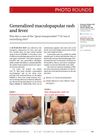
 This case study describes a 29-year-old man who presented with a fever and a generalized maculopapular rash, alongside symptoms like hair loss and joint pain, leading to an investigation into whether his condition was a case of the "great masquerader.
1 citations
,
July 2025 in “Journal of Investigative Dermatology” April 2015 in “Journal of the American Academy of Dermatology” This case study suggests that the most likely diagnosis for the patient with a pink, scaling rash is secondary syphilis.
 June 2023 in “Pediatric investigation”
 This case report describes a 7-year-old boy with pityriasis versicolor presenting as scalp hypopigmentation, a rare distribution for this fungal infection. Diagnosis was confirmed via Wood's lamp examination and microscopy, and the condition resolved after treatment with topical terbinafine hydrochloride cream.
September 1973 in “Primates” 10 citations
,
May 1991 in “Journal of the American Academy of Dermatology” December 2024 in “Annals of Medicine and Surgery” Early diagnosis of pseudopelade of Brocq in men is crucial to prevent permanent hair loss.
49 citations
,
July 2000 in “Journal of Histochemistry & Cytochemistry” This study found cell-specific variations in POMC mRNA and peptide expression in murine skin, suggesting that PC1 and PC2 convertases contribute to differential POMC processing.
 29 citations
,
June 2005 in “Journal of Zoo and Wildlife Medicine”
29 citations
,
June 2005 in “Journal of Zoo and Wildlife Medicine” This study concluded that coat damage in captive rhesus macaques is unlikely caused by parasitic, bacterial, or mycotic infections but may be linked to environmental or behavioral factors affecting hair growth.
89 citations
,
March 1996 in “Proceedings of the National Academy of Sciences” This study found that homozygous mutant mice with a hypomorphic CD18 mutation developed a chronic inflammatory skin disease resembling human psoriasis, potentially implicating additional genetic factors in disease susceptibility.
 3 citations
,
January 2008 in “Journal of the American Academy of Dermatology”
3 citations
,
January 2008 in “Journal of the American Academy of Dermatology” A patient's skin rash did not affect the area where a previous viral rash was healing, suggesting a rare immune response.
 April 2017 in “Journal of Investigative Dermatology”
 This study found that the PON1 192 R allele was associated with an increased risk of psoriasis and altered lipid profiles in patients from Western Mexico.
 7 citations
,
March 2022 in “Scientific reports”
7 citations
,
March 2022 in “Scientific reports” In this study, researchers found that pigs with genetically disrupted ANTXR1 were resistant to Senecavirus A infection, showing no clinical symptoms, and provided a model for human GAPO syndrome, while confirming ANTXR1 as a receptor for the virus.