June 2017 in “The Medical Journal of Australia” This article provides no abstract or new research findings.
5 citations
,
March 2012 in “Veterinary dermatology” This case report describes a potential drug-induced localized scleroderma in a Persian cat following the application of a 'spot-on' treatment.
6 citations
,
September 2011 in “Journal of the American Academy of Dermatology” This report describes a case of secondary syphilis with an unusual folliculocentric papular eruption in an HIV-positive patient, underlining the diagnostic challenges and importance of biopsy with treponemal staining in such cases.
5 citations
,
November 2010 in “Veterinary Record” Treatment with oral terbinafine and topical enilconazole was successful in resolving a Trichophyton dermatophytosis outbreak in L'Hoest's monkeys, with complete mycological cure achieved after eight weeks.
March 2019 in “eCommons (Cornell University)” This report covers the diagnosis and treatment of equine pemphigus foliaceus presented by a case study of a Hackney pony mare, showing improvement with prednisolone treatment.
 28 citations
,
January 2022 in “PLoS ONE”
28 citations
,
January 2022 in “PLoS ONE” This study reports that a sarcoptic mange outbreak, likely originating from mange-infected llamas from a governmental program, dramatically reduced vicuña and guanaco populations in San Guillermo National Park, Argentina.
 2 citations
,
June 2003 in “International Journal of Acarology”
2 citations
,
June 2003 in “International Journal of Acarology” This study describes a new mite species from marmots in a city park in Washington, noting that infested marmots displayed significant hair loss and tissue abnormalities.
July 2023 in “Indian Journal of Sexually Transmitted Diseases and AIDS” This case study reports that moth-eaten alopecia and a macular rash, along with positive histopathology and serology tests, indicated a diagnosis of secondary syphilis in a 24-year-old male patient.
 January 1999 in “Journal of the European Academy of Dermatology and Venereology”
 RAPK is a rare skin disorder with pigmented spots, mainly on hands and feet, starting in youth.
2 citations
,
April 2020 in “International Journal of Dermatology and Venereology” This review summarizes current evidence on how beta-human papillomavirus and Merkel cell polyomavirus may contribute to the development of nonmelanoma and Merkel cell skin carcinomas, respectively, but it reports no new clinical findings.
 36 citations
,
November 2000 in “Journal of the American Academy of Dermatology”
36 citations
,
November 2000 in “Journal of the American Academy of Dermatology” This case study describes a unique patient with dermatomyositis who exhibited features of pityriasis rubra pilaris and porokeratosis, suggesting markers for malignancy warranting thorough investigation and monitoring.
 9 citations
,
November 2000 in “Journal of the American Academy of Dermatology”
9 citations
,
November 2000 in “Journal of the American Academy of Dermatology” This report presents a rare case of a patient with type Wong dermatomyositis who also exhibits clinical and histologic features of porokeratosis, potentially signaling associated malignancies in dermatomyositis patients.
January 2025 in “Indian Journal of Small Ruminants (The)” In this case study of a Beetal doe with severe skin lesions, the researchers diagnosed concurrent psoroptic mange and malasseziosis, and reported successful treatment with a combination of Ivermectin, antibiotics, and topical applications, leading to reduced skin lesions and new hair growth.
 133 citations
,
May 2016 in “Cell Host & Microbe”
133 citations
,
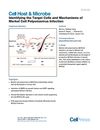
May 2016 in “Cell Host & Microbe” In this study, human dermal fibroblasts were identified as natural host cells that support productive Merkel cell polyomavirus infection, and the MEK antagonist trametinib was introduced as an effective inhibitor to control the virus.
20 citations
,
October 2005 in “Archives of Dermatological Research”  16 citations
,
April 2007 in “Journal of Medical Primatology”
16 citations
,
April 2007 in “Journal of Medical Primatology” This study reports that a 14-year-old female rhesus monkey with alopecia universalis was found to have a T-cell-mediated autoimmune disease similar to human alopecia areata universalis.
9 citations
,
January 2015 in “Indian Dermatology Online Journal” This case report highlights the successful treatment of Kaposi varicelliform eruption in a pemphigus vulgaris patient using intravenous acyclovir, alongside antibiotics, resulting in healing of skin lesions with scarring.
15 citations
,
July 2015 in “Journal of exotic pet medicine” This review discusses the prevalence, diagnosis, treatment, and prevention of zoophilic dermatophyte infections in small exotic mammals and reports no new clinical findings; it emphasizes the need for veterinary guidance and public awareness.
December 2020 in “American Journal of Transplantation” This article discusses a journal-based CME activity on rare viral skin eruptions in pediatric transplant patients and reports no new clinical results; it aims to improve physicians' knowledge and treatment of this condition.
 3 citations
,
May 2010 in “Archives of dermatology”
3 citations
,
May 2010 in “Archives of dermatology” This excerpt discusses website navigation and access details for JAMA Dermatology and reports no new research findings.
1 citations
,
December 2020 in “Case reports in dermatological medicine” This case report discusses a 67-year-old male with pre-existing pemphigus vulgaris who showed nearly 90% resolution of his skin lesions after two weeks of acyclovir treatment, accompanied by continued use of systemic steroids.
 June 2023 in “JAAD Case Reports”
 This article reviews the epidemiology of desmoplastic melanoma and reports no new clinical findings, emphasizing higher risks in chronically sun-exposed older males.
 20 citations
,
March 1985 in “Journal of The American Academy of Dermatology”
20 citations
,
March 1985 in “Journal of The American Academy of Dermatology” Genetic factors alone might not cause pemphigus vulgaris; other factors like birth complications and puberty may trigger it.
 16 citations
,
January 2010 in “Indian Journal of Dermatology, Venereology and Leprology”
16 citations
,
January 2010 in “Indian Journal of Dermatology, Venereology and Leprology” This review discusses the role of skin manifestations as early markers and prognostic indicators of HIV infection in children but reports no new clinical results.
14 citations
,
March 2000 in “Journal of Zoo and Wildlife Medicine” This study identified a new Demodex species causing demodicosis in a zoo koala, successfully treated with daily oral ivermectin.
 6 citations
,
February 2010 in “Journal of The American Academy of Dermatology”
6 citations
,
February 2010 in “Journal of The American Academy of Dermatology” This case report details a 31-year-old woman with a subcutaneous nodule on her hand characterized by necrosis and lymphocytic infiltrate.
 1 citations
,
May 2025 in “The Journal of Rheumatology”
1 citations
,
May 2025 in “The Journal of Rheumatology” This case report highlights the challenge of distinguishing between neuropsychiatric lupus and rituximab-associated progressive multifocal leukoencephalopathy in systemic lupus erythematosus patients, emphasizing the importance of early recognition and careful management.
2 citations
,
September 2017 in “Journal of Zoo and Wildlife Medicine” This case report presents the first known instance of cutaneous lymphoma in a nondomestic bovid, documented in a 13-year-old addax.
 13 citations
,
July 2012 in “Pigment Cell & Melanoma Research”
13 citations
,
July 2012 in “Pigment Cell & Melanoma Research” In this study, researchers identified a new dominant mutation in Hairless mice, called Pied, resulting from a deletion in the Adam10 gene, which causes freckle-like skin pigmentation by inhibiting melanocyte expansion.
 June 2024 in “British Journal of Dermatology”
 In this case study, a 46-year-old post-transplant woman with poorly controlled diabetes exhibited a rare acquired form of epidermodysplasia verruciformis associated with HPV-49, marked by unique histological findings that distinguishing it from trichodysplasia spinulosa.