Sarcoptic Mange Outbreak Decimates South American Wild Camelid Populations in San Guillermo National Park, Argentina
January 2022
in “
PLoS ONE
”
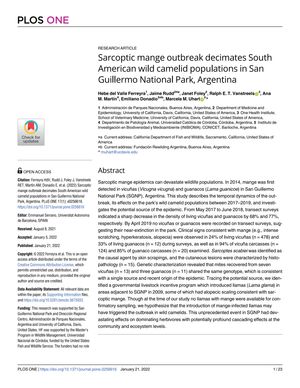
Studysummary This study reports that a sarcoptic mange outbreak, likely originating from mange-infected llamas from a governmental program, dramatically reduced vicuña and guanaco populations in San Guillermo National Park, Argentina. Our plain-language summary of this paper — not a Tressless recommendation.
The study documented a severe outbreak of sarcoptic mange in San Guillermo National Park, Argentina, which drastically reduced the populations of vicuñas and guanacos between 2017 and 2019. The density of these wild camelids decreased by 68% and 77%, respectively, and by April 2019, they were nearly extinct in the park. Mange symptoms, such as intense scratching, hyperkeratosis, and alopecia, were observed in a significant portion of both living and deceased animals. Sarcoptes scabiei was identified as the cause, with genetic analysis suggesting a single source of the outbreak. The introduction of mange-infected llamas through a governmental livestock program in 2009 was hypothesized as the potential trigger for the epidemic. This event had devastating impacts on the park's ecosystem, affecting the dominant herbivores and potentially causing broader ecological consequences.