 40 citations
,
July 1995 in “Toxicologic Pathology”
40 citations
,
July 1995 in “Toxicologic Pathology” In this study, glyburide prevented or significantly reduced cardiovascular lesions in dogs caused by minoxidil by blocking its hemodynamic effects, suggesting the toxicity is related to these profound effects rather than direct heart toxicity.
 92 citations
,
September 2019 in “ACS nano”
92 citations
,
September 2019 in “ACS nano” This study observed that a wearable electric stimulation device significantly promoted hair regeneration in rats and mice, outperforming conventional pharmacological treatments and enhancing growth factor secretion.
 90 citations
,
May 1972 in “Clinical Pharmacology & Therapeutics”
90 citations
,
May 1972 in “Clinical Pharmacology & Therapeutics” Minoxidil quickly leaves blood, turns into urine metabolites, and has lasting blood pressure-lowering effects.
 46 citations
,
January 1991 in “Journal of Investigative Dermatology”
46 citations
,
January 1991 in “Journal of Investigative Dermatology” Minoxidil works in liver and outer hair root sheath for hair growth.
 29 citations
,
October 1996 in “Toxicology and Applied Pharmacology”
29 citations
,
October 1996 in “Toxicology and Applied Pharmacology” Higher minoxidil doses in dogs cause faster heart rate, lower blood pressure, and heart issues.
 28 citations
,
April 2008 in “Journal of Inclusion Phenomena and Macrocyclic Chemistry”
28 citations
,
April 2008 in “Journal of Inclusion Phenomena and Macrocyclic Chemistry” This study identified a weak interaction between minoxidil and ß-cyclodextrin in solution, forming an inclusion complex with a 1:1 molar ratio.
 22 citations
,
March 2020 in “Cosmetics”
22 citations
,
March 2020 in “Cosmetics” This review discusses the potential of nanotechnology-based formulations for delivering topical minoxidil to improve hair loss treatment outcomes and reports no new clinical results, urging further research into their benefits and safety considerations.
 22 citations
,
June 2012 in “Journal of Investigative Dermatology”
22 citations
,
June 2012 in “Journal of Investigative Dermatology” This study found that adiponectin promotes hair growth in cultured human hair follicles, suggesting its receptors could be a target for clinical hair growth strategies.
 13 citations
,
March 2021 in “British Journal of Pharmacology”
13 citations
,
March 2021 in “British Journal of Pharmacology” This study found that KY19382 can effectively promote hair regeneration and follicle neogenesis in mice and human hair models by activating Wnt/β-catenin signalling, suggesting potential use for alopecia treatment.
 8 citations
,
September 2017 in “Journal of Natural Medicines”
8 citations
,
September 2017 in “Journal of Natural Medicines” This study reported that the n-butanol fraction of Perilla frutescens extract, particularly rosmarinic acid, showed potential for hair regrowth and anti-androgenic activity in male mice, suggesting it as a possible treatment for androgenetic alopecia.
 8 citations
,
January 2011 in “Organic and Biomolecular Chemistry”
8 citations
,
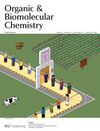
January 2011 in “Organic and Biomolecular Chemistry” Minoxidil reacts to nitrosation 7 times more than phenol, mainly due to its -NH₂ groups, leading to the creation of N-nitrosominoxidil.
 2 citations
,
January 2015 in “Journal of cosmetology & trichology”
2 citations
,
January 2015 in “Journal of cosmetology & trichology” This article reviews the negative impact of hair loss on self-esteem and quality of life across cultures without presenting new findings.
 2 citations
,
January 2018 in “The Korea Journal of Herbology”
2 citations
,
January 2018 in “The Korea Journal of Herbology” In this study with C57BL/6 mice, SHJ extract was associated with increased hair growth and density, suggesting potential use in hair care cosmeceuticals, while also enhancing melanin production in melanoma cells.
 1 citations
,
November 2019 in “The Korea Journal of Herbology”
1 citations
,
November 2019 in “The Korea Journal of Herbology” In this study, a herbal mixture (RAA) was found to promote hair growth in mice, showing increases in hair density and follicle size similar to minoxidil treatment.
 March 2026 in “Scientific Reports”
 This study found that Cnidium officinale extract and its compound ferulic acid improved hair growth by promoting dermal papilla cell function and mitochondrial activity, suggesting their potential as a new treatment option for alopecia, possibly through estrogen receptor alpha activation.
 September 2025 in “Frontiers in Medicine”
 This study found that angiopoietin-1 significantly reduces apoptosis and promotes proliferation in human follicle dermal papilla cells under DHT-induced stress, suggesting its potential as a therapeutic candidate for androgenetic alopecia.
 September 2023 in “Journal of microbiology and biotechnology”
 This study found that low molecular weight collagen peptide from fish may promote hair growth in both human cells and mice by activating the Wnt/β-catenin signaling pathway.
 September 2023 in “International Journal of Applied Pharmaceutics”
 This study found that a topical gel containing Minoxidil and Tofacitinib citrate showed promise for treating alopecia areata, with formulation F5 demonstrating effective drug release and stability in evaluations.
 January 2023 in “Anais do Congresso Brasileiro Interdisciplinar em Ciência e Tecnologia.”
 This study optimized conditions for quantifying minoxidil using high-performance liquid chromatography, establishing specific parameters for mobile phase, flow rate, column temperature, and retention time.
 121 citations
,
March 1989 in “Journal of Investigative Dermatology”
121 citations
,
March 1989 in “Journal of Investigative Dermatology” Minoxidil can help grow hair in mice by making cells grow and improving hair quality. More research needed.
 118 citations
,
October 2013 in “Trends in Genetics”
118 citations
,
October 2013 in “Trends in Genetics” The AUTS2 gene is linked to neurological disorders and may affect human brain development and cognition.
 53 citations
,
January 1993 in “Biochemical Pharmacology”
53 citations
,
January 1993 in “Biochemical Pharmacology” This study reports a method for efficiently synthesizing chromeno-pyrimidine-N-oxides in good to excellent yields, confirmed by X-ray analysis, through a reaction between 4-chloro-3-formylcoumarin and aromatic carboximide oximes.
 48 citations
,
June 2013 in “Journal of Dermatological Science”
48 citations
,
June 2013 in “Journal of Dermatological Science” This study found that valproic acid promoted human hair growth by increasing β-catenin levels, suggesting it may be a potential therapeutic option for alopecia.
 48 citations
,
April 2013 in “Expert Opinion on Investigational Drugs”
48 citations
,
April 2013 in “Expert Opinion on Investigational Drugs” This article reviews emerging treatments for androgenetic alopecia, including topical 5-alpha-reductase inhibitors and prostaglandin modulators, but reports no clinical results and calls for further efficacy evidence, especially for PRP.
 48 citations
,
June 2014 in “Neurobiology of Disease”
48 citations
,
June 2014 in “Neurobiology of Disease” This study found that stem cells derived from spinal and bulbar muscular atrophy patients exhibited reduced androgen receptor levels and HDAC6, providing potential insights into the disease mechanism for future therapies.
 35 citations
,
November 2019 in “Scientific Reports”
35 citations
,
November 2019 in “Scientific Reports” In this study using a mouse model and human hair follicle cells, shikimic acid was found to promote hair growth and may serve as a new therapeutic agent for alopecia.
 34 citations
,
February 1999 in “Journal of Dermatological Science”
34 citations
,
February 1999 in “Journal of Dermatological Science” This study found that minoxidil increased 17ß-hydroxysteroid dehydrogenase activity by nearly 40% in dermal papilla cells from balding scalps but not in nonbalding scalp cells or dermal fibroblasts.
 34 citations
,
February 1992 in “The Journal of Clinical Endocrinology and Metabolism”
34 citations
,
February 1992 in “The Journal of Clinical Endocrinology and Metabolism” In this study, the combination of finasteride and minoxidil significantly increased hair growth in balding male stumptail macaques compared to each drug alone.
 32 citations
,
March 2020 in “Drug Design Development and Therapy”
32 citations
,
March 2020 in “Drug Design Development and Therapy” This review examines the pharmacology, clinical efficacy, and adverse effects of oral finasteride for female pattern hair loss, and discusses potential new treatments like topical finasteride and dutasteride, but reports no new clinical results.
 31 citations
,
February 2014 in “Journal of dermatological science”
31 citations
,
February 2014 in “Journal of dermatological science” This study found that placental growth factor (PlGF) enhanced hair shaft elongation and accelerated hair follicle growth, suggesting its potential as a therapeutic target for alopecia.