 March 2005 in “Journal of The American Academy of Dermatology”
 Mycophenolate mofetil improved skin condition in a man with nephrogenic fibrosing dermopathy.

This study found that a machine-learning-driven strategy helped develop microneedles with high hardness and rapid dissolution, effectively promoting hair regrowth in androgenetic alopecia mice by activating the Wnt/β-catenin pathway, surpassing minoxidil's effects without biosafety risks.
 12 citations
,
April 2025 in “Discover Pharmaceutical Sciences”
12 citations
,
April 2025 in “Discover Pharmaceutical Sciences” This review examines microneedle patches for drug delivery, detailing their designs, materials, manufacturing methods, and potential advantages, but reports no new clinical results.
 1 citations
,
July 2022 in “Frontiers in Microbiology”
1 citations
,
July 2022 in “Frontiers in Microbiology” This study found that dietary supplementation with 0.2% MSM improved hair quality in kittens and had no significant negative effects on their growth performance, antioxidant capacity, or gut microbiota.
 1 citations
,
December 2012 in “Journal of the European Academy of Dermatology and Venereology”
1 citations
,
December 2012 in “Journal of the European Academy of Dermatology and Venereology” This letter to the editor reports that sentinel lymph node status is the strongest independent predictor for both disease-free and overall survival in patients with thick melanoma.
June 2026 in “Indian Dermatology Online Journal” In this case report, a 20-year-old man with a birthmark was identified as having a supernumerary nipple, a developmental anomaly, using dermoscopy to distinguish it from other pigmented skin lesions such as melanocytic nevus or basal cell carcinoma.
November 2025 in “Journal of Investigative Dermatology” N,N-Dimethylglycine sodium salt may improve skin health and treat hair loss.
10 citations
,
October 2018 in “Journal of molecular and cellular cardiology/Journal of Molecular and Cellular Cardiology” This study identified NM_026333 as a potential anti-aging gene that, when induced, may alleviate proton-induced aging symptoms in CF6-overexpressing and high salt-fed mice.
March 2005 in “Journal of the American Academy of Dermatology” Recognizing minor skin lesions can help identify serious cancer syndromes.
372 citations
,
December 2004 in “Nature Genetics”  9 citations
,
March 2024 in “Journal of Biomaterials Applications”
9 citations
,
March 2024 in “Journal of Biomaterials Applications” This study developed dissolving microneedles using specific polymers for transdermal delivery of rizatriptan benzoate, demonstrating improved drug skin penetration and significant alleviation of migraine symptoms in vivo compared to passive diffusion, suggesting potential advantages over conventional treatment methods for acute migraine.
 October 2024 in “Small Methods”
 This study found that dissolving microneedles loaded with platinum nanozymes induced faster hair growth in an androgenetic alopecia model than daily minoxidil applications, with no significant safety concerns.
 February 2024 in “Current Medicinal Chemistry”
 In this study, minoxidil nanoparticles significantly increased hair growth rate in C57BL/6 mice compared to traditional minoxidil, suggesting enhanced effectiveness and potential as a new formulation.
July 2024 in “Chemical Engineering Journal” A new microneedle system with minoxidil nanoparticles effectively promotes hair regrowth with fewer side effects.
 8 citations
,
November 1990 in “Archives of Dermatology”
8 citations
,
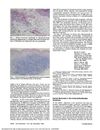
November 1990 in “Archives of Dermatology” This case report details a woman with eosinophilia-myalgia syndrome associated with L-tryptophan ingestion, highlighting skin lesions with abundant dermal mucin.
1 citations
,
July 1991 in “PubMed” This case report describes a patient with adrenomyeloneuropathy, highlighting unusual MRI findings of high signal areas in the right striatum.
 December 2023 in “Frontiers in microbiology”
 This study reported that mannan oligosaccharides improved the fur quality, immune response, antioxidant status, and gut microbiota of fur-growing raccoon dogs, suggesting they could potentially replace antibiotics in their diet.
324 citations
,
May 2002 in “Oncogene” This study identified a 14,883 bp genomic deletion affecting the Plcd1 and Vill genes as likely responsible for the abnormal phenotype observed in snthr-1Bao mice.
4 citations
,
December 2016 in “Blood” This study describes a case of cyclic thrombocytopenia where a novel MPL gene mutation may contribute to the disease, with gene expression changes in platelet and neutrophil genes preceding platelet count fluctuations.
March 2026 in “Materials Today Chemistry” Smart microneedles improve hair loss treatment by delivering drugs precisely with fewer side effects.
6 citations
,
June 1986 in “The Journal of Dermatology” This report discusses a case of reticular erythematous mucinosis syndrome, highlighting minimal mucin deposition and significant lymphocytic infiltration around the hair follicle, contributing to the ongoing debate about its nature as a mucinosis.
36 citations
,
July 1996 in “The journal of investigative dermatology/Journal of investigative dermatology” This research reports a new autosomal recessive mutation in mice, 'lanceolate hair', causing generalized alopecia and hair shaft abnormalities, which may serve as a model for Netherton's syndrome in humans.
March 2026 in “ACS Applied Materials & Interfaces” This study described a novel three-dimensional-printed microneedle system designed for improved transdermal delivery of minoxidil to treat hair loss, demonstrating effective hair regrowth and safety in a mouse model while allowing sustainable needle base recovery.
 2 citations
,
January 2008 in “Journal of Society of Cosmetic Chemists of Japan”
2 citations
,
January 2008 in “Journal of Society of Cosmetic Chemists of Japan” PMS nanoparticles improve damaged hair by protecting and restoring its surface and color.
6 citations
,
September 2014 in “Journal of the American Academy of Dermatology” In this report, researchers described a potential new variant of mucinous nevus, characterized by dilation of hair follicle pores and fibromucinous stroma in both the papillary and perifollicular dermis.
This study in cashmere goats identified the lncRNA MRPS28, which interferes with secondary hair follicle morphogenesis by inhibiting dermal papilla formation through sponging chi-miR-145-5p, offering insights into breeding strategies for improved cashmere quality.
This study developed a novel, 3D-printed dissolving microneedle system for delivering minoxidil to treat hair loss, which showed pH-triggered drug release and enhanced hair regrowth in an alopecia mouse model, offering a potentially sustainable and safe transdermal therapy option.
 21 citations
,
April 1982 in “Genetics Research”
21 citations
,
April 1982 in “Genetics Research” In this study, researchers observed that mice with the naked gene showed frequent absence of hair cuticle and cortical cells during follicle growth, with abnormal keratin deposition also noted.
February 2026 in “Advanced Science” This study found that the combination of TTNPB and CHIR99021 enhanced the derivation of highly advanced neural stem cells from human pluripotent stem cells, with improved chromatin accessibility and neuroectodermal gene expression, and these cells successfully engrafted in rat hippocampi to ameliorate depression-like symptoms.