3 citations
,
October 2023 in “Journal of Pain” In this exploratory study of trigeminal neuralgia patients undergoing microvascular decompression surgery, differential protein expression in plasma and cerebrospinal fluid was observed between responders and non-responders, suggesting potential biomarkers to predict surgical success and providing insights into the mechanisms of pain relief.
 January 2018 in “日本薬理学会年会要旨集 =”
 This study found that high-dose minoxidil, a potassium channel opener, may protect neuronal tissue from damage following transient focal cerebral ischemia in mice.
11 citations
,
June 2015 in “Scientific Reports” In this study of Han Chinese women, the mitochondrial DNA N haplogroup was associated with a higher risk of late-onset systemic lupus erythematosus and its specific manifestations, such as skin impairment and neurological disturbances.
 1 citations
,
February 2017 in “The American journal of dermatopathology/American journal of dermatopathology”
1 citations
,
February 2017 in “The American journal of dermatopathology/American journal of dermatopathology” This case report presented a 52-year-old man with cutaneous focal mucinosis, exhibiting rare follicular induction of the epidermis, underscoring the importance of recognizing this association in differential diagnoses.

In this study, a pH-responsive microneedle patch was developed, showing potential in rat models for treating spinal cord injuries by reducing inflammation, promoting nerve regeneration, and supporting neurogenesis, which contributed to improved motor and neurological recovery.
30 citations
,
August 2005 in “British journal of dermatology/British journal of dermatology, Supplement” This study identified a novel CDH3 mutation associated with sparse hair and pigmentary macular changes in two siblings with hypotrichosis but no visual symptoms.

This study found that polycystic ovary syndrome was the most common cause of hirsutism among premenopausal Algerian women.
 May 2023 in “Current Medicinal Chemistry”
 This review highlights the potential of microneedle devices in dermatology for conditions like skin aging and autoimmune skin diseases, emphasizing their ability to facilitate targeted drug delivery by creating temporary skin pathways.
This study found that scalp care using micro-needle therapy was effective in improving hair density and thickness in middle-aged women with menopausal symptoms compared to a control group.
18 citations
,
August 2011 in “Medical Hypotheses” This article discusses the relationship between sedentary behavior and chronic disease, proposing that "physical inactivity disease" may be a non-permissive brain disorder with various physiological effects, but it reports no new research results.
December 2022 in “The Turkish Journal of Pediatrics” This study reported that hair microscopy can help diagnose rare pediatric neurological diseases, as specific hair characteristics were linked to conditions like giant axonal neuropathy, Griscelli syndrome, and Menkes disease.
 16 citations
,
May 2000 in “Endocrinology”
16 citations
,
May 2000 in “Endocrinology” This study identified a new gene, mrp4, in mice, which suggests it may have a unique role in the growth and development of hair follicles in the ears and tails.
1 citations
,
January 2018 in “Jornal Brasileiro de Patologia e Medicina Laboratorial” This case report describes a 10-year-old girl with monilethrix, detailing hereditary autosomal dominant traits and distinctive nodular hair shaft abnormalities observed in her family through clinical examination and microscopic analysis.
 April 2019 in “Journal of Investigative Dermatology”
 In this report, the potential connection between Merkel cell carcinoma and Curvularia lunata infection in an elderly patient is discussed, highlighting the need for precise diagnostic methods and suggesting that surgery combined with the antifungal voriconazole may be a viable treatment option.
1 citations
,
April 2023 in “Indian Journal of Dermatology Venereology and Leprology” This case report describes a young adult with primary follicular mucinosis, successfully treated with topical tacrolimus, resulting in resolution without sequelae.
3 citations
,
January 2021 in “Molecular genetics & genomic medicine” In this study, novel mutations in the BTD gene were identified in a patient with profound biotinidase deficiency, highlighting the importance of biotinidase activity measurement and mutation analysis for early diagnosis.
 January 2025 in “Pakistan Veterinary Journal”
 This study examined the effects of microneedling on dogs with non-inflammatory alopecia and found that it may aid hair regrowth, especially for those with controlled endocrine disorders but persistent alopecia, as demonstrated by hair regrowth observed over 12 months in specific cases.
March 2026 in “Acta Pharmaceutica Sinica B” This review reports that microneedle-mediated transdermal drug delivery systems show promise in enhancing alopecia treatments by improving the efficacy of various therapeutic agents, including drugs, biologics, and stem cells, but highlights a gap between basic research advancements and clinical trial focus.
 4 citations
,
January 2025 in “Translational Psychiatry”
4 citations
,
January 2025 in “Translational Psychiatry” In this study, remote photobiomodulation therapy to the lungs improved behavioral and neurological outcomes in rats with repeated closed-head injuries, suggesting potential preventive benefits for brain health.
July 2024 in “International Journal of Molecular Sciences” This article proposes using the hallmarks of ageing and dysregulated microRNAs to create a molecular morbidity score that could improve prognostication and clinical trial inclusion for patients with multimorbidity.
 22 citations
,
February 2008 in “Journal of Neurochemistry”
22 citations
,
February 2008 in “Journal of Neurochemistry” This study found that minoxidil prevents long-term serotonergic toxicity induced by MDMA in rats, primarily by opening mitochondrial KATP channels and involving Akt and MAP kinases in its neuroprotective mechanism.
21 citations
,
April 2004 in “Australasian Journal of Dermatology” This report describes a rare case of hair and nail ectodermal dysplasia in a 3-year-old girl, where treatment with topical minoxidil resulted in minimal improvement after 12 months.
 August 2023 in “Asian Journal of Medical Sciences”
 In this study, microneedling combined with minoxidil solution showed a higher rate of excellent hair growth response in male androgenetic alopecia patients compared to microneedling with hair multivitamin solution, though some side effects like pain and bruising were noted.
March 2024 in “European Journal of Neuroscience” This study, using a reporter mouse line, characterized diverse subtypes of dopaminergic neurons in the enteric nervous system, identifying unique subtypes with potential roles in gut function and disease.
1 citations
,
October 2022 in “Journal of Cosmetic Dermatology” In this study, combining 2% minoxidil with weekly microneedling significantly improved hair regrowth in women with female pattern hair loss compared to using minoxidil alone, with an 85% effective rate reported in the group receiving both treatments over a 24-week period.
27 citations
,
September 2013 in “The FASEB Journal” This study reports that the loss of the protein Memo in mice leads to a reduced lifespan and suggests that Memo is a key regulator of FGFR signaling and vitamin D production.
1 citations
,
October 2025 in “International Journal of Molecular Sciences” This study found that zebrafish with a mutation in the GDP-fucose biosynthesis gene exhibited enhanced and faster regeneration of mechanosensory hair cells, implicating the importance of this gene and Notch signalling regulation in hair cell regeneration mechanisms.
 53 citations
,
January 2011 in “Diabetes”
53 citations
,
January 2011 in “Diabetes” The study found that severe insulin resistance and premature diabetes are common in patients with PCNT genetic defects, primarily affecting those over four years old, while not impacting early insulin signaling in adipocytes.
 133 citations
,
May 2016 in “Cell Host & Microbe”
133 citations
,
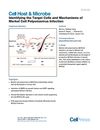
May 2016 in “Cell Host & Microbe” In this study, human dermal fibroblasts were identified as natural host cells that support productive Merkel cell polyomavirus infection, and the MEK antagonist trametinib was introduced as an effective inhibitor to control the virus.
 August 2008 in “European Neuropsychopharmacology”
 This study identified significant correlations between self-esteem, psychiatric symptoms, and health-related quality of life in peritoneal dialysis patients.