 June 2024 in “BioSCIENCE”
 This study reviewed the use of microinfusion of microparticles (MMP®) with methotrexate for treating alopecia frontal fibrosante and found it reduced symptoms associated with the condition and improved specific scalp measurements, showing that the technique is safe and well-tolerated.
 March 2024 in “Advanced science”
 This study observed that a novel extracellular matrix hydrogel made from human fibroblast-derived matrix improved wound healing in animal models, showing significant effects such as hair follicle formation, reduced inflammation, enhanced pro-healing growth factor levels, and interaction with macrophages, compared to traditional collagen hydrogels.
 September 2023 in “Medicine”
 This study found increased infiltration of specific immune cells, such as γδ T cells and CD8+ T cells, in the bald scalp of male androgenetic alopecia patients, and identified four key immune-related genes potentially involved in hair loss development through interferon-γ signaling pathways.
 November 2022 in “The journal of investigative dermatology/Journal of investigative dermatology”
 This study used single-cell and spatial transcriptomic profiling to identify specific molecular markers in human follicular dermal papilla cells, enhancing understanding of their role in hair follicle development.
October 2022 in “Faculty of 1000 Research Ltd” This review discusses the roles of various growth factors and cytokines in skin regeneration, highlighting their potential for future therapeutic development, and reports no new experimental findings.
 July 2022 in “The journal of investigative dermatology/Journal of investigative dermatology”
 This study suggests that particulate matter can induce inflammation in human outer root sheath cells, potentially affecting hair growth, through oxidative stress-dependent MAPK and JAK-STAT signaling pathways.
May 2022 in “Голова и шея.” This study identified distinct differences between mature and immature hypertrophic scars of the head and neck, with immature scars showing higher TGF-β expression and more pronounced inflammatory reactions.
 July 2021 in “IntechOpen eBooks”
 This review discusses the potential of ginseng and its metabolites for treating hair loss and reports no new clinical findings.
 January 2021 in “Faculty Opinions – Post-Publication Peer Review of the Biomedical Literature”
 This study found that ageing in women leads to significant structural and biological changes in the scalp hair follicle environment, which may affect hair growth.
 January 2020 in “Cosmetics”
 This study found that Ecklonia cava extract increased skin hydration and decreased redness, suggesting potential benefits for protecting and repairing scalp skin from pollutant-induced damage.
This study found that Heated radish extract potently suppressed melanin production in vitro and reduced wrinkle formation and collagen degradation in vivo, suggesting its potential as a skin whitening and antiaging product.
 April 2018 in “The journal of investigative dermatology/Journal of investigative dermatology”
 This study found that age-related changes in scalp dermal fibroblasts, including increased MMP-1 and reduced ECM components, may significantly affect the hair follicle environment and contribute to hair aging.

This study identified several age-related changes in gene expression associated with the extracellular matrix of scalp dermal fibroblasts, which may impact hair follicle maintenance in women over 40.
 September 2017 in “Journal of Investigative Dermatology”
 This study found that their novel 3D-imaging method, ASAXA-μCT, identified shrinkage of sweat glands as a key factor in skin aging, which leads to dermal defects, decreased elasticity, and increased wrinkling and sagging.
 April 2017 in “Australasian Journal of Dermatology”
 This study observed that systemic acitretin improved symptoms in 75% of lichen planopilaris patients, despite varied responses and a dominant female prevalence.
This study suggests that Lychnophora salicifolia Mart. extract in liposomal formulations could serve as an effective topical photochemopreventive agent by improving skin penetration and reducing oxidative and inflammatory damage from ultraviolet radiation.
 September 2016 in “Journal of Dermatological Science”
 This study found that P. cornucopiae extract showed antioxidant and protective effects on human skin fibroblasts, suggesting its potential as an antiaging agent by preventing oxidative stress-induced collagen breakdown.
This study found that in rats, combined treatment with finasteride and doxazosin altered epithelial cell behavior and matrix metalloproteinases activity, suggesting effects possibly mediated by TGF-β1 and androgen pathways.
January 2008 in “Acta Anatomica Sinica” In this study, minoxidil promoted hair follicle growth in culture by delaying catagen phase onset and possibly inhibiting TGFβ1 overexpression.
January 2007 in “동물실험대체법학회지” This article reviews in vitro methods for evaluating whitening, anti-wrinkle, and hair growth ingredients in cosmetics, noting that more human-relevant evaluation methods with reliable biomarkers are needed; it presents no new clinical outcomes.
This article discusses the role of epimorphin as a key morphoregulator for various epithelial cells in tubulogenesis and reports no experimental results on its signaling pathways.
 March 2023 in “Research Square (Research Square)”
 In this study, researchers found that changes in immune cell infiltration and immune-related gene expression may contribute to the immune microenvironment changes in male androgenetic alopecia.
June 2022 in “Journal of Cosmetic Dermatology” This review discusses minimally invasive procedures for female pattern hair loss and highlights their potential as adjunctive therapies, though the evidence for their efficacy is currently limited.
 43 citations
,
April 2017 in “Experimental Dermatology”
43 citations
,
April 2017 in “Experimental Dermatology” This review summarizes the genetic studies on female pattern hair loss, highlighting the lack of clearly identified susceptibility loci and suggesting distinct aetiological differences from male pattern hair loss.
6 citations
,
December 2023 in “Journal of Clinical Medicine” This review explores the potential link between psoriasis and metabolic syndrome, focusing on how disturbances in growth factors may connect these conditions and contribute to symptoms like keratinocyte proliferation and inflammation.
 20 citations
,
July 2000 in “PubMed”
20 citations
,
July 2000 in “PubMed” This article describes an organized diagnostic approach for identifying nonscarring and scarring alopecias to aid family physicians in making accurate in-office diagnoses, but it reports no new clinical findings.
 11 citations
,
June 2008 in “Dermatologic Surgery”
11 citations
,
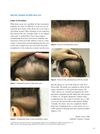
June 2008 in “Dermatologic Surgery” Transplanting chest hair into scalp scars may effectively treat wide donor scars in hair restoration.
 6 citations
,
March 2008 in “Dermatologic Surgery”
6 citations
,
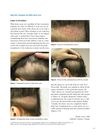
March 2008 in “Dermatologic Surgery” Transplanting chest hair into scars can effectively treat wide donor scars from hair restoration surgery.
 6 citations
,
December 1997 in “Journal of The American Academy of Dermatology”
6 citations
,
December 1997 in “Journal of The American Academy of Dermatology” CTE can distort results in hair growth trials, so exclude it carefully.
 4 citations
,
April 2000 in “Plastic and Reconstructive Surgery”
4 citations
,
April 2000 in “Plastic and Reconstructive Surgery” The document suggests fixing common hair transplant issues by combining artistic principles with plug reduction, recycling, and additional micrograft transplantation, while also potentially using arnica to help with post-operative swelling.