 2 citations
,
September 1980 in “Experientia”
2 citations
,
September 1980 in “Experientia” Polyethylene alanine caused hair loss in young lab animals but not in adults, with hair regrowth occurring within 20 days.
October 2022 in “Zenodo (CERN European Organization for Nuclear Research)” This study reported that combining Poly-D,L-Lactic Acid with Platelet-Rich Plasma for facial rejuvenation reduced wrinkle severity and improved skin tone and hyperpigmentation in a 45-year-old female patient.
 March 2024 in “Cytologia”
 In this study, researchers observed that melatonin-mediated LncRNA MTC in Liaoning cashmere goat skin fibroblasts enhances cell proliferation by interacting with the GSTM1 protein, affecting its complex formation with ASK1 and thereby inhibiting apoptosis, which may be relevant for improving cashmere growth.
January 2025 in “JAAD Case Reports” In this study, researchers noted that while Poly-L-lactic acid dermal fillers boost collagen synthesis to add volume and reduce wrinkles, there is no established link between these fillers and hair loss according to existing literature.
 November 2023 in “Scientific Reports”
 In this study, researchers used NIH hairless mice to uncover genetic markers associated with hair loss and identified a Lama3 point mutation as a potential genetic contributor, creating a mutant mouse model that may advance the study of androgenetic alopecia.
 14 citations
,
May 2018 in “Journal of the American Academy of Dermatology”
14 citations
,
May 2018 in “Journal of the American Academy of Dermatology” This paper reviews treatments for lichen planopilaris, including low-level laser therapy, but reports no new clinical results and highlights the need for further research.
This study found that integrating machine learning enhances the predictive accuracy of forensic DNA phenotyping from low template DNA, achieving high accuracy for traits like eye color, although challenges remain for admixed populations and complex traits.
7 citations
,
March 2023 in “Lasers in Surgery and Medicine” This study found that a single ablative fractional laser treatment significantly reduced hedgehog pathway gene expression in microscopic murine basal cell carcinomas, nearly matching the effects of repeated topical vismodegib applications.
 February 2026 in “Archives of Dermatological Research”
 In this study, microneedle-assisted delivery of polyglutamate significantly improved hair parameters, scalp symptoms, and quality of life in androgenetic alopecia patients, with no serious adverse reactions reported.
10 citations
,
May 2020 in “Advances in Polymer Technology” This study found that melatonin-loaded nanoparticles improved antidepressant effects and HPA axis regulation in pinealectomized rats, compared to free melatonin, through controlled-release properties.
 2 citations
,
March 2023 in “Biomedicine & pharmacotherapy”
2 citations
,
March 2023 in “Biomedicine & pharmacotherapy” This study found that platelet lysate significantly improved hair growth and follicle performance in both experimental settings and AGA patients, showing results comparable to platelet-rich plasma.
4 citations
,
January 2022 in “Dermatology Research and Practice” In this study, methotrexate therapy with or without corticosteroids showed similar efficacy and safety in treating patients with lichen planopilaris, with no significant differences in the primary outcome or adverse effects between the two groups.
July 2022 in “Journal of Investigative Dermatology” This study analyzed randomized trials on low-level light therapy combined with minoxidil for androgenetic alopecia, reporting either superior or equivalent hair regrowth compared to minoxidil alone, with initial improvements tapering over time.
July 2004 in “Journal of Clinical Oncology” This study found therapeutic isolated limb perfusion with melphalan to be effective for in-transit melanoma metastases on a limb, with a high response rate and transient systemic toxicity.
2 citations
,
January 2022 in “Indian dermatology online journal” This case report details the dermoscopic features of bilateral cutaneous larva migrans in an adult male, noting similarities with lymphangioma circumscriptum but highlights that typical dermoscopy magnification may be insufficient for diagnosis.
 January 2012 in “Human health handbooks”
 This review discusses the application of low-level light therapy for hair loss treatment, particularly androgenetic alopecia, and reports no new clinical results; the authors suggest consideration of light source characteristics and potential pros and cons.
June 2026 in “British Journal of Dermatology” This case study documented the first known instance of biopsy-confirmed lichen planopilaris occurring after hairline-lowering surgery in a patient without prior history, highlighting a potential complication where surgical trauma may trigger immune-mediated hair loss.
 July 2014 in “Plastic and Reconstructive Surgery”
 Sentinel lymph node biopsy is recommended for all types of desmoplastic melanoma due to higher rates of nodal metastasis.
 July 2014 in “Plastic and Reconstructive Surgery”
 Sentinel lymph node biopsy is recommended for all types of desmoplastic melanoma due to higher rates of nodal metastasis.
1 citations
,
May 2011 in “DOAJ (DOAJ: Directory of Open Access Journals)” In this study, researchers detected all three genotypes associated with the MLPH gene's R199H polymorphism in a population of Czech pointer dogs, which is linked to coat color dilution.
 September 2024 in “Journal of the American Academy of Dermatology”
 This review discusses the consensus reached by international experts on guidelines for prescribing and monitoring low-dose oral minoxidil for hair loss, and reports no new clinical results.
 July 2025 in “New Phytologist”
 This study demonstrated that the FER/MLO signaling module regulates calcium dynamics and ROS accumulation in root hair growth, with the constitutively active MLO (faNTA) able to restore normal development and signaling in specific mutant genotypes, highlighting MLO15's role in root hair tip growth regulation.
January 2025 in “International journal of research studies in biosciences” This abstract discusses the prevalence and forms of lichen planopilaris, a type of scarring hair loss, but reports no new clinical findings.
26 citations
,
December 2020 in “Photodermatology Photoimmunology & Photomedicine” This review discusses photobiomodulation as a potential treatment for hair loss, highlighting its safety and possible effectiveness but noting cost, protocol standardization, and expectation management as limitations; it reports no new clinical results.
 14 citations
,
January 2017 in “Annals of Dermatology”
14 citations
,
January 2017 in “Annals of Dermatology” In this retrospective study, low-dose methotrexate was observed to be effective and well-tolerated in treating recalcitrant alopecia areata multiplex, achieving complete or near-complete hair regrowth in about 90% of patients despite some experiencing elevated liver enzymes and gastrointestinal discomfort.
 February 2026 in “Zenodo (CERN European Organization for Nuclear Research)”
 This review discusses the epidemiology, pathophysiology, diagnosis, and management of male androgenetic alopecia, noting that combination treatments, including FDA-approved and emerging therapies, may improve outcomes without added side effects.
 90 citations
,
July 2008 in “Dermatologic therapy”
90 citations
,
July 2008 in “Dermatologic therapy” This article reviews lichen planopilaris, a chronic scarring alopecia, and explores recent treatment developments, but it reports no new clinical results.
7 citations
,
April 2019 in “Animal biotechnology” This study observed that POMP is strongly expressed in the root sheath hair follicles of Liaoning Cashmere goats and its expression can be regulated by certain factors, which may influence cashmere growth.
 1 citations
,
January 2008 in “Journal of Physiology & Pathology in Korean Medicine”
1 citations
,
January 2008 in “Journal of Physiology & Pathology in Korean Medicine” In this study, topical extracts of Mylabris phalerata Pall. were observed to promote hair growth in mice, potentially indicating its benefit for hair growth activity at low doses.
 1 citations
,
March 2015 in “Journal of the European Academy of Dermatology and Venereology”
1 citations
,
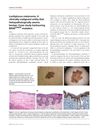
March 2015 in “Journal of the European Academy of Dermatology and Venereology” This letter to the editor shares a case study of lentiginous melanoma that appears clinically malignant but histopathologically benign, involving the BRAFV600R mutation.