 22 citations
,
January 2015 in “Dermatology Research and Practice”
22 citations
,
January 2015 in “Dermatology Research and Practice” This study found that an oral marine protein supplement significantly increased hair growth and reduced hair shedding in women with temporary thinning hair over 90 days compared to a placebo.
April 2025 in “International Journal of Pharmaceutics” Liposomes improve minoxidil delivery to hair follicles, enhancing treatment for hair loss.
 September 2011 in “Clinical Biochemistry”
 The demineralized bone matrix scaffold is better for cell attachment than the mineralized bone allograft.
 16 citations
,
March 2009 in “Skin Pharmacology and Physiology”
16 citations
,
March 2009 in “Skin Pharmacology and Physiology” This study found that the penetration enhancer SEPA™ significantly increased both the speed and amount of hair growth from minoxidil in balding stumptail macaques compared to Rogaine®.
 April 2019 in “Journal of Investigative Dermatology”
 This study found that lichen planopilaris is associated with three core molecular pathways, which may inform new therapeutic strategies for scarring alopecia, including unique pathways like ABC transporters specific to LPP.
9 citations
,
January 2019 in “Dermatology Online Journal” In this study, researchers suggest that laser-assisted drug delivery could enhance the administration of platelet-rich plasma, and potentially bimatoprost or minoxidil, for patients with androgenetic alopecia by ensuring uniform placement in the dermis without injection pain.
3 citations
,
March 2019 in “American Journal of Dermatopathology” This case report presents the first documented instance of basal cell carcinoma and cutaneous leiomyosarcoma occurring as a collision neoplasm in the same biopsy specimen.
 February 2025 in “Journal of Nanobiotechnology”
 This study developed a microneedle system using black phosphorus nanosheets and baicalin for treating androgenetic alopecia, finding it effectively enhanced drug penetration and follicular targeting while showing synergistic efficacy and safety in preclinical tests, including in vivo model efficacy against testosterone-induced hair loss.
2 citations
,
February 2021 in “Indian Dermatology Online Journal” This case report describes the first instance of classical lichen planopilaris with atrophic lichenoid plaques developing in a Blaschko-linear pattern due to imatinib treatment in a patient with chronic myeloid leukemia.

This study found that the FER/MLO signaling module plays a crucial role in calcium oscillations and ROS production in root hair tip growth, with the MLO15 protein regulating these processes and restoring disrupted growth and signaling in fer mutant root hairs.
July 2025 in “Frontiers in Medicine” This study identified compound heterozygous mutations, c.1101del and c.736 T > A, in the LIPH gene responsible for causing autosomal recessive woolly hair in a child, with c.1101del being a novel frameshift mutation.
 June 2026 in “Drug Delivery and Translational Research”
 This study developed a spring-driven microneedle booster that improved early and cumulative delivery of minoxidil, accelerating hair regrowth compared to traditional roller methods in an androgenetic alopecia model.
This case report highlights that Tjalma Syndrome may present as a main symptom of systemic lupus erythematosus and should be considered in patients with ascites, pleural effusions, and elevated CA-125 levels.
 May 2014 in “Clinical and Experimental Dermatology”
 A 70-year-old woman with a rare skin condition improved after treatment with topical steroids and acitretin.
 15 citations
,
April 2020 in “Journal of The American Academy of Dermatology”
15 citations
,
April 2020 in “Journal of The American Academy of Dermatology” This article discusses the challenges of treating lichen planopilaris, reviews various therapeutic options including minoxidil, and reports no new clinical findings.
33 citations
,
February 2021 in “Journal of Medicinal Chemistry” This study found that novel MPC inhibitor analogues with specific chemical modifications promoted significant hair growth in shaved mice when applied topically.
 3 citations
,
September 2024 in “BMC Oral Health”
3 citations
,
September 2024 in “BMC Oral Health” This study found that low-level laser therapy effectively reduced relapse rates, while functional appliances did not; combining them offered no additional benefits.
 May 2023 in “Elsevier eBooks”
 This article discusses scalp micropigmentation as a noninvasive method to conceal various forms of hair loss and scalp abnormalities and reports no clinical results; the authors highlight its safe and effective application.
 1 citations
,
May 2015 in “Journal of The American Academy of Dermatology”
1 citations
,
May 2015 in “Journal of The American Academy of Dermatology” Lichen planus pigmentosus and fibrosing frontal alopecia in Colombia are likely different stages of the same disease.
June 2026 in “Mendeley Data” This dataset provides additional exposure data and comprehensive analyses for a study on the long-term effects of particulate matter on androgenetic alopecia, but it presents no new findings.
11 citations
,
January 2014 in “Mass spectrometry” In this study, silver oxide-based nanoparticles were used to ionize analytes and detect specific target molecules through adduct formation with silver isotopes, facilitating signal correlation with these molecules.
 September 2021 in “Hair transplant forum international”
 In this study, the P&P Hairline Laser, a hands-free laser-assisted device, was found to produce smoother and more symmetrical hairlines compared to traditional handheld laser devices.
 6 citations
,
July 2009 in “Biomolecules & therapeutics”
6 citations
,
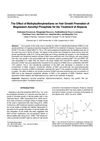
July 2009 in “Biomolecules & therapeutics” This study found that combining MSM with MAP significantly enhanced hair growth in mice, comparable to or better than minoxidil, due to increased intradermal retention of MAP.
 12 citations
,
October 2012 in “Dermatologic Clinics”
12 citations
,
October 2012 in “Dermatologic Clinics” This review discusses the use of electromagnetic radiation, including low-level laser therapy, for hair loss management, but it reports no new clinical results and suggests further research.
 16 citations
,
December 2017 in “Journal of The American Academy of Dermatology”
16 citations
,
December 2017 in “Journal of The American Academy of Dermatology” This study found that low-level laser therapy may reduce inflammation and increase hair thickness in patients with lichen planopilaris after six months of treatment, though the small sample size limits the findings.
19 citations
,
May 2001 in “Endocrinology” This study suggests that Mrp3 may play a role in both wound healing and the hair follicle cycle as a growth factor and/or angiogenesis factor.
June 2022 in “Journal of Cosmetic Dermatology” This review discusses minimally invasive procedures for female pattern hair loss and highlights their potential as adjunctive therapies, though the evidence for their efficacy is currently limited.
52 citations
,
July 1998 in “Urology” This study found that liarozole is more effective than cyproterone acetate for improving PSA response and survival in metastatic prostate cancer after first-line endocrine therapy, while maintaining quality of life.
July 2021 in “Authorea (Authorea)” This article discusses Graham-Little Piccardi Lassueur Syndrome, a rare variant of Lichen planopilaris, but reports no clinical findings or results.
5 citations
,
July 2018 in “Skin appendage disorders” This case report describes a woman with lichen planopilaris in the hair part line, with a history of long-term use of spray-on sunscreen on that area.