16 citations
,
August 2000 in “British Journal of Dermatology” In this case report, lichen myxedematosus associated with hepatocellular carcinoma showed progressive improvement in skin lesions without further treatment following tumor resection.
421 citations
,
September 2003 in “Development” This study concluded that label-retaining cells in mouse epidermis differ in their sensitivity to proliferative stimuli, influencing their division and potential transdifferentiation without consistently depleting their population.
 23 citations
,
June 2012 in “PLOS ONE”
23 citations
,
June 2012 in “PLOS ONE” This study found that KLF4 expression in mouse hair follicle stem cells is important for effective cutaneous wound healing, with its knockdown leading to reduced stem cell populations and delayed healing.
4 citations
,
July 2013 in “The Journal of Dermatology” This article reports a case of lupus miliaris disseminatus faciei affecting the scalp, which led to scarring hair loss, but it provides no new experimental findings.
 March 2025 in “International Journal of Molecular Sciences”
 This study established a Krt24-CreERT2 mouse line targeting outer bulge hair follicle stem cells, finding these cells crucial for hair follicle development and repair, particularly following ionizing radiation exposure.
 March 2020 in “The journal of investigative dermatology/Journal of investigative dermatology”
 This study suggests that the expression of VLCFA biosynthesis genes is suppressed in skin hyperplasia and cancer, which could influence keratinocyte function.
 27 citations
,
September 1992 in “The Lancet”
27 citations
,
September 1992 in “The Lancet” ICL is a condition with low CD4+ T cells like AIDS but not caused by HIV, and normal CD4+ T cell counts may vary between men and women.
 March 2024 in “Cytologia”
 In this study, researchers observed that melatonin-mediated LncRNA MTC in Liaoning cashmere goat skin fibroblasts enhances cell proliferation by interacting with the GSTM1 protein, affecting its complex formation with ASK1 and thereby inhibiting apoptosis, which may be relevant for improving cashmere growth.
November 2024 in “Biochemical and Biophysical Research Communications” In this study, researchers observed that mutant mice with a genetic hair loss condition exhibited significant differential expression of genes related to keratinization and hair follicle formation, providing insights into potential strategies for understanding and treating alopecia.
 3 citations
,
July 2021 in “Life science alliance”
3 citations
,
July 2021 in “Life science alliance” This study observed that disrupting the Pnkp gene in adult mice resulted in a premature aging-like phenotype, suggesting PNKP's vital role in maintaining normal growth and survival of certain progenitor cell populations.
31 citations
,
April 2004 in “Journal of Investigative Dermatology” This study found that a newly identified gene, mK17n, may explain the lack of nail issues in mK17 null mice by compensating for mK17's function in the nail bed.
54 citations
,
January 1984 in “Molecular and Cellular Biochemistry” This study found that deleting the Mad2l1 gene in mice leads to rapid onset of acute lymphoblastic leukemia and liver cancer due to induced chromosomal instability.
 May 2024 in “Cell proliferation”
 This study found that melatonin supplementation significantly promoted hair regeneration in a hair depilation mouse model by up-regulating the Wnt/β-catenin signaling pathway in dermal papillae and hair follicle stem cells, suggesting potential implications for human hair loss treatments.
 5 citations
,
February 2010 in “Drug development and industrial pharmacy”
5 citations
,
February 2010 in “Drug development and industrial pharmacy” This study found that vesicles formed with behenyltrimethylammonium chloride, stearic acid, and hinokitiol significantly improved skin permeation of hinokitiol in vitro, which may aid in hair growth promotion.
 December 2024 in “Livers”
 This case report highlights a female patient with familial partial lipodystrophy who showed significant improvement in liver stiffness after starting leptin replacement therapy.
 1 citations
,
March 2015 in “Journal of the European Academy of Dermatology and Venereology”
1 citations
,
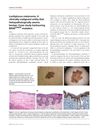
March 2015 in “Journal of the European Academy of Dermatology and Venereology” This letter to the editor shares a case study of lentiginous melanoma that appears clinically malignant but histopathologically benign, involving the BRAFV600R mutation.
15 citations
,
May 2014 in “Journal of Biological Chemistry” In this study, targeting the expression of a keratin KRT5/KRT8 chimeric cDNA in keratin-deficient mice partially restored structural defects in epidermal cells, but did not fully normalize skin health.
7 citations
,
May 2022 in “Cancers” This study found that UC.145 influences DKK1 methylation and Wnt signaling in gastric cancer, with implications for patient survival and its potential as a predictive biomarker.
 October 2014 in “Journal of the Portuguese Society of Dermatology and Venereology”
 This paper presents a therapeutic approach with excellent results in a case of lichen planopilaris overlapping with dermatomyositis and scleroderma, although broader applicability is not discussed.
3 citations
,
December 2013 in “Journal of Cell Science” This study found that K79+ keratinocytes migrate outward to help form the hair follicle lumen both during development and adult regeneration, revealing a novel mechanism of hair follicle formation in mice.
May 2019 in “Case medical research” 14 citations
,
February 2022 in “The Journal of clinical investigation/The journal of clinical investigation” This study found that the development of Merkel cell carcinoma from hair follicles in mice can be driven by in vivo reprogramming with ATOH1 and relies on p53 loss for progression.
79 citations
,
June 1991 in “Journal of Medical Genetics” This article discusses the classification of mental retardation based on IQ ranges and provides no new experimental findings.
August 2005 in “The Journal of Cell Biology” This abstract provides a graphic illustrating that mice lacking the Sgk3 gene exhibit thin coats and abnormal hair, suggesting a role for Sgk3 kinase in hair follicle growth, but reports no new experimental findings.

This study found that chemically induced skin tumors in mice predominantly originated from Lgr6 + and/or Lrig1 + stem cells of the upper hair follicle rather than from other stem cell populations.

This study explored a mother and daughter with loose anagen hair syndrome linked to wooly hair, identifying an intronic variant in the KRT71 gene that affects hair keratin splicing, thus broadening the spectrum of KRT71-related disorders.
4 citations
,
August 2013 in “Chinese Medical Journal” This study found that a mutation in the seventh exon of the KRT86 gene plays a major role in the pathogenesis of monilethrix in a Chinese family.
7 citations
,
November 2016 in “Oncotarget” This study found that Lgr6+ stem cells in mice are not major initiators of UV- or chemically induced skin tumors.
 September 1961 in “Archives of Dermatology”
 This letter contains an apology from the author to Dr. Malkinson for remarks that were unintentionally offensive, acknowledging Dr. Malkinson's superior understanding of the discussed problem.