 1 citations
,
October 2021 in “Journal of The American Academy of Dermatology”
1 citations
,
October 2021 in “Journal of The American Academy of Dermatology” This review discusses treatment options for androgenetic alopecia in transgender and gender-diverse patients, highlighting first-line treatments like topical minoxidil and finasteride, but reports no new clinical results.
 1 citations
,
July 2019 in “Journal of the American Academy of Dermatology”
1 citations
,
July 2019 in “Journal of the American Academy of Dermatology” This review argues that case reports remain crucial for identifying new conditions, adverse drug reactions, and medical associations, despite the anecdotal nature of their evidence.
 April 2024 in “International Journal of Dermatology”
 This study reviewed cases of filler-induced alopecia and found that hyaluronic acid injections were most commonly associated with this condition, highlighting that hyaluronidase treatments can rapidly restore hair density, while alternative interventions need further exploration.
June 2013 in “The mental health clinician” This review discusses Dr. Atul Butte's lecture on transforming vast data sets into drug discovery insights and highlights the importance of merging clinical, molecular, and environmental data for personalized medicine, but it reports no new clinical results.
 1 citations
,
February 2023 in “Daehan ui'sa hyeobhoeji/Daehan uisa hyeopoeji”
1 citations
,
February 2023 in “Daehan ui'sa hyeobhoeji/Daehan uisa hyeopoeji” This article reviews strategies for managing the side effects of cytotoxic chemotherapy in primary healthcare settings and reports no new clinical findings.
 March 2024 in “International journal of pharmaceutical sciences and drug research”
 In this review, the authors explored current and novel treatment options for androgenetic alopecia, noting both FDA-approved pharmacologic treatments like Minoxidil and Finasteride and various non-pharmacologic and surgical methods, including hair transplantation and scalp micro-pigmentation.
 April 2024 in “Nigerian Postgraduate Medical Journal”
 This review summarizes existing knowledge on androgenetic alopecia, including its epidemiology, pathophysiology, and management, but presents no new research findings.
 June 2025 in “Clinical Cosmetic and Investigational Dermatology”
 This report presents a case where a 17-year-old male developed severe unilateral alopecia following radiotherapy for pediatric glioblastoma multiforme, which did not respond to minoxidil or platelet-rich plasma treatments.
 February 2026 in “Pharmaceuticals”
 This study introduced the KRDQN predictive framework, which outperformed existing methods in predicting adverse drug reactions and provided interpretable insights into drug mechanisms, aiding pharmacovigilance and clinical decision-making.
 January 2026 in “International Journal of Applied Pharmaceutics”
 This study developed a novel LC-ESI-MS/MS method to quantify Minoxidil in pharmaceutical forms, finding it precise, accurate, and robust. It withstands excipient and degradant interference, although Minoxidil degrades under some stress conditions but remains stable thermally.
 September 2023 in “International Journal of Applied Pharmaceutics”
 This study found that a topical gel containing Minoxidil and Tofacitinib citrate showed promise for treating alopecia areata, with formulation F5 demonstrating effective drug release and stability in evaluations.
 5 citations
,
July 2020 in “JAMA Dermatology”
5 citations
,
July 2020 in “JAMA Dermatology” Minoxidil solution applied twice daily improved hair growth in patients with Woolly Hair/Hypotrichosis due to LIPH gene issues, with mild side effects.
 13 citations
,
December 2010 in “Archives of Dermatology”
13 citations
,
December 2010 in “Archives of Dermatology” This abstract provides website information and publication navigation for JAMA Dermatology, but it includes no research results or study findings.
 9 citations
,
February 2016 in “The Journal of Dermatology”
9 citations
,
February 2016 in “The Journal of Dermatology” This letter provides no study results about minoxidil 3% lotion for beard enhancement but instead shares author and affiliation details for the published research.
 8 citations
,
June 2017 in “JAMA Dermatology”
8 citations
,
June 2017 in “JAMA Dermatology” Women pay more for the same 5% minoxidil foam than men, but prices for liquid solutions are similar.
 7 citations
,
June 2021 in “Cureus”
7 citations
,
June 2021 in “Cureus” This case report discusses minoxidil-induced anasarca as a potential side effect in patients using minoxidil for hypertension, emphasizing the importance of recognizing it for early diagnosis and management.
 29 citations
,
December 2003 in “Teratology”
29 citations
,
December 2003 in “Teratology” This case report describes fetal malformations and placental abnormalities in a pregnant woman who applied minoxidil topically, suggesting potential risks of its use during pregnancy.
 1 citations
,
February 2022 in “Veterinární Medicína”
1 citations
,
February 2022 in “Veterinární Medicína” This report presents the first successful management of minoxidil toxicosis in a cat, detailing the clinical progression and treatment plan used to resolve the condition.
 397 citations
,
February 2004 in “British Journal of Dermatology”
397 citations
,
February 2004 in “British Journal of Dermatology” This article reviews the mechanisms by which minoxidil stimulates hair growth and reports no new clinical findings.
 80 citations
,
September 1984 in “Journal of The American Academy of Dermatology”
80 citations
,
September 1984 in “Journal of The American Academy of Dermatology” In this study, 5% topical minoxidil was observed to promote hair regrowth in some patients with androgenic alopecia, while no regrowth was noted in patients with alopecia areata.
 66 citations
,
February 2010 in “CrystEngComm”
66 citations
,
February 2010 in “CrystEngComm” Made 8 minoxidil samples; 1 cocrystal, 7 salts formed.
 55 citations
,
June 2009 in “Journal of Pharmaceutical Sciences”
55 citations
,
June 2009 in “Journal of Pharmaceutical Sciences” This study found that ethanol-containing formulations significantly increased minoxidil retention in the stratum corneum and appendages initially, while a propylene glycol-rich formulation enhanced deeper skin penetration over time.
 55 citations
,
February 1985 in “Archives of Dermatology”
55 citations
,
February 1985 in “Archives of Dermatology” This study found that 32% of patients with hereditary male pattern baldness experienced cosmetically acceptable hair growth after applying topical minoxidil twice daily, with no serious side effects reported.
 52 citations
,
February 1985 in “Archives of Dermatology”
52 citations
,
February 1985 in “Archives of Dermatology” Minoxidil absorbs poorly through skin, with low risk of side effects at 1-2% concentration.
 40 citations
,
December 2006 in “Journal of The European Academy of Dermatology and Venereology”
40 citations
,
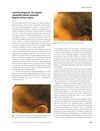
December 2006 in “Journal of The European Academy of Dermatology and Venereology” This article reports two cases where 2% topical minoxidil showed promise in treating traction alopecia, but it does not offer broader clinical conclusions.
 17 citations
,
May 2012 in “Journal of dermatology”
17 citations
,
May 2012 in “Journal of dermatology” This letter to the editor compares the efficacy and safety of bimatoprost 0.03% with minoxidil 3% for eyebrow enhancement but does not report any study results.
 17 citations
,
April 2002 in “Contact Dermatitis”
17 citations
,
April 2002 in “Contact Dermatitis” Minoxidil 5% caused skin discoloration in a man using it for hair loss.
 17 citations
,
May 1998 in “Contact Dermatitis”
17 citations
,
May 1998 in “Contact Dermatitis” Minoxidil can cause pustular allergic reactions on skin.
 13 citations
,
November 2013 in “The Journal of Dermatology”
13 citations
,
November 2013 in “The Journal of Dermatology” This study suggests that minoxidil 2% lotion is a safe and effective treatment for enhancing eyebrows, showing better results than placebo after 16 weeks.
 12 citations
,
September 2018 in “Dermatologic Therapy”
12 citations
,
September 2018 in “Dermatologic Therapy” This study found that 14 days of low-dose aspirin reduced the predicted response to topical minoxidil in androgenetic alopecia patients from 50% to 27%, suggesting aspirin may inhibit minoxidil efficacy.