 March 2024 in “JAAD International”
 This review discusses the potential strategy of continuing topical minoxidil when starting low dose oral minoxidil to mitigate initial hair shedding in alopecia, but reports no new clinical results.
 July 2024 in “The journal of investigative dermatology/Journal of investigative dermatology”
 Using both topical and oral minoxidil does not reduce hair shedding.
 November 2025 in “SKIN The Journal of Cutaneous Medicine”
 This study suggests that hair shedding, often reported with minoxidil use, is poorly defined in androgenetic alopecia treatment despite its prevalence on social media, highlighting a gap in the literature.
 November 1991 in “PubMed”
 This study observed that a 2% topical minoxidil solution was beneficial in 63% of male patients with androgenic alopecia, although only 6.6% experienced dramatic cosmetic improvement.
 14 citations
,
April 2006 in “Expert Review of Dermatology”
14 citations
,
April 2006 in “Expert Review of Dermatology” This review discusses therapeutic options for androgenetic alopecia, noting that while antiandrogen treatments prevent further hair loss and promote some regrowth, dramatic results are rare.
 1 citations
,
August 2019 in “Pediatric dermatology”
1 citations
,
August 2019 in “Pediatric dermatology” This study reports that topical minoxidil 5% foam may effectively promote hair growth in congenital alopecia and hypotrichosis linked to desmoplakin mutations, as demonstrated by significant hair growth in an 8-year-old boy.
January 2005 in “河北农业大学学报” This study found that a 2% topical minoxidil solution benefited 63% of men with androgenic alopecia by slowing balding or increasing hair density, but only 6.6% saw dramatic cosmetic improvement.
 12 citations
,
March 2013
12 citations
,
March 2013 This report describes a case where a 4-year-old boy with congenital alopecia due to hypohidrotic ectodermal dysplasia experienced significant hair growth after using topical minoxidil.
 March 2004 in “Journal of The American Academy of Dermatology”
 This study found that the TrichoScan effectively measures hair growth changes, showing significant increases in hair counts and thickness in men with androgenetic alopecia after 6 months of using 5% minoxidil solution.
 November 2014 in “British Journal of Dermatology”
 Male hair loss is mainly due to thinner hair, not less hair.
2 citations
,
August 2024 in “Molecular Genetics & Genomic Medicine” In this case study, an 8-day-old neonate with holocarboxylase synthetase deficiency showed dramatic improvement in lactic acidosis and overall clinical condition following biotin mega-dose therapy, highlighting the importance of early genetic testing and timely treatment in such metabolic disorders.
 4 citations
,
January 2022 in “Skin appendage disorders”
4 citations
,
January 2022 in “Skin appendage disorders” In this case report, a 64-year-old patient with chemotherapy-induced alopecia was treated with oral minoxidil and experienced good results, suggesting a potential new therapy for this challenging condition.
 14 citations
,
March 2015 in “Clinical and Experimental Dermatology”
14 citations
,
March 2015 in “Clinical and Experimental Dermatology” In this study, human placenta extract was observed to enhance the hair-growth-promoting effects of minoxidil and stimulate earlier and prolonged anagen phases in a mouse model.
 40 citations
,
September 2003 in “Archives of Dermatology”
40 citations
,
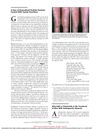
September 2003 in “Archives of Dermatology” This webpage provides access options for JAMA Dermatology but does not contain research findings or results.
 39 citations
,
November 1984 in “Journal of Cardiovascular Pharmacology”
39 citations
,
November 1984 in “Journal of Cardiovascular Pharmacology” Minoxidil lowers blood pressure, increases heart rate, and improves blood flow in dogs.
 33 citations
,
June 1995 in “Journal of Pharmaceutical Sciences”
33 citations
,
June 1995 in “Journal of Pharmaceutical Sciences” This study found that minoxidil penetration through the skin increased with higher ethanol content and occlusion, with the highest penetration observed at 90% ethanol.
 25 citations
,
January 1983 in “Analyst”
25 citations
,
January 1983 in “Analyst” Method measures minoxidil in tablets accurately and easily.
 20 citations
,
February 1985 in “Archives of Dermatology”
20 citations
,
February 1985 in “Archives of Dermatology” This report discusses the potential of minoxidil for treating hair loss, spurred by early findings of hair regrowth in some patients, but emphasizes the need for further research to establish its safety and efficacy.
 6 citations
,
May 2012 in “Clinical and experimental dermatology”
6 citations
,
May 2012 in “Clinical and experimental dermatology” This article reports a case of pseudofolliculitis barbae potentially induced by the use of oral minoxidil.
 1 citations
,
June 2021 in “Journal of Cosmetic Dermatology”
1 citations
,
June 2021 in “Journal of Cosmetic Dermatology” In this study, the addition of a SULT1A1 enzyme booster to daily 5% minoxidil treatment significantly increased hair regrowth in men with androgenic alopecia compared to minoxidil alone.
 July 2024 in “International Journal of Medical Arts”
 In this study, both topical minoxidil and latanoprost were found to improve dermoscopic features of alopecia areata, with latanoprost showing superior effectiveness; minor side effects included erythema and itching.
 102 citations
,
September 1977 in “The Lancet”
102 citations
,
September 1977 in “The Lancet” Minoxidil with propranolol and diuretics lowers blood pressure but causes fluid retention and hair growth.
 24 citations
,
January 1993 in “Dermatologic Clinics”
24 citations
,
January 1993 in “Dermatologic Clinics” Minoxidil effectively treats hair loss, works better for women, and requires consistent use.
 25 citations
,
January 2010 in “International Journal of Pharmaceutics”
25 citations
,
January 2010 in “International Journal of Pharmaceutics” This study found that polymeric nanoparticles retained more minoxidil and facilitated superior drug permeation compared to lipid nanoparticles, although premature drug release affected formulation performance.
 192 citations
,
March 1998 in “British Journal of Dermatology”
192 citations
,
March 1998 in “British Journal of Dermatology” This study found that minoxidil significantly increases VEGF mRNA and protein expression in dermal papilla cells, suggesting a role in enhancing hair follicle vascularization in androgenetic alopecia.
 100 citations
,
March 1973 in “American Journal of Cardiology”
100 citations
,
March 1973 in “American Journal of Cardiology” Minoxidil effectively lowers blood pressure without major side effects.
 72 citations
,
December 1983 in “Journal of Investigative Dermatology”
72 citations
,
December 1983 in “Journal of Investigative Dermatology” Minoxidil helps hair cells live longer and grow longer.
 55 citations
,
June 2009 in “Journal of Pharmaceutical Sciences”
55 citations
,
June 2009 in “Journal of Pharmaceutical Sciences” This study found that ethanol-containing formulations significantly increased minoxidil retention in the stratum corneum and appendages initially, while a propylene glycol-rich formulation enhanced deeper skin penetration over time.
 54 citations
,
June 1985 in “American Journal of Dermatopathology”
54 citations
,
June 1985 in “American Journal of Dermatopathology” This abstract does not provide specific findings or results.
 50 citations
,
September 1975 in “American Heart Journal”
50 citations
,
September 1975 in “American Heart Journal” Minoxidil effectively controls blood pressure in severe cases, but may cause fluid retention and edema.