 31 citations
,
December 2002 in “Biochimica et biophysica acta. G, General subjects/Biochimica et biophysica acta. General subjects (Online)”
31 citations
,
December 2002 in “Biochimica et biophysica acta. G, General subjects/Biochimica et biophysica acta. General subjects (Online)” This study identified two types of calcium in human scalp hair, with one type highly variable between individuals, potentially impacting the analysis of environmental and medical factors related to hair calcium.
7 citations
,
March 2003 in “Journal de Physique IV (Proceedings)” This study identified two types of calcium in human scalp hair shafts: easily removable calcium, likely as calcium soaps, and more stably bound calcium, possibly related to Ca-binding proteins.
 4 citations
,
August 2017 in “JAMA Dermatology”
4 citations
,
August 2017 in “JAMA Dermatology” This abstract provides navigation and subscription details for JAMA Dermatology and includes no research findings.
2 citations
,
July 2009 in “Medical hypotheses” This article discusses hair transplant techniques and hypothesizes that smaller regenerating units within hair follicles may allow for one-to-many transplantation, potentially increasing hair numbers for those with hair loss, but reports no new experimental results.
1 citations
,
January 2016 in “Australasian Journal of Dermatology” This case study describes a 54-year-old man with an E600A mutation in the NOD-2 gene associated with Blau syndrome, who presented with skin involvement, differing from typical cases, and initially responded to colchicine treatment.
 November 2024 in “Research for Rural Development/Research for Rural Development (Online)”
 This study concluded that rosemary essential oil rich in terpenes was successfully extracted using vacuum-assisted hydrodistillation, and Solid Phase Micro Extraction was superior for identifying volatile compounds compared to direct injection.

This case report describes a transgender woman who achieved a soft, feminine hairline nine months post-hair transplant using follicles from both the occipital scalp and pubic area.
January 2019 in “Institutional Repositories DataBase (IRDB)” This study achieved regeneration of hair follicle-like structures and erector muscle of hair in vitro by simulating cellular organization and applying mechanical stimuli.
 January 2012 in “TRANSACTIONS OF THE JAPAN SOCIETY FOR AERONAUTICAL AND SPACE SCIENCES AEROSPACE TECHNOLOGY JAPAN”
 This paper outlines the research plan and current progress of a study analyzing mineral metabolism changes in astronauts by examining hair shafts after long-term space flight, with no new results yet.
 3 citations
,
February 2014 in “Dong-ui saengni byeongni hakoeji”
3 citations
,
February 2014 in “Dong-ui saengni byeongni hakoeji” This study found that micro needle roller therapy enhanced hair follicle development and increased growth factor expression in C57BL/6 mice, suggesting potential benefits for alopecia treatment.
January 2011 in “Nuclear Techniques” This study found that lead accumulated in the hair shafts of individuals exposed to mining environments, while iron, copper, and zinc levels remained stable, highlighting the significance of SRXRF micro-analysis for environmental health research.
October 2022 in “Dermatology practical & conceptual” This study found that micro-needling with triamcinolone acetonide led to the best treatment outcomes for alopecia areata compared to other methods of trans-epidermal drug delivery.
 15 citations
,
January 2016 in “Journal of cell science & therapy”
15 citations
,
January 2016 in “Journal of cell science & therapy” This study found that autologous micro-grafts improved wound healing and reduced pain in leg ulcers unresponsive to routine treatments within one week, lasting up to a month.
2 citations
,
May 2002 in “PubMed” This review explores follicular unit micro-graft hair transplants for androgenetic alopecia, emphasizing their painless and permanent hair restoration capabilities, but it presents no new clinical findings.
 July 2023 in “Journal of Education, Health and Sport”
 This literature review reports that micro-needle radiofrequency is increasingly recognized in aesthetic medicine as a safe, effective treatment for various skin conditions, but further research is needed to optimize treatment parameters for the best outcomes.
January 2021 in “Korean Journal of Chemical Engineering” This study found that preparing Finasteride micro and nanoparticles using a gas-antisolvent method reduced the particle size significantly.
 33 citations
,
January 2002
33 citations
,
January 2002 This study found that daily topical application of 500 microg/ml latanoprost led to moderate to marked hair regrowth in a macaque model of androgenetic alopecia.
18 citations
,
April 2018 in “Biotechniques/BioTechniques” This study developed a method for extracting proteins from micro-sized human head hairs, facilitating proteomic analysis even with limited hair sample availability.
 15 citations
,
June 2015 in “Human Cell”
15 citations
,
June 2015 in “Human Cell” This study found that forming spheroids using silicone micro-wells improved the viability and neural differentiation potential of human adipose-derived stem cells after thawing.
3 citations
,
July 2024 in “Urology Annals” This study reported a marginally lower sperm retrieval rate using micro-testicular sperm extraction (m-TESE) among nonmosaic Klinefelter Syndrome patients compared to existing literature, with younger patients benefitting more significantly from the procedure.
2 citations
,
October 2022 in “Electrochem” This review explores the applications of phytonutrient-based biosensors in micro-electrochemical systems and reports no new experimental findings, emphasizing the potential and challenges of this innovative approach.
 88 citations
,
July 2019 in “International Journal of Molecular Sciences”
88 citations
,
July 2019 in “International Journal of Molecular Sciences” In this study of patients with Androgenic Alopecia, micro-grafts containing HD-AFSCs resulted in significantly improved hair density and follicle count over 11 months compared to a saline solution, suggesting a potential alternative therapy for hair regrowth.
 2 citations
,
April 2018 in “Majalah Obat Tradisional”
2 citations
,
April 2018 in “Majalah Obat Tradisional” In this study, the FIII micro emulsion formulation of virgin coconut oil and rice bran oil showed the best results for hair growth, increasing rabbit hair length by 1.26 cm in 18 days.
 March 2013 in “Revista Brasileira de Cirurgia Plástica”
 This article reviews advances in hair transplant techniques such as megasessions of micro and mini grafts, highlighting platelet growth factors' potential to enhance hair density, without reporting new clinical findings.
 13 citations
,
August 2007 in “Bioorganic & medicinal chemistry letters”
13 citations
,
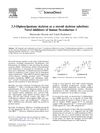
August 2007 in “Bioorganic & medicinal chemistry letters” This study developed a new competitive 5alpha-reductase inhibitor with an IC(50) of 0.84 microM using a novel chemical structure.
5 citations
,
May 2021 in “EMBO journal” This review discusses the role of polarity signaling in coordinating tissue mechanics, micro-environmental functions, and cell fate decisions, but it reports no new results, highlighting the need for further study in mammalian models.
 3 citations
,
January 2015 in “Indian journal of burns”
3 citations
,
January 2015 in “Indian journal of burns” This study observed that postburn hair transplants, using follicular unit micro grafting, can effectively restore facial hair and scalp regions, with eyebrow and mustache restoration yielding the highest patient satisfaction.
1 citations
,
April 2015 in “Neurology” This study found that hyperpigmented skin changes resembling Schamberg’s purpura occur in areas affected by CRPS and can also appear on mirror-image locations of unaffected limbs, potentially improving with the condition's treatment.
January 2025 in “Journal of College of Physicians And Surgeons Pakistan” In this case report, a 36-year-old woman with GAPO syndrome underwent successful XEN gelatin micro-stent implantation in both eyes to control primary open-angle glaucoma that was unresponsive to medical treatment, marking the first documented use of this minimally invasive glaucoma surgery in such a patient.
80 citations
,
December 1996 in “Pain” This study found that spinal strychnine enhances low threshold tactile responses in cat dorsal horn neurons, which may mirror pain states in humans that are less responsive to opioid treatments.