14 citations
,
December 2019 in “International Journal of Phytocosmetics and Natural Ingredients” This study found that a conditioner containing Spirulina platensis and Ascophyllum nodosum extracts improved hair shine and reduced combability force after 28 days of use.
September 2025 in “Journal of Applied Biological Chemistry” In a laboratory study, Grateloupia elata extract demonstrated antioxidant and anti-aging effects by scavenging free radicals, inhibiting collagenase and elastase, increasing procollagen production, and reducing MMP-1 secretion, suggesting its potential use in functional cosmetics.
 6 citations
,
May 2022 in “Frontiers in Microbiology”
6 citations
,
May 2022 in “Frontiers in Microbiology” This review evaluates the potential of natural products from marine microorganisms for cosmetic applications and reports no new experimental results, highlighting challenges and prospects in their use.
 July 2025 in “Biotechnology and Bioprocess Engineering”
 Spirulina extract may effectively promote hair growth and reduce inflammation, offering a natural alternative for hair loss treatment.
165 citations
,
May 2023 in “Science Advances” In this study, the researchers developed a living microecological hydrogel containing Chlorella and Bacillus subtilis that showed potential in promoting the healing of infected diabetic wounds by providing continuous oxygen delivery and anti-infective properties.
130 citations
,
December 2022 in “Antioxidants” This review discusses the antioxidant activity of natural polysaccharides, highlighting their potential applications in areas like drug delivery and tissue engineering, but reports no new experimental findings.
24 citations
,
January 2023 in “International Journal of Nanomedicine” This review outlines how combining biomembrane-based nanostructures and microstructures with hydrogels can enhance strategies for chronic wound healing, by utilizing the unique properties of both to address metabolic disturbances and severe symptoms in wound care.
12 citations
,
June 2023 in “International Journal of Molecular Sciences” This review examines the potential of biomaterial-based wound dressings in managing diabetic foot ulcers, highlighting their versatility and therapeutic properties for promoting wound healing in individuals with diabetes mellitus.
June 2025 in “Materials Today Bio” In diabetic mice, this study reported that the multifunctional hydrogel CPGel achieved complete wound closure in 21 days, showing promise in improving chronic wound healing through antibacterial, antioxidative, and tissue regeneration properties.
11 citations
,
January 2025 in “Marine Drugs” This review highlights the need for standardized reporting on fucoidan extract properties to better understand the relationships between chemical structures and bioactivities, and to improve the quality and utility of fucoidan-related data.
January 2026 in “International Journal of Molecular Sciences” Understanding molecular signals and genetics is key to improving hair regeneration therapies.
 49 citations
,
October 2017 in “Nutrients”
49 citations
,
October 2017 in “Nutrients” This study observed that the ethyl acetate extract of Equisetum debile showed high activity against 5α-reductase and lipid peroxidation with no cytotoxicity on dermal papilla cells.
 5 citations
,
August 2018
5 citations
,
August 2018 This paper highlights the growing scientific interest in plant extracts for cosmetics due to their potential benefits, including antioxidant, antimicrobial, and protective properties, while emphasizing the need for quality and safety assessment to mitigate possible adverse reactions.
111 citations
,
April 2023 in “Ultrasonics Sonochemistry” This review discusses the extraction, purification, and biological activities of maidenhairtree polysaccharides, emphasizing the higher efficiency of ultrasound-assisted extraction, but it reports no new clinical results.
 11 citations
,
March 2018 in “Protoplasma”
11 citations
,
March 2018 in “Protoplasma” In this laboratory study, procyanidin B2 inhibited early plant growth and biochemical responses in wheat seedlings treated with lipopolysaccharides from Azospirillum brasilense, suggesting that plant response activation requires LPS recognition by plant cells.
1 citations
,
July 2019 in “Journal of the Korean Society of Food Science and Nutrition” This study found that platycodon ethanol extract showed potential as a natural ingredient for hair loss prevention by increasing radical scavenging ability, inhibiting inflammation, and affecting DHT generation in laboratory experiments.
 2 citations
,
November 2017 in “Biotechnology Letters”
2 citations
,
November 2017 in “Biotechnology Letters” This study developed a high-throughput method that identifies bioactive chemicals influencing DHT production in prostate cancer cells, with potential nutraceutical candidates including fucoxanthin, phenethyl caffeate, and Curcuma longa L. extract.
15 citations
,
June 2023 in “Molecules” This study focused on developing agarose/fucoidan hydrogels for the encapsulation of pancreatic cells, reporting that these materials supported cell viability and self-organization into pseudo-islets over 7 days, highlighting potential for diabetes treatment applications.
 April 2021 in “Journal of Investigative Dermatology”
 This study observed that photobiomodulation therapy may contribute to hair growth stability or improvement in individuals with darker skin types, without reported adverse events, though its findings are limited by a small sample size.
March 2025 in “Regenerative Therapy” This study suggests that SACM may enhance hair growth more effectively than non-treated ACM, highlighting the potential of S. maxima as a promising agent for use in pharmaceutical and cosmeceutical industries.
 March 2026 in “International Journal of Molecular Sciences”
 This study found that Grateloupia angusta extract improved wound healing by promoting matrix production and pro-angiogenic activity in cell cultures and enhanced early wound repair in a mouse skin incision model.
2 citations
,
April 2021 in “Asian pacific Journal of Tropical Biomedicine” This study found that Origanum vulgare extract significantly ameliorated finasteride-induced liver and kidney damage in mice by improving biochemical indices, reducing inflammation, and enhancing antioxidant status in a dose-dependent manner.
This study explored Black Sea shark liver oil-based emulgels, finding that the addition of borage oil (Gel 2) enhanced the anti-inflammatory and wound healing properties compared to shark liver oil alone (Gel 1) and a reference diclofenac gel, suggesting promising eco-friendly applications in dermatocosmetics.
 7 citations
,
January 2021 in “Evidence-based complementary and alternative medicine”
7 citations
,
January 2021 in “Evidence-based complementary and alternative medicine” This study suggests that porphyra-334 may have antiaging properties, promoting collagen synthesis, improving periorbital wrinkles, and supporting hair follicle growth through gene regulation.
 2 citations
,
January 2020 in “BioMed Research International”
2 citations
,
January 2020 in “BioMed Research International” This study found that Phaeodactylum tricornutum extract enhanced hair follicle cell proliferation, indicated by increased keratin and ERK1/2 signaling, suggesting its potential for hair care applications.
 105 citations
,
January 2010 in “Mediators of Inflammation”
105 citations
,
January 2010 in “Mediators of Inflammation” This article reviews the role of skin surface lipid in mediating environmental stressors and discusses potential therapeutic interventions, reporting no new experimental findings.
 57 citations
,
March 2024 in “Nano-Micro Letters”
57 citations
,
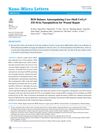
March 2024 in “Nano-Micro Letters” In this study, researchers created a core-shell nanozyme, CeO2@ZIF-8/Au, which autonomously regulates ROS levels to efficiently eliminate bacteria, reduce inflammation, and promote wound healing by balancing ROS generation and scavenging in response to environmental conditions.
 45 citations
,
April 2019 in “Scientific Reports”
45 citations
,
April 2019 in “Scientific Reports” This study found that Synechococcus elongatus PCC 11801 responded to increased CO2 concentrations by enhancing photosynthesis and carbon fixation while reducing other metabolic pathways, suggesting its potential for efficient CO2 capture.
 27 citations
,
September 2015 in “PharmaNutrition”
27 citations
,
September 2015 in “PharmaNutrition” This article discusses various potential health benefits and increasing global interest in astaxanthin but presents no new clinical results, though ongoing trials are exploring its effects on chronic diseases and other conditions.
 19 citations
,
April 2024 in “Journal of Umm Al-Qura University for Applied Sciences”
19 citations
,
April 2024 in “Journal of Umm Al-Qura University for Applied Sciences” This review explores the diverse roles of rosemary, covering its nutritional and medicinal uses, cosmetic and pharmaceutical applications, and evaluates various extraction methods, with a focus on sustainable practices and commercial prospects.