3 citations
,
April 2025 in “International Journal of Molecular Sciences” This review evaluates the anti-aging properties of TSG from He shou wu, finding it may protect against age-related diseases through multiple mechanisms, though further research is needed for clinical application.
3 citations
,
June 2021 in “Frontiers in genetics” This study found that STAT3 directly inhibited the activity of the sheep FST gene promoter, consequently reducing cell proliferation and promoting a better understanding of hair follicle development mechanisms.
1 citations
,
February 2025 in “Journal of Anatomy” This study observed that during the postnatal development of gray short-tailed opossums, skin transitions from facilitating gas exchange through a dense capillary network at birth to supporting thermoregulation, with significant changes in skin thickness and structure occurring by 35 days old.
January 2026 in “Medicina” In this study, researchers documented the immunohistochemical distribution of CD34 in basal cell carcinoma and found distinct patterns of CD34 expression, with variations in CD34 positivity between different areas of BCC tumor stroma and adjacent skin regions.
December 2025 in “Cosmetics” This review highlights that post-oncologic skin suffers from several impairments following cancer treatments, and dermocosmetic strategies, particularly those involving nanocarriers, can enhance the efficacy and stability of antioxidants, thereby aiding skin regeneration and improving quality of life.
 November 2025 in “Journal of Nanobiotechnology”
 This study found that in androgenetic alopecia mice, MNX@Arg-CLAVs, a novel nanovesicle platform containing minoxidil and conjugated linoleic acid, enhanced hair regeneration and reduced hair follicle aging more effectively and with less irritation compared to traditional minoxidil tincture.
November 2025 in “BMC Genomics” This study found that the systemic wrinkled skin phenotype in Xiang pigs involves gene expression changes and genetic variations associated with oxidative stress and extracellular matrix components, resembling features seen in Shar-Pei dogs.
November 2025 in “Photochemistry and Photobiology” This review article identifies a need for standardized guidelines in using photobiomodulation therapy for spinal cord injury repair, emphasizing that current inconsistencies in therapy parameters may hinder optimal outcomes and limit clinical trials.
 April 2025 in “BMC Immunology”
 This study highlights the role of immune dysregulation, microRNA modulation, and SIRT1 pathways in alopecia areata, suggesting antisense oligonucleotides targeting miR-485-3p as a promising therapeutic strategy for promoting hair regrowth and reducing inflammation in murine models.
April 2025 in “Molecular Biology Reports” In this study, researchers found that DNMT1-mediated methylation of SRD5A2 in urethral epithelial cells from hypospadias-afflicted rats upregulates proteins associated with cell cycle and mitochondrial function, suggesting SRD5A2 as a potential therapeutic target for hypospadias due to its role in modulating cellular functions.
 April 2025 in “Drug Design Development and Therapy”
 This study observed that the herbal extract WJWE promoted hair growth and protected hair follicle cells in a DHT-induced murine model of androgenetic alopecia, potentially by engaging the SIRT1/JNK/p38 MAPK and Wnt5A/β-Catenin signaling pathways.
 February 2025 in “Stem Cell Research & Therapy”
 This review highlights the critical role of mitochondrial dysfunction in hair loss, particularly androgenetic alopecia, and explores potential therapies targeting mitochondrial pathways to improve hair health, underscoring the need for further research in this area.
 May 2024 in “Clinical Cosmetic and Investigational Dermatology”
 In this study, researchers reviewed the roles of autophagy and mitophagy in hair follicle cycles, exploring their potential links to hair loss and investigating how manipulating these pathways might offer new therapeutic strategies.

This study found that the FER/MLO signaling module plays a crucial role in calcium oscillations and ROS production in root hair tip growth, with the MLO15 protein regulating these processes and restoring disrupted growth and signaling in fer mutant root hairs.
 July 2025 in “New Phytologist”
 This study demonstrated that the FER/MLO signaling module regulates calcium dynamics and ROS accumulation in root hair growth, with the constitutively active MLO (faNTA) able to restore normal development and signaling in specific mutant genotypes, highlighting MLO15's role in root hair tip growth regulation.
2 citations
,
September 2018 in “JAAD case reports” This report describes a rare case of folliculotropic and syringotropic CD8 mycosis fungoides with unusual widespread mucosal involvement.
 April 2025 in “Journal of Investigative Dermatology”
 This study found that fibronectin supports hair follicle regeneration by influencing stem cell behavior through integrin-dependent mechanotransduction, highlighting its potential role in epidermal renewal.
February 2025 in “Actas Dermo-Sifiliográficas” This study found that oral minoxidil can improve hair and eyebrow growth and increase the density of the frontotemporal hairline in patients with FFA, though adverse effects were reported by a third of participants.
19 citations
,
May 2001 in “Endocrinology” This study suggests that Mrp3 may play a role in both wound healing and the hair follicle cycle as a growth factor and/or angiogenesis factor.
 2 citations
,
January 2019 in “Annals of Dermatology”
2 citations
,
January 2019 in “Annals of Dermatology” This preliminary study found that Melandrium firmum extract may promote hair growth and inhibit 5α-reductase, suggesting potential as a candidate for treating androgenetic alopecia.
January 2008 in “Dialnet (Universidad de la Rioja)” This study found that compound 2 from Polygonum multiflorum increased dermal papilla cell proliferation and vibrissa follicle hair-fiber length more effectively than minoxidil in vitro, suggesting potential for alopecia treatment.
 August 2021 in “Acta Haematologica Polonica”
 This paper discusses the diagnostic challenges and treatment options for folliculotropic mycosis fungoides, emphasizing the differing prognoses between its indolent and aggressive subtypes and reporting no new clinical results.
January 2011 in “Dialnet (Universidad de la Rioja)” This study found that the "After Minoxidil" spray improved hair styling and decreased greasiness after using topical minoxidil, which may enhance compliance and effectiveness.
January 2015 in “Pathology” A 64-year-old man had a rare skin cancer near his ear, unresponsive to antibiotics, with specific skin and hair follicle changes.
3 citations
,
January 2002 in “Actas Dermo-Sifiliográficas” In this case report, a 23-year-old woman developed localized trichorrhexis nodosa after compulsively applying 3% minoxidil to her scalp for two months.
January 2026 in “Dermatologic Therapy” This review discusses folliculotropic mycosis fungoides, highlighting its diagnostic criteria and therapeutic strategies based on disease staging, but does not report new clinical findings.
 2 citations
,
February 2022 in “Human Gene Therapy”
2 citations
,
February 2022 in “Human Gene Therapy” This study found that upregulated miR-149 restricted hair follicle stem cell differentiation and hair growth by inhibiting the MAPK1/ERK2 pathway, which affects FGF2 and c-MYC expression.
November 2024 in “Actas Dermo-Sifiliográficas” In this retrospective study, oral minoxidil was found to improve the density of the frontotemporal hairline in 45.1% of patients with frontal fibrosing alopecia, with some also experiencing eyebrow and eyelash growth; however, adverse effects such as hypertrichosis were noted in 33.6% of the participants.
 1 citations
,
October 2023 in “Journal of the Pakistan Medical Association”
1 citations
,
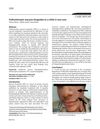
October 2023 in “Journal of the Pakistan Medical Association” This source describes a case of a 12-year-old male diagnosed with folliculotropic mycosis fungoides, presenting with an asymptomatic, erythematous plaque. Histology and immunohistochemistry confirmed FMF, which is typically rare in children and marked by follicular infiltration by CD4+ lymphocytes.
December 2023 in “Animals” In this study, researchers analyzed miRNA and gene expression in the hair follicles of FMD during different hair cycle stages, identifying differential expression patterns and key pathways involved in hair follicle development and growth.