 219 citations
,
September 2009 in “European journal of epidemiology”
219 citations
,
September 2009 in “European journal of epidemiology” This article discusses the rationale, design, major findings, and updated objectives and methods of the ongoing Rotterdam Study on various diseases, without reporting new research results.
 December 2024 in “http://isrctn.com/”
 MpowerTM may improve hair growth and satisfaction more than plain minoxidil, with mild side effects.
 August 2024 in “Bioimpacts”
 In this study on mice, a hydro-alcoholic solution containing kopexil significantly enhanced hair growth and increased hair-promoting factors without causing notable liver or kidney toxicity compared to minoxidil.
 October 2025 in “Journal of Molecular Structure”
 Hyaluronic acid microneedles help deliver minoxidil derivatives effectively for hair regrowth.
 April 2026 in “microPublication”
 In this study, researchers explored whether minoxidil, a common treatment for androgenetic alopecia, may have estrogenic activity and found preliminary evidence suggesting it could act as a partial agonist of Estrogen Receptor α (ERα).
 4 citations
,
August 2020 in “Facial plastic surgery & aesthetic medicine”
4 citations
,
August 2020 in “Facial plastic surgery & aesthetic medicine” This study found that combining concentrated growth factor injections with minoxidil treatment significantly improved hair growth and participant satisfaction in male patients with androgenetic alopecia compared to minoxidil alone.
December 2025 in “Journal of Drug Delivery Science and Technology” In mouse studies, this research found that combining ginsenoside Rg3 and glycyrrhizic acid with minoxidil improved treatment outcomes for androgen alopecia by addressing both symptoms and root causes, notably activating the Wnt/β-catenin pathway and promoting hair follicle cell proliferation.
October 2022 in “Our Dermatology Online” In this study, researchers compared the effectiveness of a tonic containing Capixyl, Procapil, and rosemary extract with 2% minoxidil in reducing hair loss and promoting hair growth in male participants over a 24-week period.
This study found that a data-driven model using XGBoost effectively predicts individualized responses to minoxidil for androgenetic alopecia, outperforming traditional methods in accuracy and reliability.
 February 2024 in “Current Medicinal Chemistry”
 In this study, minoxidil nanoparticles significantly increased hair growth rate in C57BL/6 mice compared to traditional minoxidil, suggesting enhanced effectiveness and potential as a new formulation.
 March 2024 in “International Journal of Pharmaceutics”
 This study found that combining minoxidil with ginsenosides Rg3 in a novel delivery system improved hair growth by reducing inflammation and oxidative stress in androgen alopecia treatments.
5 citations
,
April 2022 in “Pharmaceutics” This study reported that 5% minoxidil nanoparticles enhanced hair growth more effectively in mice than a commercial minoxidil solution, with significantly higher drug accumulation in the upper hair follicles.
23 citations
,
March 2021 in “Gels” This study found that minoxidil solubilized in gelatin-containing microemulsions resulted in over 5% of the drug remaining in porcine skin, significantly more than the reference gel.
 February 2023 in “International Journal of Pharmaceutics”
 In this study, the researchers developed minoxidil cubosomes using nanotechnology, which improved drug penetration in the skin, showed greater hair growth efficacy, and reduced adverse skin reactions compared to traditional minoxidil solutions.
 January 2024 in “Expert Opinion on Pharmacotherapy”
 This source suggests that oral minoxidil could be a safe and effective treatment option for both female and male androgenetic alopecia, although it is currently used off-label.
 5 citations
,
December 1991 in “Annals of the New York Academy of Sciences”
5 citations
,
December 1991 in “Annals of the New York Academy of Sciences” Minoxidil boosts hair growth by undergoing a process in hair follicles and certain skin cells, and by increasing the production of compounds essential for hair growth and maintenance.
 September 2024 in “Journal of the American Academy of Dermatology”
 In this pilot study, minoxidil-treated scalp skin grafts from hair loss patients on mice showed increased expression of key anti-aging biomarkers and hair regrowth, suggesting minoxidil as a potential anti-aging agent by boosting VEGF-A production in hair follicles.
 December 2024 in “Biological and Pharmaceutical Bulletin”
 In this study, researchers found that minoxidil nanocrystals delivered using MG-MXD@NP, containing methylcellulose and gum arabic, significantly improved hair growth in mice compared to a standard minoxidil lotion, with enhanced delivery to skin tissues and increased markers of hair follicle stem cell activity.
 October 2024 in “International Journal of Research in Medical Sciences”
 This study found that adding a SULT1A1 enzyme booster to minoxidil treatment improved hair growth response in 65% of androgenetic alopecia patients who were previous non-responders to minoxidil alone, with females benefiting more than males.
January 2026 in “Dermatologica Sinica” In this study, oral minoxidil (1.25 mg and 2.5 mg) and topical 5% minoxidil significantly promoted hair regrowth in men with androgenetic alopecia over six months, showing comparable efficacy across both oral and topical treatments.

Using 5% minoxidil foam twice daily can help regrow hair, especially in younger men aged 20-30.
22 citations
,
January 1999 in “Journal of Toxicology Clinical Toxicology” This report describes the first documented case of an oral overdose of the extra strength 5% minoxidil solution, resulting in severe hypotension and requiring intensive medical intervention.
June 2025 in “Zenodo (CERN European Organization for Nuclear Research)” Combining Procapil with minoxidil improves hair growth in men with hair loss.
June 2025 in “Zenodo (CERN European Organization for Nuclear Research)” Combining Procapil with minoxidil improves hair growth in men with hair loss.
 October 2019 in “DOAJ (DOAJ: Directory of Open Access Journals)”
 In this study, N-MXD (minoxidil nanoparticles) was shown to deliver more drug into hair bulbs and enhance IGF-1 and VEGF levels more effectively than commercial formulations, resulting in higher therapeutic efficiency for hair growth in C57BL/6 mice.
 October 2023 in “Bioactive Materials”
 This study developed a novel liposome-based delivery system for Minoxidil and nitric oxide, which showed promising results in promoting hair regrowth in an androgenetic alopecia model by enhancing transdermal absorption, prolonging skin retention, and reducing inflammation.
 1 citations
,
June 2021 in “Journal of Cosmetic Dermatology”
1 citations
,
June 2021 in “Journal of Cosmetic Dermatology” In this study, the addition of a SULT1A1 enzyme booster to daily 5% minoxidil treatment significantly increased hair regrowth in men with androgenic alopecia compared to minoxidil alone.
 28 citations
,
January 2004 in “British Journal of Pharmacology”
28 citations
,
January 2004 in “British Journal of Pharmacology” This study found that minoxidil provides cardioprotective effects in guinea-pig heart cells through selective activation of mitochondrial ATP-sensitive potassium channels.
4 citations
,
July 1987 in “Dermatologic Clinics” 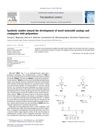 12 citations
,
February 2010 in “Tetrahedron Letters”
12 citations
,
February 2010 in “Tetrahedron Letters” This article describes the synthesis of novel polyamine-modified minoxidil analogs and conjugates to potentially enhance minoxidil's biological activity, selectivity, and water solubility, but reports no new biological results.