 4 citations
,
December 2010 in “Copernican Letters”
4 citations
,
December 2010 in “Copernican Letters” This article reviews popular peptides used in cosmetics for wrinkle treatment and presents no new clinical findings.
 September 2019 in “Romanian Journal of Pediatrics”
 This article discusses the unique regenerative healing process in fetal skin that can occur without scarring, highlighting potential therapeutic targets to reduce fibrosis in postnatal wound healing.
33 citations
,
February 2021 in “Journal of Medicinal Chemistry” This study found that novel MPC inhibitor analogues with specific chemical modifications promoted significant hair growth in shaved mice when applied topically.
November 2022 in “Skin Appendage Disorders” This study found that a 6-month treatment with 2% palmitoyl tetrapeptide 20 showed no significant improvement in reducing hair graying in patients, despite theoretical potential.
 July 2025 in “ACS Pharmacology & Translational Science”
 In this study, maslinic acid applied topically was observed to stimulate hair growth in mice comparably to minoxidil, primarily activating pathways like Wnt/β-catenin, and suggesting a link between hair growth and cilia activity.
 108 citations
,
August 2017 in “Clinical, Cosmetic and Investigational Dermatology”
108 citations
,
August 2017 in “Clinical, Cosmetic and Investigational Dermatology” This review highlights microneedling's promise as an adjuvant therapy for enhanced drug delivery in dermatology, especially for conditions like atrophic scars and pigmentation disorders, though its efficacy for vitiligo is limited.
 65 citations
,
April 2021 in “Natural Products and Bioprospecting”
65 citations
,
April 2021 in “Natural Products and Bioprospecting” This review discusses the traditional uses and pharmacologically active compounds of 22 Dendrobium species for dermatological disorders but reports no new results, highlighting the need for further research.
 45 citations
,
January 2020 in “Pharmaceutical Biology”
45 citations
,
January 2020 in “Pharmaceutical Biology” This review discusses the potential dermatological applications of Dendrobium officinale polysaccharides, noting their hair growth promoting, skin moisturizing, and antioxidant effects, but reports no new clinical results.
 1 citations
,
August 2023 in “International journal of pharmacy & integrated health sciences”
1 citations
,
August 2023 in “International journal of pharmacy & integrated health sciences” This review discusses various bioactive elements in cosmeceuticals, highlighting their potential benefits, such as anti-aging effects and skin tone improvement, while noting the growing demand due to safety concerns and expanding market opportunities.
 May 2026 in “Commagene Journal of Biology”
 This review found that anti-aging peptides show promise in cosmeceuticals due to their targeted actions to rejuvenate skin, but challenges like peptide stability, penetration, and limited clinical data limit their current effectiveness.
January 2019 in “Archives of dermatology and skin care” This preclinical study reported that the mix of biomimetic peptides, MGF, promoted hair growth and increased cell proliferation in cultured human hair follicles from AGA subjects.
53 citations
,
July 1981 in “Journal of Endocrinology” In this study, α-MSH and cyclic AMP were found to stimulate melanogenesis in hair follicle cultures, while cyclic GMP and melatonin inhibited melanin production but not tyrosinase activity.
 6 citations
,
July 2009 in “Biomolecules & therapeutics”
6 citations
,
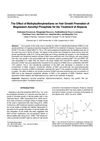
July 2009 in “Biomolecules & therapeutics” This study found that combining MSM with MAP significantly enhanced hair growth in mice, comparable to or better than minoxidil, due to increased intradermal retention of MAP.
 October 2025 in “Journal of Molecular Structure”
 Hyaluronic acid microneedles help deliver minoxidil derivatives effectively for hair regrowth.
12 citations
,
January 2013 in “Indian Journal of Dermatology” This case report on a 13-year-old boy with monilethrix observed slight improvement after a two-month trial of oral N-acetyl cysteine, but overall hair density did not improve further.
 17 citations
,
August 2007 in “Bioorganic & Medicinal Chemistry Letters”
17 citations
,
August 2007 in “Bioorganic & Medicinal Chemistry Letters” This study found that a specific amino-pyridine compound showed potent androgen receptor antagonist activity, stimulating hair growth in mice and reducing sebum production in a hamster model.
 April 2026 in “Experimental & Molecular Medicine”
 This study used integrated single-cell chromatin and transcriptomic analyses in developing mouse skin to uncover gene networks involved in skin lineage specification and identified Mef2c+ upper fibroblasts as potential precursors to certain muscle-like structures, with cross-species findings in human skin.
 January 2017 in “Qucosa (Saxon State and University Library Dresden)”
 This study found that plasma protein binding significantly contributes to the shifts in glucocorticosteroid concentration ratios among blood, saliva, and hair, challenging prior assumptions about enzyme inactivation as the main factor.
 October 2025 in “Advanced Materials”
 In this study, researchers developed ionizable coenzyme Q10-engineered lipid/fiber microplexes that restored mitochondrial-ribosomal function and enhanced mRNA translation in senescent cells, leading to increased hair follicle density and bone formation in mouse models compared to conventional lipid nanoparticles.
 12 citations
,
September 2018 in “International Journal of Cosmetic Science”
12 citations
,
September 2018 in “International Journal of Cosmetic Science” This study demonstrated that the biomimetic peptide PTP20 may help preserve hair pigmentation and reduce greying by enhancing melanocyte function and increasing melanin production in human hair follicles.
 7 citations
,
January 1982 in “Acta agriculturae Scandinavica”
7 citations
,
January 1982 in “Acta agriculturae Scandinavica” Mink use L-methionine and L-cystine slightly better than natural amino acids for hair growth, but D-methionine is not effective.
12 citations
,
December 1981 in “Journal of Endocrinology” This study found that α-melanocyte-stimulating hormone increased melanin production in hair follicles of moulting Siberian hamsters, whereas [8-arginine]-vasotocin inhibited melanin production without affecting tyrosinase activity.

In this study, a novel liposomal peptide formulation significantly enhanced hair growth in mice compared to minoxidil, but results on human tissue penetration were inconclusive, suggesting further research is needed for translation to human use.
July 2025 in “OPAL (Open@LaTrobe) (La Trobe University)” The research found that topical maslinic acid stimulates hair growth in mice, comparable to minoxidil, by inducing anagen phase acceleration and activating pathways such as Wnt/β-catenin, Notch, and MAPK; a potential link to cilia activity was also explored.
 March 2025 in “Journal of Science Natural Science”
 This study successfully synthesized acetyl tetrapeptide-3 on a laboratory scale with over 56% yield and 100% purity, supporting its use in developing hair loss and scalp care products.
 April 2015 in “Journal of Nutritional Therapeutics”
 This study found that a more liberal intake of restricted amino acids in patients with methylmalonic acidemia resulted in improved growth and fewer illness episodes.
8 citations
,
February 2021 in “Biomolecules & therapeutics” This study found that myristoleic acid promotes dermal papilla cell proliferation and anagen signaling through autophagy, cell cycle progression, and activation of the Wnt/β-catenin and ERK pathways.
 January 2019 in “Proceedings for Annual Meeting of The Japanese Pharmacological Society”
 In this study, injecting Nε-(carboxymethyl) lysine into skin tissue weakened hair shaft and follicle formation, likely by inhibiting cell proliferation and migration needed for hair follicle morphogenesis.
 April 2024 in “Current research in nutrition and food science”
 This study found that a food supplement improved skin moisturization, elasticity, and thickness, reduced telogen hair density, and enhanced nail status in women with mild-to-moderate aging signs after 84 days.
 22 citations
,
February 2008 in “Journal of Neurochemistry”
22 citations
,
February 2008 in “Journal of Neurochemistry” This study found that minoxidil prevents long-term serotonergic toxicity induced by MDMA in rats, primarily by opening mitochondrial KATP channels and involving Akt and MAP kinases in its neuroprotective mechanism.