 1 citations
,
January 1995 in “Skin Cancer”
1 citations
,
January 1995 in “Skin Cancer” This study suggests that immunohistochemistry of keratin and involucrin expression can aid in distinguishing malignant trichilemmoma from other tumors previously diagnosed as such.
 October 2023 in “Research Review”
 This source describes the development, structure, and types of skin appendage tumors, noting both benign and malignant forms, potential associations with syndromes, and categories based on follicular differentiation.
8 citations
,
July 2015 in “European journal of histochemistry” This study found that Sox9 was variably expressed in most canine skin neoplasms, particularly in those originating from the hair follicle's bulge region, suggesting its potential as a stem cell marker.
4 citations
,
January 2019 in “Journal of cutaneous pathology” This study found that phospho-S6 is strongly expressed in malignant hair follicle tumors but only patchily in a minority of benign tumors, indicating a potential marker for distinguishing between the two.
This article reviews the characteristics and diagnostic criteria of tricholemmoma and tricholemmal carcinoma, detailing their clinical presentations and associations but reports no new clinical findings.
January 2017 in “Enlighten: Publications (The University of Glasgow)” This study found that in mice with deregulated β-catenin and PTEN signaling, increased follicular hyperplasia and sebaceous gland changes occur, but typical papillomas do not develop, potentially due to p21 response and reduced stem cell markers.
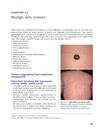
This chapter classifies various benign skin tumors and discusses their characteristics, treatment indications, and potential for recurrence, but reports no new clinical findings.
18 citations
,
January 2013 in “Veterinary Dermatology” This study found that K15 is a useful marker for investigating the role of stem cells in canine hair follicle tumours, while nestin is not optimal.
 7 citations
,
March 2017 in “Journal of dermatology”
7 citations
,
March 2017 in “Journal of dermatology” This review outlines the clinical and histopathological features that aid in classifying tumors arising from the folliculosebaceous apparatus and reports no new research results.
35 citations
,
December 2008 in “PubMed” In this study, researchers reported that specific immunoreactivity patterns observed in hair follicle stem cell markers suggest different origins for trichilemmoma, basal cell carcinoma, and squamous cell carcinoma in human skin tissues.
 June 2022 in “IP Indian journal of clinical and experimental dermatology”
 In this study, among patients with clinically suspected appendageal tumours, histopathology confirmed their presence in 42 cases, with benign types found more frequently than malignant ones.

In this case report, a 65-year-old man's neck lesion was initially misdiagnosed as benign but later identified as trichilemmal carcinoma, with the authors recommending Mohs Micrographic Surgery as the preferred treatment option for this rare condition.
35 citations
,
September 2004 in “American Journal of Dermatopathology” This case report introduces 'onycholemmal carcinoma' as a designation for a slowly growing malignant tumor of the nail bed epithelium in a 69-year-old male, with no recurrence or metastasis observed over four years after treatment.
5 citations
,
June 2016 in “University of Zagreb University Computing Centre (SRCE)” This study observed that canine follicular tumors are an uncommon type of skin neoplasia in Croatian dogs, often benign but with a small percentage presenting malignancy, and vary based on the breed's hair growth type.
 January 2025 in “International Journal of Clinical and Diagnostic Pathology”
 This study found that skin adnexal tumors are mostly benign, with 98.6% of cases being non-cancerous, and highlighted histopathological examination as essential for accurate diagnosis and management, given their frequent clinical misdiagnosis.
 4 citations
,
January 2012 in “Elsevier eBooks”
4 citations
,
January 2012 in “Elsevier eBooks” The document concludes that various skin conditions have specific treatments, ranging from antihistamines for urticaria to surgery and medication for tumors and chronic skin diseases.
11 citations
,
May 2022 in “JEADV. Journal of the European Academy of Dermatology and Venereology/Journal of the European Academy of Dermatology and Venereology” This systematic review provides a detailed overview of the clinical and dermoscopic features of cutaneous adnexal tumors, highlighting their potential to mimic other skin lesions and assisting in differential diagnosis.
December 2021 in “Pathologica” This case report describes a rare instance of trichogerminoma with unusually numerous mitotic figures and a higher Ki67 proliferative rate, distinguishing it from previously documented cases.
1 citations
,
May 2017 in “InTech eBooks” This review discusses various scalp infections, infestations, and neoplasms but reports no new clinical findings; the authors emphasize the diversity of diseases from different origins.
 16 citations
,
March 2005 in “Journal of The American Academy of Dermatology”
16 citations
,
March 2005 in “Journal of The American Academy of Dermatology” This report describes a case of Birt-Hogg-Dube syndrome with manifestations including multiple fibrofolliculomas, acrochordons, and renal oncocytoma.
 3 citations
,
March 2005 in “Journal of the American Academy of Dermatology”
3 citations
,
March 2005 in “Journal of the American Academy of Dermatology” This case report describes a patient with Birt-Hogg-Dube syndrome exhibiting multiple fibrofolliculomas, acrochordons, and renal oncocytoma.
 May 2020 in “Research Square (Research Square)”
 This study found that trichilemmal carcinoma shares genetic changes with other skin cancers, suggesting a similar pathogenesis, particularly in those with aggressive clinical courses linked to TP53 mutations.
 April 2020 in “Research Square (Research Square)”
 This study reported genetic mutations in trichilemmal carcinoma similar to those found in other skin cancers, including TP53 mutations associated with aggressive disease.

In this case report, researchers diagnosed a 12-year-old girl with a nevus sebaceus of Jadassohn, characterized by a yellowish-pink plaque on the scalp and a genetic variant, following previous misdiagnosis as alopecia areata.
 5 citations
,
May 2013 in “The American Journal of Dermatopathology”
5 citations
,
May 2013 in “The American Journal of Dermatopathology” This article discusses the classification and characteristics of infundibular squamous cell carcinoma and highlights the ongoing debate about its differentiation from other carcinoma types, reporting no new clinical results.
 5 citations
,
January 2014 in “Journal of Cutaneous and Aesthetic Surgery”
5 citations
,
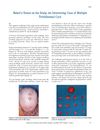
January 2014 in “Journal of Cutaneous and Aesthetic Surgery” A woman had 13 non-cancerous cysts on her scalp successfully removed in one surgery.
 16 citations
,
July 2021 in “Histopathology”
16 citations
,
July 2021 in “Histopathology” This review discusses recent findings on molecular changes in cutaneous adnexal tumours and reports novel markers and pathways involved, highlighting the diverse oncogenic drivers and tumour suppressor alterations.
 21 citations
,
January 2018 in “Anticancer Research”
21 citations
,
January 2018 in “Anticancer Research” This study suggests that NBCCS and BFHS may be the same genetic condition, which could help improve identification and management of misdiagnosed cases with specific surveillance strategies.
 February 2026 in “Clinical Cosmetic and Investigational Dermatology”
 In this study, the authors emphasize that IFK, though rare in young patients, should be considered when diagnosing scalp lesions in all age groups, highlighting the importance of recognizing its dermoscopic and histopathologic features to avoid misdiagnosis and ensure proper management.
 66 citations
,
December 2013 in “Nature Cell Biology”
66 citations
,
December 2013 in “Nature Cell Biology” This study found that quiescence in hair follicle stem cells acts as a tumor suppression mechanism for cutaneous squamous cell carcinoma, with Pten activity necessary to maintain this state.