
In this case report, a 59-year-old woman experienced burning sensations and developed atrophic, hypopigmented, ivory papules and plaques on her palms and soles over three years, which worsened after walking for extended periods.

This review discusses loose anagen hair syndrome, a benign and self-limited condition predominantly affecting children, and highlights the importance of differentiating it from other hair disorders like telogen effluvium and trichotillomania, but reports no new results.
March 2022 in “Journal of cosmetic dermatology” In this case study, a 6-year-old child with autosomal recessive woolly hair showed significant hair growth and sustained improvement with a 4-year combination treatment of botanical extracts, though the precise mechanisms need further research.
1 citations
,
February 2019 in “bioRxiv (Cold Spring Harbor Laboratory)” This study identified lymphatic vessels as crucial components of the hair follicle stem cell niche, coordinating connections and contributing to hair follicle regeneration in mice.
1 citations
,
January 2013 in “Lung India” This letter discusses how differentiating features in clinical and radiological findings can help distinguish pulmonary Langerhans cell histiocytosis and Birt-Hogg-Dube syndrome from lymphangioleiomyomatosis, noting overlapping symptoms but specific distinctive traits.

In this case study, an 80-year-old woman developed lichen planus pigmentosus inversus after receiving multiple intra-articular injections of a homeopathic preparation, suggesting a possible link, though causality remains speculative.
May 2023 in “bioRxiv (Cold Spring Harbor Laboratory)” This study reported the first comprehensive transcriptome atlas of the extraorbital lacrimal gland in mice, identifying over 41 cell subclasses and revealing significant cell-cell communication networks, particularly among innate lymphoid cells.
June 2025 in “British Journal of Dermatology” This reported case of lichen planopilaris in siblings suggests a potential genetic predisposition, supporting the hypothesis of inherited susceptibility in this condition.
 5 citations
,
January 2021 in “Veterinary dermatology”
5 citations
,
January 2021 in “Veterinary dermatology” This study found that adding low-level laser therapy to conventional treatment for canine acral lick dermatitis significantly increased hair growth compared to conventional therapy alone, but did not significantly reduce licking behavior.
5 citations
,
June 2015 in “The Journal of Dermatology” This study identified "HTLV-1-associated lichenoid dermatitis" as a skin condition in HTLV-1-infected individuals, characterized by reactive eruptions associated with increased immunity toward infected CD4+ T cells.
 87 citations
,
March 2014 in “Biochimica et Biophysica Acta (BBA) - Molecular and Cell Biology of Lipids”
87 citations
,
March 2014 in “Biochimica et Biophysica Acta (BBA) - Molecular and Cell Biology of Lipids” This paper discusses X-linked ichthyosis and its genetic causes, focusing on biochemical pathways and their role in epidermal differentiation and barrier function, but it presents no new clinical findings.
 13 citations
,
December 2010 in “Annales de Dermatologie et de Vénéréologie”
13 citations
,
December 2010 in “Annales de Dermatologie et de Vénéréologie” This retrospective study in Morocco confirms that Stevens-Johnson and Lyell syndromes lead to severe ocular and unsightly mucocutaneous sequelae, significantly affecting patients' social and professional integration.
 January 2026 in “Frontiers in Medicine”
 This study suggests that coexisting LSS and TSPEAR variants might contribute to a complex phenotype of congenital hypotrichosis and ectodermal abnormalities in a child, and highlights the need for cautious interpretation of genotype-phenotype links and the potential value of broader genetic testing.
 September 2017 in “The journal of investigative dermatology/Journal of investigative dermatology”
 This study reports that the loss of Langerhans cells in lichen planopilaris scars may be linked to the downregulation of ITG αvβ6, which is not seen in other scar formation diseases.
 5 citations
,
July 2020 in “JAMA Dermatology”
5 citations
,
July 2020 in “JAMA Dermatology” Minoxidil solution applied twice daily improved hair growth in patients with Woolly Hair/Hypotrichosis due to LIPH gene issues, with mild side effects.
40 citations
,
October 2012 in “Journal of the American Academy of Dermatology” This study found that the Cutaneous Lupus Disease Area and Severity Index (CLASI) is correlated with both physician-assessed and patient-reported outcomes in cutaneous lupus erythematosus, particularly highlighting concerns about body image in visible areas.
 2 citations
,
August 2012 in “Journal of the American Academy of Dermatology”
2 citations
,
August 2012 in “Journal of the American Academy of Dermatology” This correspondence describes two patients with both epidermolysis bullosa simplex, Dowling-Meara type, and loose anagen hair syndrome, an association not previously reported in the literature.
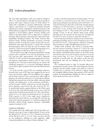 April 2012 in “Informa Healthcare eBooks”
 Lichen planopilaris is a rare, chronic condition causing hair loss, mainly in middle-aged women, and early treatment is important to prevent permanent baldness.
 202 citations
,
June 2005 in “Aaps Pharmscitech”
202 citations
,
June 2005 in “Aaps Pharmscitech” This review discusses the potential of lecithin organogels for improving topical drug delivery and presents no new experimental results; the authors highlight their stability and low skin irritancy as advantages.
5 citations
,
November 2005 This review discusses the applications of confocal laser scanning microscopy in visualizing fluorescent compounds within the skin, noting its potential for tracking drug carriers and enhancing penetration studies, but reports no new results.
5 citations
,
August 2001 in “International Journal of Dermatology” This case study reports a 20-year-old laborer's progressive hair loss with scalp and body lesions, diagnosed as lichen planopilaris, leading to scarring alopecia resembling male-pattern baldness.

This case study reports the first known instance of lichen planopilaris being associated with multiple autoimmune syndrome in a woman with hypothyroidism and Crohn's disease.
 13 citations
,
December 2017 in “Journal of Cosmetic and Laser Therapy”
13 citations
,
December 2017 in “Journal of Cosmetic and Laser Therapy” This study evaluated the use of low-level laser therapy for treating androgenic alopecia in adults, finding it a promising and safe at-home option for stimulating hair growth compared to sham devices, though further research is needed to confirm its clinical effectiveness.
 April 2023 in “Journal of dermatological treatment”
 This study reports a case of complete hair regrowth in lichen planopilaris after 12 weeks of treatment with ixekizumab, suggesting its potential as a targeted therapy.
 8 citations
,
November 2022 in “Cureus”
8 citations
,
November 2022 in “Cureus” In this study, patients with mild to moderate scalp seborrheic dermatitis experienced greater improvements in severity scores and quality of life with Lulican™ shampoo compared to Ketoconazole over four weeks, with similar safety profiles but better tolerability and cosmetic acceptability for LulicanTM.
 36 citations
,
August 2011 in “Journal of dermatological science”
36 citations
,
August 2011 in “Journal of dermatological science” This article examines the role and composition of integral hair lipids in forming a protective barrier similar to the skin's epidermal lipid layer and reports no new findings about their effects.
November 2014 in “International Society of Hair Restoration Surgery” This announcement explains the Fellow designation for hair restoration surgeons meeting specific educational criteria, without reporting new research findings.
 August 2022 in “Case reports in medicine”
 This case report describes a 19-year-old female with systemic lupus erythematosus who exhibited eyelash trichomegaly, a rare disorder involving changes in eyelash characteristics, alongside diffuse alopecia.
 31 citations
,
June 2018 in “Dermatologic Surgery”
31 citations
,
June 2018 in “Dermatologic Surgery” In this randomized, double-blind trial, researchers observed that low-level laser therapy led to significantly greater hair regrowth on treated areas compared to a sham treatment in patients with androgenetic alopecia over 24 weeks, suggesting it as a potentially effective and safe option.
 October 2023 in “International Journal of Science and Research (IJSR)”
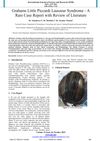
 This paper describes Grahams Little Piccardi Lassueur Syndrome, a rare type of Lichen Planopilaris that causes different types of alopecia and distinctive skin papules, primarily affecting females aged 40 to 70, and notes the current challenges in treatment options, particularly once scarring occurs.