2 citations
,
September 2025 in “Future Journal of Pharmaceutical Sciences” This study reviewed the potential of Lupeol, a natural triterpenoid, in promoting hair growth and reducing inflammation related to alopecia, revealing promising molecular pathways and favorable pharmacokinetics while suggesting further research to validate these findings.
 April 2016 in “Journal of The American Academy of Dermatology”
 People with lichen planopilaris often have seborrheic dermatitis, which can delay the diagnosis of lichen planopilaris.
 7 citations
,
March 2020 in “Lasers in Medical Science”
7 citations
,
March 2020 in “Lasers in Medical Science” LLLT is a safe, promising hair loss treatment, but more research needed.
29 citations
,
May 2025 in “Polymers” This study systematically examines how smart biomaterials used with DLP technology can enhance bioprinting in tissue engineering and regenerative medicine, while also identifying current challenges and future research needs.
 21 citations
,
August 2013 in “Journal of Dermatological Treatment”
21 citations
,
August 2013 in “Journal of Dermatological Treatment” This review discusses the mixed evidence and high risk of bias in studies on low-level light therapy for treating androgenetic alopecia and calls for rigorous randomized controlled trials to assess its efficacy.
January 2018 in “Archives of dermatology and skin care” This systematic review found widespread support in existing literature for the effectiveness of low level laser therapy in promoting hair growth, but emphasized the need for larger case-controlled studies to confirm these results.
 23 citations
,
January 2010 in “Journal of The American Academy of Dermatology”
23 citations
,
January 2010 in “Journal of The American Academy of Dermatology” This article discusses the efficacy and safety of mycophenolate mofetil and hydroxychloroquine for treating lichen planopilaris and reports no new clinical results.
4 citations
,
November 2019 in “Dermatology - Open Journal” This study reports that Lichen planus pigmentosus is present in Moroccan patients but remains challenging to treat, with only some experiencing complete resolution of lesions after therapy.
July 2025 in “Journal of Investigative Dermatology” Scarring alopecia involves increased immune cells and specific gene changes near damaged hair follicles.
 10 citations
,
July 2002 in “Australasian Journal of Dermatology”
10 citations
,
July 2002 in “Australasian Journal of Dermatology” This letter to the editor provides no new results or studies on dermatological topics; it may address previous articles or observations.
 206 citations
,
September 2010 in “PLoS ONE”
206 citations
,
September 2010 in “PLoS ONE” This study found that using a Picosecond IR Laser (PIRL) on mouse skin led to less tissue damage and scarring compared to conventional surgical lasers and tools.
 6 citations
,
January 2016 in “Journal of lasers in medical sciences”
6 citations
,
January 2016 in “Journal of lasers in medical sciences” This study found that a single session of low level laser irradiation did not significantly affect hair growth outcomes in transplanted follicles for patients with androgenic alopecia.
65 citations
,
October 2015 in “Acta Biomaterialia” This study found that using a pH-sensitive layered double hydroxide nanocarrier to deliver etoposide significantly reduced liver toxicity and enhanced the drug’s effectiveness in targeting and suppressing non-small cell lung cancer.
 December 1997 in “Proceedings of SPIE, the International Society for Optical Engineering/Proceedings of SPIE”
 This study concluded that low energy laser therapy may effectively complement classical treatment for scalp alopecia, leading to faster results, although long-term maintenance still requires ongoing classical therapy.
1 citations
,
August 2016 in “Pan Stanford Publishing Pte. Ltd. eBooks” This chapter reviews low-level light therapy for hair growth and loss prevention but reports no new clinical results, providing an overview of mechanisms, treatments, and future perspectives.
 May 2026 in “AAPS PharmSciTech”
 This study found that PEGylated LUT-Aspasomes significantly improved neuroprotective effects in stressed rats, enhancing spatial memory, reducing depressive-like behavior, and preserving hippocampal architecture better than free luteolin. Additionally, it increased brain delivery and stability, suggesting potential for treating stress-related neurobehavioral disorders.
 8 citations
,
July 2020 in “Medicine”
8 citations
,
July 2020 in “Medicine” In this study, low-level light therapy using a new helmet-type device significantly increased hair density and thickness in patients with androgenetic alopecia, showing no adverse events or side effects, suggesting it may be a safe and effective treatment option for both sexes.

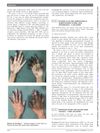
In this case report, a 59-year-old woman experienced burning sensations and developed atrophic, hypopigmented, ivory papules and plaques on her palms and soles over three years, which worsened after walking for extended periods.
24 citations
,
December 2018 in “Inflammation and Regeneration” This review discusses the roles of various PLA2 enzymes in skin health and disease, highlighting potential pathways for future diagnosis and therapy, but it reports no new clinical results.
November 2021 in “Frontiers in medicine” This case study documents the first reported instance of bullous lichen planus/systemic lupus erythematosus overlap syndrome with initial hair loss, which improved with treatment including glucocorticoids and immunosuppressive drugs.
May 2024 in “JAAD Case Reports” This case report describes a 29-year-old man with a year-long non-itchy skin eruption and hair loss, with distinct papules and plaques across his scalp, beard, body, and suprapubic regions, but no systemic symptoms or family history of autoimmune disease.
 November 2021 in “International Journal for Research in Applied Science and Engineering Technology”
 This review discusses the various applications of lyophilized platelet-rich plasma in treating different diseases and reports no new clinical results.
 2 citations
,
October 2020 in “International Journal of Dermatology”
2 citations
,
October 2020 in “International Journal of Dermatology” This study found that lichen planopilaris in men typically presents similarly to women, with a lower likelihood of nonscalp hair loss and a higher association with mucosal lichen planus and thyroid disease.
July 2024 in “Skin Appendage Disorders” This review discusses the role of trichoscopy in diagnosing lichen planopilaris and reports no clinical results; the authors emphasize early recognition to potentially prevent permanent scarring.
 60 citations
,
December 2015 in “Lasers in Medical Science”
60 citations
,
December 2015 in “Lasers in Medical Science” This review concluded that FDA-cleared low-level laser therapy devices are safe and effective for patients with male and female pattern hair loss who do not respond to or tolerate standard treatments.
 33 citations
,
March 2017 in “Dermatologic Surgery”
33 citations
,
March 2017 in “Dermatologic Surgery” In this clinical study, low-level laser therapy using the HANDI-DOME LASER device increased hair counts by 51% compared to controls, indicating its potential as a safe and effective treatment for androgenetic alopecia in women aged 18 to 60.
December 2024 in “Skin Appendage Disorders” This bibliometric analysis revealed important studies on LPP, noted essential trichoscopic features, and identified significant evidence gaps. The researchers emphasized a need for more robust and diverse studies to improve diagnostics and treatment strategies.
 January 2018 in “Clinical approaches and procedures in cosmetic dermatology”
 This review discusses clinical studies on low-level laser therapy for various types of hair loss and suggests it may be promising for those unresponsive to conventional treatments, but reports no new clinical results.
In this case report, a 19-year-old woman with systemic lupus erythematosus experienced significant improvement in neuropsychiatric symptoms, including psychosis and seizures, following treatment with high-dose corticosteroids, immunosuppressants, and antidepressants.
 May 2024 in “Journal of the Egyptian Women's Dermatologic Society /Journal of the Egyptian Women's Dermatologic Society”
 In this split-scalp study, researchers observed that combining fractional CO2 laser and PRP treatment was significantly more effective in improving hair parameters in women with female pattern hair loss than using each intervention alone or placebo.