January 2025 in “International Journal of Dermatology” This letter to the editor discusses blood pressure changes in patients taking low-dose oral minoxidil but reports no new research findings.
This study reported that analyzing hair cortisol levels using a validated online SPE LC-MS method provided a way to assess long-term hormone secretion in 114 healthy volunteers, with a median hair cortisol value of 4.76 pg/mg.
6 citations
,
November 2019 in “Journal of Cosmetic Dermatology” This study found that applying a 1% BOI lotion improved hair density and thickness in patients with mild pattern hair loss over six months.
January 2010 in “World Clinical Drugs” This study successfully applied an optimized LC-MS/MS method for accurately determining finasteride concentrations and assessing its pharmacokinetics in healthy volunteers.
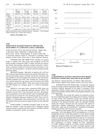 April 2013 in “The Journal of Urology”
 Researchers created a simple tool to predict bladder blockage from prostate enlargement using urine flow rate and prostate volume.
 November 2020 in “Journal of The American Academy of Dermatology”
 This paper discusses photobiomodulation therapy for androgenetic alopecia, focusing on the potential differences in efficacy between laser diodes and LEDs, and reports no new clinical results.
 4 citations
,
March 2015 in “Skin Research and Technology”
4 citations
,
March 2015 in “Skin Research and Technology” This study suggests that using trichotillometry to establish the normal range of shear strain for different hair types could inform diagnostic and treatment decisions for various hair conditions.

Researchers developed a method to identify and measure different animal hair fibers in textiles, successfully distinguishing materials like cashmere from cheaper fibers.
18 citations
,
December 2010 in “Journal of analytical atomic spectrometry” This study demonstrated that using lead-doped keratin film as a calibration standard allows for accurate tracking of lead distribution along hair strands, revealing different exposure patterns among workers in a battery manufacturing factory in Thailand.
January 2023 in “Zenodo (CERN European Organization for Nuclear Research)” This study developed a reliable RP-HPLC method for the simultaneous estimation of Spironolactone and Hydrochlorothiazide, which was validated as accurate, precise, and robust for pharmaceutical applications.
28 citations
,
December 2002 in “Der Hautarzt” TrichoScan accurately measures hair growth and loss, showing increased hair counts and thickness with treatment.
14 citations
,
June 2021 in “British Journal of Dermatology” This article discusses the BIOMAP consortium's efforts in standardizing data for atopic dermatitis and psoriasis research to facilitate personalized medicine, but it presents no new research findings.
 4 citations
,
March 2012 in “InTech eBooks”
4 citations
,
March 2012 in “InTech eBooks” This article discusses the major role of motor vehicles in contributing to urban air pollution and its significant health impacts, especially in developing countries, but reports no new findings.
 January 2019 in “Analytical Science and Technology”
 This study developed a rapid method using advanced chromatography and mass spectrometry to detect hair-growth enhancing compounds, discovering synthetic drugs in about 21% of tested supplements.
In this study, a modified Sinclair scale was presented for evaluating hair loss severity in men with female pattern hair loss, outlining stages from normal hair density to severe hair loss while preserving the anterior hairline. Reliability data for using this scale was also included.
August 2025 in “BMC Pharmacology and Toxicology” The LTF gene may help predict and manage nonspecific orbital inflammation.
 April 2016 in “Annals of laboratory medicine”
 The researchers reported that epitestosterone treatment reduced eicosanoid levels generated by cyclooxygenases and lipoxygenases in rabbit liver samples with carrageenan-induced inflammation.
6 citations
,
March 2021 in “Journal of the American Academy of Dermatology” This study found that the Brigham Eyelash Tool for Alopecia (BELA) is a reliable measure for assessing eyelash loss in alopecia areata patients, demonstrating high inter- and intrarater reliability.
 October 2023 in “Oriental Journal of Chemistry/Oriental journal of chemistry”
 This study focused on the rheology of almond oil at various temperatures and shear rates, using a Brookfield RVDV II I Ultra Rheometer, to evaluate its potential as a biodegradable lubricant.
 October 2013 in “Journal of the American College of Cardiology”
 Blood pressure that doesn't drop at night is linked to worse blood vessel function in people with high blood pressure.
January 2024 in “ResearchWorks at the University of Washington (University of Washington)” This study found that while measuring zinc in hair did not allow calculation of individual hair growth rates, it effectively characterized zinc, lead, and mercury concentrations and improved methods for analyzing these exposures using LA-ICP-MS.
 10 citations
,
March 2022 in “Communications biology”
10 citations
,
March 2022 in “Communications biology” In this study, researchers found that non-invasive analysis of skin surface lipid RNAs revealed alterations in gene expression patterns associated with atopic dermatitis, suggesting its potential for understanding skin disease pathophysiology.
7 citations
,
January 1966 in “Archives of Dermatology” The method accurately measures hair growth with minimal risk and is better than other methods.
 66 citations
,
November 2011 in “Journal of The American Academy of Dermatology”
66 citations
,
November 2011 in “Journal of The American Academy of Dermatology” This study concluded that a polarized-light handheld dermatoscope attached to a digital camera is a practical and useful tool for diagnosing different types of alopecia.
 14 citations
,
May 2020 in “Drug Testing and Analysis”
14 citations
,
May 2020 in “Drug Testing and Analysis” This study reports that hair analysis could potentially monitor metformin use in diabetic patients, suggesting a possible correlation between daily dose and concentration in dark hair but not in light hair.
30 citations
,
November 2005 in “The journal of investigative dermatology. Symposium proceedings/The Journal of investigative dermatology symposium proceedings” This study discovered that the lipid in human hair follicles is mainly located in the hair cuticle and keratinized inner root sheath, distinct from sebaceous and epidermal lipids, suggesting a potential role as a "hair barrier.

This study suggests that a portable OCT system may be useful for the clinical diagnosis and evaluation of skin diseases and laser treatment outcomes.
1 citations
,
August 2010 in “Journal of dermatology” This study found that photoepilation using intense pulsed light significantly reduced hair growth parameters, and phototrichograms may offer an objective method to evaluate its effectiveness.
December 2021 in “Skin appendage disorders” This study developed and validated an objective dermoscopic severity score for evaluating female pattern hair loss, which may serve as a supplementary outcome measure in therapeutic trials.