 2 citations
,
January 2007 in “Toxicologie Analytique et Clinique”
2 citations
,
January 2007 in “Toxicologie Analytique et Clinique” This case study observed a massive lithium overdose in a 38-year-old woman with bipolar disorder, who survived despite extremely high lithium concentrations through continuous venovenous hemodiafiltration.
 72 citations
,
October 2009 in “The FASEB journal”
72 citations
,
October 2009 in “The FASEB journal” This study found that thyrotropin-releasing hormone (TRH) acts as a potent stimulator of hair growth in human scalp hair follicles, promoting elongation and prolonging the anagen phase.
 39 citations
,
November 2021 in “Clinical Endocrinology”
39 citations
,
November 2021 in “Clinical Endocrinology” This review discusses a new multidisciplinary guideline for treating male hypogonadism and emphasizes a comprehensive approach but reports no new experimental results.
 October 2024 in “Journal of the Endocrine Society”
 This case report highlights that in severe illnesses like sepsis, myxedema coma can occur with less elevated TSH levels than typical for primary hypothyroidism, likely due to inflammatory cytokines affecting TSH secretion, even when central lesions are absent.
 1 citations
,
June 2001 in “Annals of Internal Medicine”
1 citations
,
June 2001 in “Annals of Internal Medicine” This letter to the editor discusses data from a study on troglitazone for lipodystrophy, noting significant increases in subcutaneous fat without dietary changes.
October 2023 in “Journal of the Endocrine Society” In this case report, a shift from Hashimoto's thyroiditis to Graves' disease was observed in a 62-year-old woman, highlighting the rare transformation from hypothyroidism to hyperthyroidism over 20 years, possibly due to changes in antibody activity, according to the researchers.
 November 2024 in “Malaysian Journal of Microbiology”
 In this study, researchers found varying levels of multiple autoantibody types among thyroid disorder patients, with 84.84% of those with immunological hypothyroidism reporting symptoms like weight gain and lethargy, whereas 81.81% of those with immune hyperthyroidism experienced hair loss.
 14 citations
,
December 1998 in “The Journal of Clinical Endocrinology and Metabolism”
14 citations
,
December 1998 in “The Journal of Clinical Endocrinology and Metabolism” This study found that MENT is 10 times more potent than testosterone in suppressing gonadotropins and contributing to anabolism in monkeys, with a potentially wider therapeutic index for human androgen replacement and male contraception.
This study found that premenopausal exercising women with oligomenorrhea had lower triiodothyronine levels and truncal fat percentage compared to other groups, suggesting distinct energetic and reproductive profiles.
37 citations
,
May 2018 in “Transgender health” This study found that oral estradiol was generally effective in achieving target 17-β estradiol levels in transgender women, but often failed to suppress testosterone adequately, with variability in individual responses.
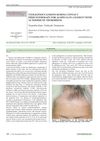 2 citations
,
July 2014 in “Our Dermatology Online”
2 citations
,
July 2014 in “Our Dermatology Online” This case report documents the development of vitiligo-like lesions in a patient with autoimmune thyroiditis following the use of topical squaric acid dibutylester for alopecia.
 10 citations
,
April 2006 in “Seminars in Reproductive Medicine”
10 citations
,
April 2006 in “Seminars in Reproductive Medicine” This article reviews the limited evidence on testosterone therapy for premenopausal women and notes a lack of long-term safety and effectiveness data for this population.
32 citations
,
August 1985 in “Clinical endocrinology” This study concluded that spironolactone may be an effective therapy for a subgroup of hirsute patients, as it reduced plasma testosterone and improved certain hair growth measures.
 June 2024 in “Biological and Clinical Sciences Research Journal”
 In this study, researchers found that women with PCOS and thyroid dysfunction had significantly altered T3 and T4 hormone levels and more frequent symptoms like weight gain and irregular menstrual cycles, suggesting the importance of thyroid screenings for personalized treatment strategies.
May 2024 in “Reactions weekly”  17 citations
,
January 1986 in “Acta obstetricia et gynecologica Scandinavica”
17 citations
,
January 1986 in “Acta obstetricia et gynecologica Scandinavica” In this study, spironolactone treatment reduced hair growth in 17 out of 30 patients with hirsutism, but was less effective compared to cyproterone acetate–estrogen therapy.
 October 2024 in “Eurasian Journal of Medicine”
 This study observed that among 81 children with Hashimoto's thyroiditis, girls were more affected than boys, with symptoms like neck swelling, fatigue, and hair loss frequently occurring, and most cases requiring treatment with levothyroxine.
 January 2022 in “Clinical Cases in Dermatology”
 This case report details a 26-year-old woman with diffuse hair loss following treatment for thyroid cancer, subsequent thyroidectomy, and development of hypothyroidism and hypoparathyroidism managed with thyroxin.
2 citations
,
January 1986 in “PubMed” This study found that spironolactone may improve acne and some ovarian functions in patients with irregular menstrual periods and androgenic symptoms, while causing few side effects.
 October 2024 in “Journal of the Endocrine Society”
 This case report describes a rare conversion from Hashimoto's thyroiditis to Graves' disease in a 23-year-old male, requiring a shift from levothyroxine to methimazole and eventually radioactive iodine therapy.
 60 citations
,
September 1979 in “Fertility and sterility”
60 citations
,
September 1979 in “Fertility and sterility” This study found that spironolactone reduced testosterone production and urinary 17-ketosteroid excretion, leading to a decrease in hair growth rate and a change in hair texture in women.
May 2021 in “Journal of the Endocrine Society” This case report describes severe hypothyroidism exacerbated by nephrotic syndrome in a 62-year-old woman, with a diagnosis of membranous nephropathy linked to significant proteinuria.
This review suggests that lithium can lead to sexual dysfunction, hair loss, acne, and psoriasis in some patients, highlighting potential management strategies but noting the need for further research.
 49 citations
,
December 2009 in “Journal of Investigative Dermatology”
49 citations
,
December 2009 in “Journal of Investigative Dermatology” This review explores the complex relationship between thyroid hormones and skin, discussing potential mechanisms and known interactions but reports no new clinical results, emphasizing the need for further research.
12 citations
,
April 1987 in “PubMed” In this study, low-dose spironolactone effectively reduced hirsutism in women and stopped hair loss in one woman with alopecia areata, without significant side effects over 12 menstrual cycles.
April 2023 in “Journal of Investigative Dermatology” In this study, low-dose spironolactone reduced the severity of female pattern hair loss in a small group of women without causing significant side effects, suggesting it may be an effective and well-tolerated treatment option.
August 2025 in “Journal of the American Academy of Dermatology”  7 citations
,
May 2012 in “International Journal of Andrology”
7 citations
,
May 2012 in “International Journal of Andrology” This study found that an oral testosterone formulation normalized serum testosterone levels and significantly reduced SHBG in men with experimentally induced hypogonadism after nine days of treatment, suggesting potential efficacy for testosterone deficiency.
 December 2023 in “International journal of high dilution research”
 The study reported that mice receiving dynamized Melatonin 6 cH and Lissotriton 6 cH for 14 days exhibited improved coat health and increased endurance in forced swimming tests, with Melatonin-treated mice swimming 2.5 times longer and Lissotriton-treated mice 4 times longer than controls.
 December 2023 in “Journal of ethnopharmacology”
 This study found that tribuloside, a flavonoid from Tribulus terrestris L., enhances melanin production in human melanocytes, zebrafish, and human skin samples without causing toxicity, potentially through inhibiting PDE to increase cAMP levels and promote the melanin biosynthesis pathway.